….House Finch miniature
April 16, 2016
It is so heartening to have requests from bloggers and site visitors who have arranged to have original bird miniature paintings sent to them. The last posting of the Raven miniature, “Keeping Watch”, is currently winging its way to Hawaii, and the March 5th miniature entitled “Raven Moon” is sitting on Byron’s desk in Wisconsin. Another of a wintering Chickadee is with its new owner, Cynthia the poet, https://littleoldladywho.net/ in Maine.
Some bird species are seemingly germain to just about anywhere, the House Finch being one. When we moved from Eastern Canada to extreme Western Canada, there they were. And on fellow blogging sites like H. J. Ruiz’ Avian 101 (https://avian101.wordpress.com/), there they are in the Peach State of Georgia.
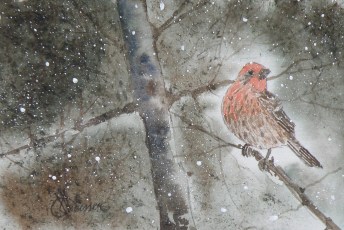
‘House Finch’ — watercolour on Saunders Waterford 140# Hot Press Paper, 2.5″ x 4″
They are, along with wintering Goldfinches, the most frequent visitor to our feeders, and have such a delightfully melodious song. Unlike the slightly larger Purple Finch which probably isn’t found in the West, they do not so much look like they’ve been dipped in raspberry concentrate, as they’ve stuck their heads in wild cherry cream soda. Their disposition is mild, insofar as they aren’t pushy or argumentative when at the feeders. If another species is bossy, they simply flit down to the snow and eat the remains below, along with the Juncos.
If you are ever interested in owning one of these posted bird miniatures, simply email me at: weisserlance@gmail.com and we’ll work out the arrangements. Thank you to all who are so very supportive in comments and visits!
…..Keeping Watch
April 7, 2016
Our little Gallery in the small city of Kamloops, B. C.’s historic Courthouse (1911) has a Featured Artist offering every month and May will be my month to put on a display of recent miniatures. So now it is a matter of working towards having a good showing.
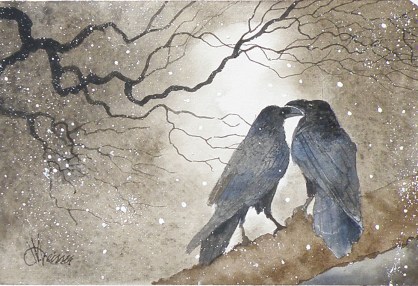
“Keeping Watch”
watercolour on Saunders Hot Press #140 lb paper, 4″ x 6″
I can’t quite explain why it is that depictions of Ravens sell so well, but they do. So it is a pleasure to be able to comply and feed the need, so to speak. They are indeed a very symbolic and ancient bird whose fame is heralded in many countries and cultural legends concerning them abound.
Out taking photographs of them this week, I came across a pair whose size was truly astonishing and whose throaty calls echoed off the nearby boulders and across the wide Thompson River. Once that is accomplished, it is a matter of trying to place them in a scene which has definite mood and emotional impact.
….draw a bird day
March 8, 2016
Teresa Robeson reminded me of ‘bird day’ (https://wordpress.com/read/feeds/4736591/posts/949345080#comments) with her striking rendition of an exotic Araripe Manakin from Brazil.
Here is a far more humble (don’t tell it that!) species, but at least I’m doing my birdy duty this Tuesday morning…..
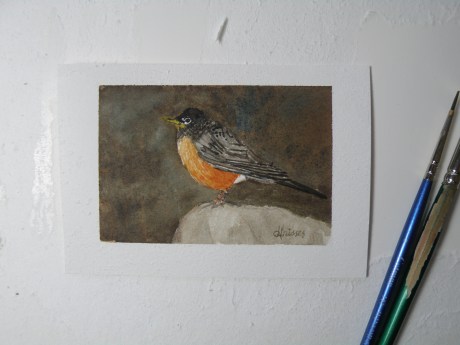
1.5″ x 2″ on Arches Hot Press 140# Paper
I saw my first one two weeks ago–around the third week of February–which is so early for this region, it is nuts. When they get here, they go for Mountain Ash berries and other withering, over-wintered types of fruit, until their usual fare of insects and worms become accessible. They are in breeding mode preoccupied with all their parental preparations.
…. mackerel sky
January 29, 2016
There is an Old English saying about weather which goes: “Mackerel scales and mare’s tails make tall ships carry low sails”. ‘Mackerel scales’ refers to Altocumulus clouds which (to some) resemble the markings on the sides of mackerel. ‘Mare’s tails’ refers to Cirrus uncinus clouds which–according to the saying–must, like mackerel scales, indicate strong winds, though the two types wouldn’t likely appear together in the same sky.

The subject is taken from a view of the British Columbia coast, beaten down by the effects of storm after storm. Having lived on Vancouver Island at one point, the weather forecast for the most northerly tip seemed to nearly always call for wind and rain which made me thankful we lived on the most southerly end. We received quite enough rain as it was. However, seldom was it ever a pelting, all-out soaking torrent–which made local people say to tourists complaining about the constant drizzle, “Yes, but it’s a dry rain.”
This was painted on treated illustration board.
…. Tranquille Creek Gorge
January 21, 2016
The watercolour video demonstrations of David Dunlop are challenging and yet simple. https://www.youtube.com/watch?v=Lgtg-Adql1Y&index=6&list=PLtEJwQmsB7SvVg8C4J2c4LDijerH7SSKF (I tried to embed the video itself in this post, but WordPress thought otherwise). But here is the blurb describing it….”Emmy Award winning David Dunlop takes you to his Connecticut studio to demonstrate a two minute watercolor, used as preparation for an oil sketch or to explore ideas“.
Mr. Dunlop is an artist/teacher from Connecticut, whose manner when teaching is inspiring and animated. He is a great follower of descriptive, energetic Masters like J.M.W. Turner and Winslow Homer, and seeks to employ their methods, while demonstrating their techniques.
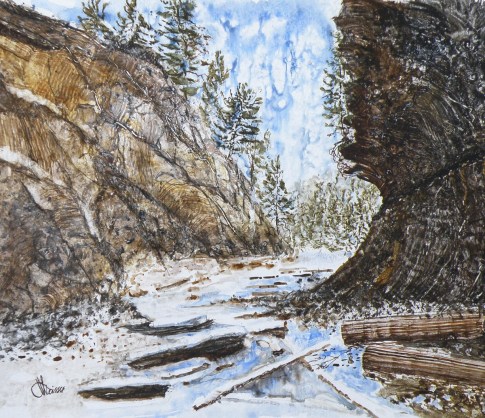
The video cited above challenges painters to do two to three minute painting sketches, which convey the movement and mood and spirit of the subject, without stopping to think and rework. In an effort to ‘do’ and not think, the subject chosen here is a favourite–a place about 20 minutes from our house–called Tranquille Creek Gorge.
Mr. Dunlop’s videos are quite dynamic and aimed more at oil painters a bit more than watercolourists, but full of very encouraging lessons because of the force of his optimistic personality and sense of fun. They are well worth watching, for those who enjoy painting as a means of expression.
….the silt bluffs
November 22, 2015
An area east of Kamloops, B. C., follows the South Thompson River which flows between dramatic limestone cliffs originally formed (it is estimated) 270 million years ago.
Among those cliffs is a gully–a waterworn ravine known as ‘the silt bluffs’, featuring very distinctive rock formations which have the look and feel of something out of a Western movie.
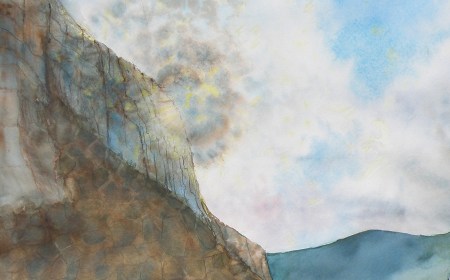
Massive geological formations such as these require some form of treatment by a painter in order to adequately convey their uniqueness and grandeur. This watercolour attempts to do that by purposely choosing to paint directly into the sun.
This part of our landscape gets quite literally baked by heat at midday, so when painting outdoors it is important to get it done quickly.
….November
November 14, 2015
It is the most blessed of months heralding the muted pallet–the toned-down greens, beefed-up greys, complex browns, accents of burnt orange, titian–trees simply/complexly themselves, displaying their line, frost-kissed leaves flashing their last colour, refusing dismissal.
Wonderous November--leaf-whipping, mini-cyclones, clouds suddenly letting forth face-lashing first flakes on towards frost-spongy earth–days framed by late mornings and early evenings, one’s home truly one’s castle, warming against the elements.
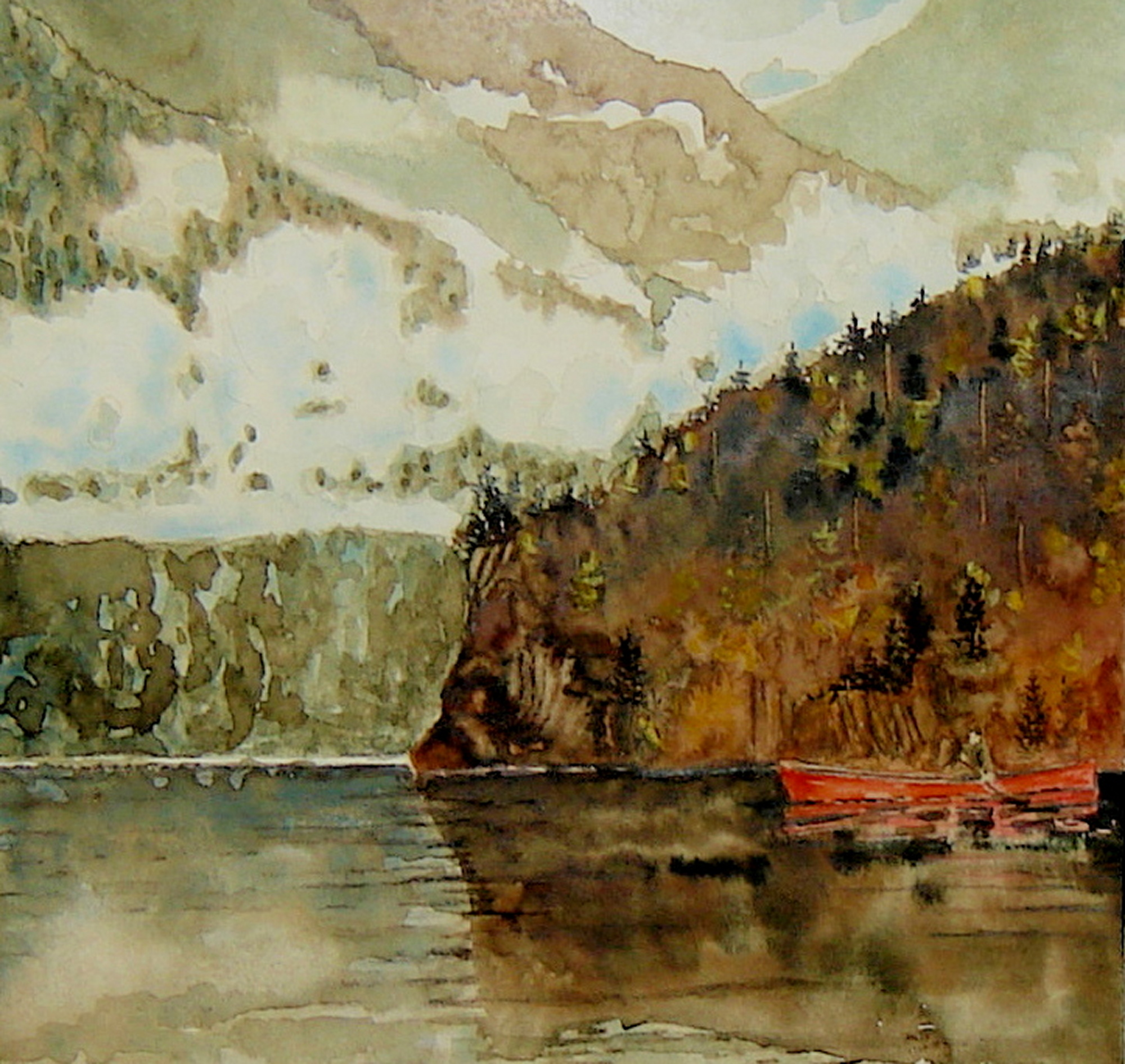
Showboats gone, one paddles purposefully, keeping warm, the lapping sounds musical, deep-throated rooks ricocheting their call round rocky bends echoing, bouncing off glassy surfaces, wood-smoky mists rising.
Banished is the garish, overly-festooned–any and all too-muchness falling away to let be what simply is…..
November
Winter’s cusp
Summer’s compliment
Spring’s concealer
…..downtown, phase 2
November 9, 2015
The Plaza Hotel (completed in 1928) is a five story Spanish Colonial Revival building in downtown Kamloops BC, Canada. It is listed as a cultural heritage site in the Canadian Register of Historic Places.
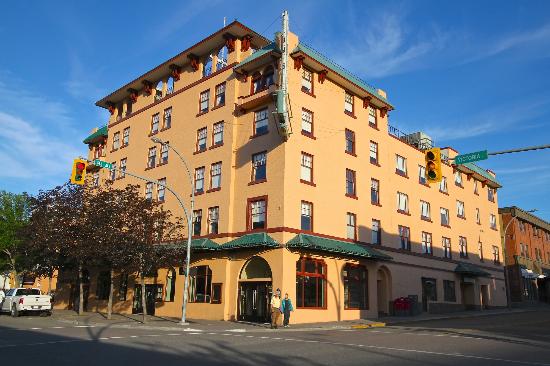
As is so often the case when seeking out subjects for painting, the postcard view isn’t usually very interesting.
The photo used for reference for this watercolour was taken from the rear alley of The Plaza.
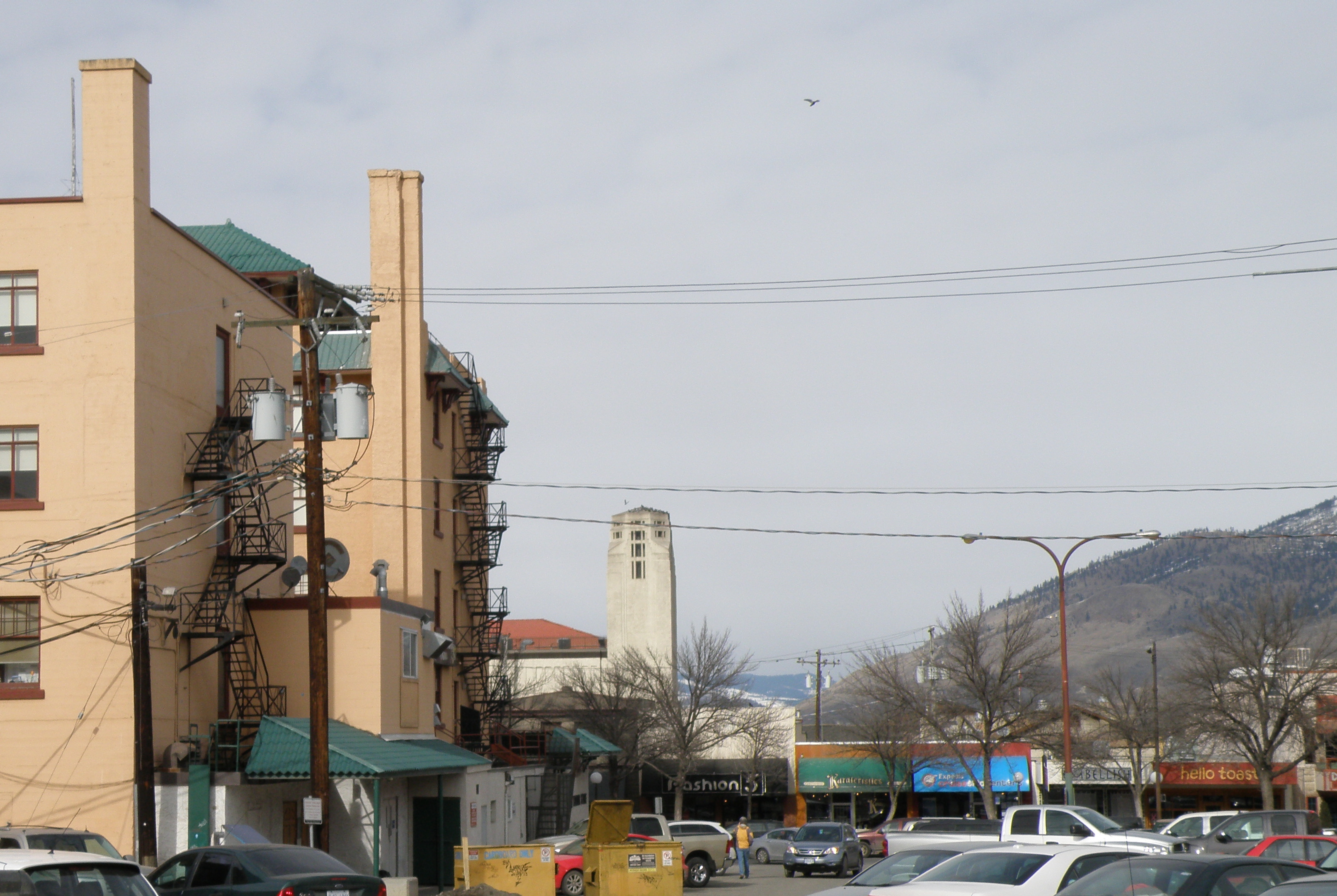
In view is the old Fire Hall tower, with belfry, 73 ft, built in 1935 at a cost of $24,500, when Kamloops had a population of approximately 6,000 (population today is about 100,000). It remains a distinctive landmark.
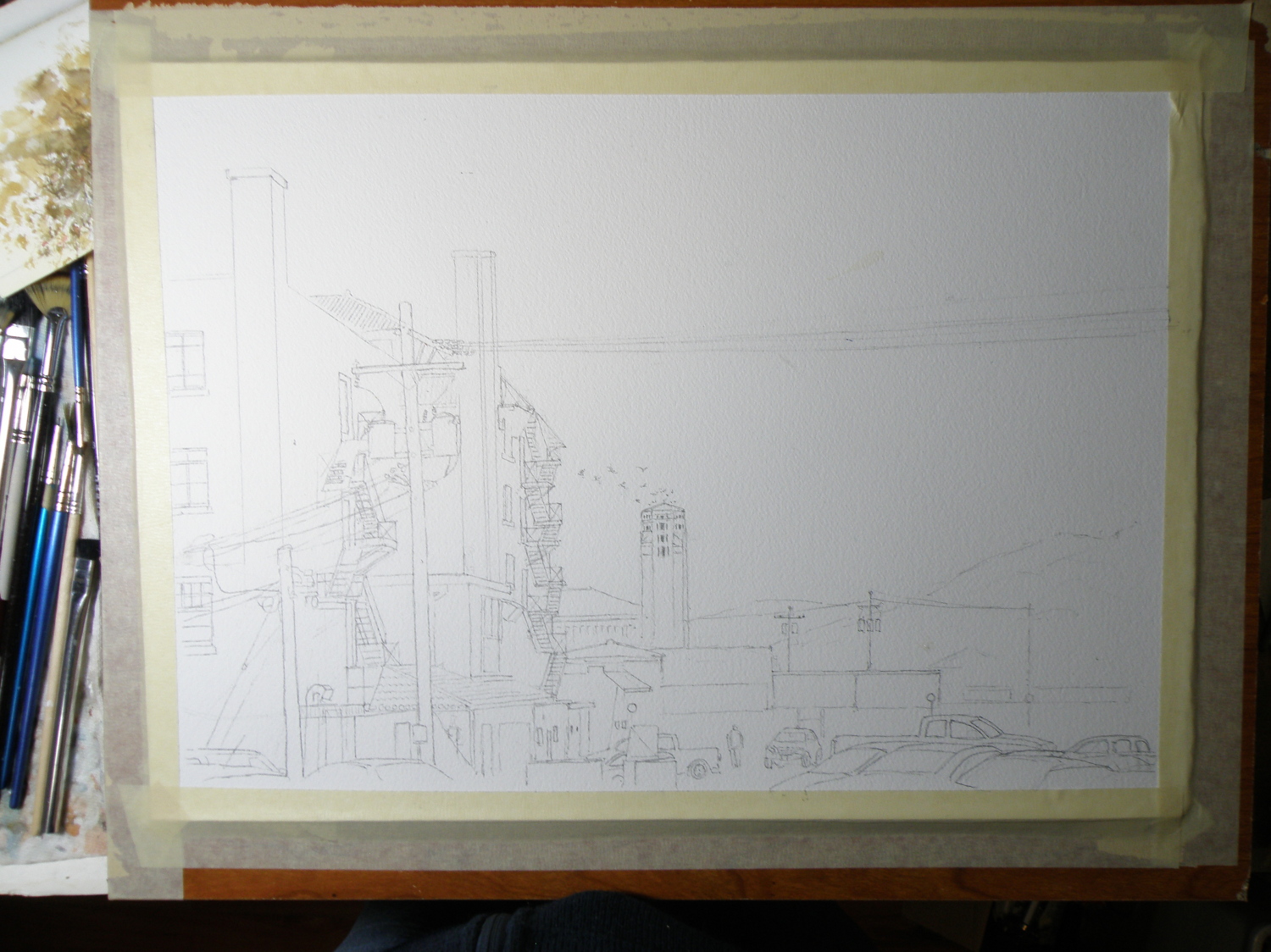
The decision to cast the subject in Winter has to do with wanting to bring some drama to the scene due to there being an overly abundant amount of sky. Pigeons have also been added to give more visual interest.
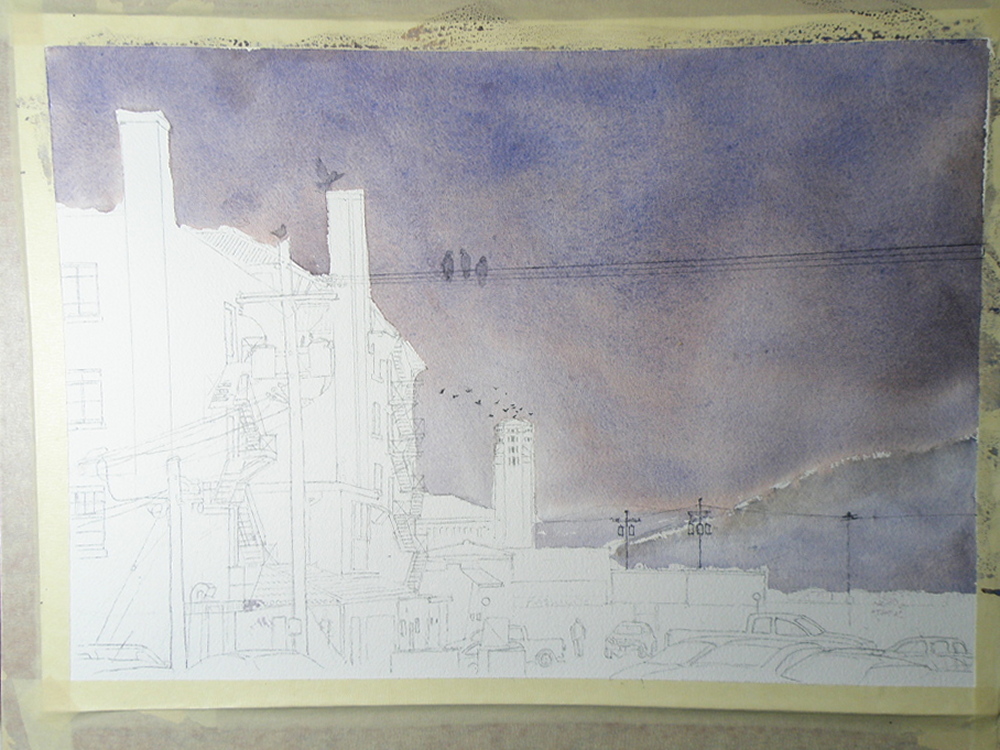
Because the hotel is a very light orange, (which gives off a bit of a pink cast in late afternoon), the sky is a wash of quin red, quin yellow and ultramarine blue in order to help incorporate the tones of the building into the rest of the painting. So quin red and quin yellow will be used as the shade of the hotel as the painting progresses.
hot
August 24, 2015
This has been one. hot. summer. Right now smoke from fires burning on the Washington State/Canada border is blowing up our way due to Southwest winds. It’s an acrid, doused campfire smell and hazy even when just looking across the street.
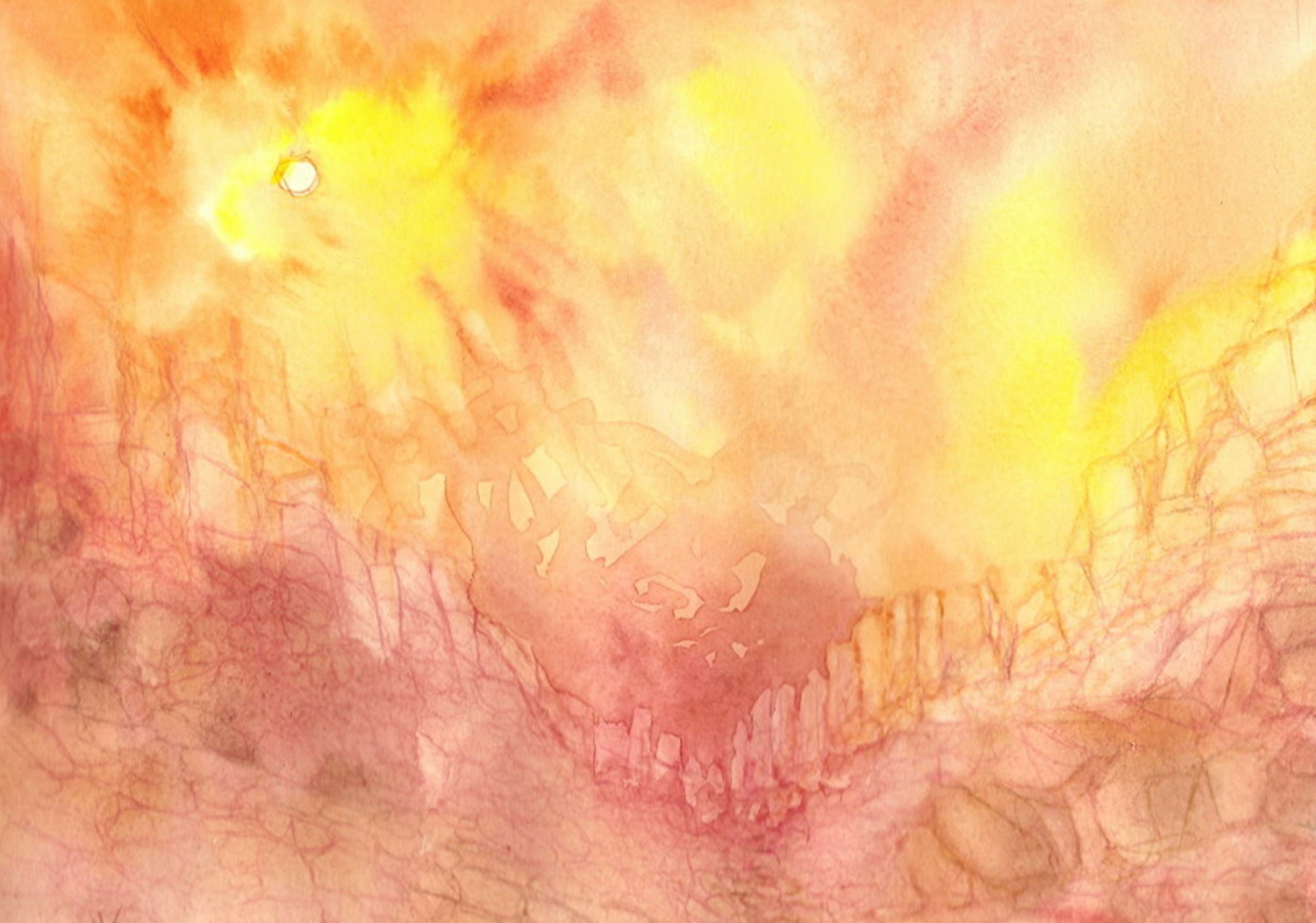
‘The Silt Bluffs, Kamloops’, watercolour on Hot Press #140 Arches, 19cm x 24cm, (7.5″ x 9.5″) sold
Oh yeah. I’m done. Bring me a nice serving of September.
breakers
July 22, 2015
The depicting of waves in watercolour is particularly challenging when one has decided on being a ‘purist’ by refraining from both opaque white and masking fluid. Personally speaking, masking fluid has become so offensive in terms of smell (its natural thinner, in case anyone wonders, is ammonia, which is why it smells so awful–but a little ammonia will indeed thin thickened masking fluid, if stirred in slowly), and damaging brushes (even when dipping them in soapy water first), and causing the hardest of edges when removed, that it’s rarely a choice for me. It does make for quite lovely snow squalls when flicked from a stiff toothbrush, I must say–and great fun, too.

‘Third Beach, Vancouver’, watercolour, painted on location, 35.5cm x 23cm (14″ x 9″), Arches Hot Press 140lb. Paper
Breaking waves challenge any student of watercolour (and every single person working in this medium will forever be a student) because of having to leave paper white for crest foam, swash, and the receding backwash effects. This, coupled with understanding which part of the wave receives more or less pigment, not to mention the change of pigmentation if backwash is curling up and drawing in sand at the same time, comes the added realisation that sky is being reflected off top surfaces the further from shore one looks.
There truly is nothing for it but to get right into the actual physics of spilling, surging, plunging, and collapsing breakers, each of which exhibits its own characteristic properties–ones our eyes are very accustomed to and therefore recognize in a flash when viewing surf–properties a viewer expects to be reproduced in paintings (if the painting is trying to conform to the challenges of representational art, that is).
https://en.wikipedia.org/wiki/Breaking_wave Drawing each of these examples over and over again makes wave action less of a mystery and eventually becomes familiar and far less challenging. However, a single line of waves is always backed by more, multiplying the visual dynamics, adding to the confusion of having to depict row upon row of breakers. Where does foam end and the gathering wave behind it start? For this, it is very instructive to carefully observe photographs and again draw over and over how this actually does look.(https://en.wikipedia.org/wiki/Breaking_wave) Only then, personally speaking, do I find painting on location not as daunting, for stopped action is easier to analyze than sitting in front of actual pounding surf.
Painting water is a dedicated pursuit all of its own. There is a painting friend of mine who includes water in every single piece he does because he is dedicated to the depiction of water, whether in the form of rain, surf, river, lake, stream, waterfall, because in each case there is a lifetime’s worth of challenge.
rufous hummingbird miniatures
July 18, 2015
The rufous hummingbird (Selasphorus rufus) is a small hummingbird, about 8 cm (3.1 in) long with a long, straight and very slender bill. These birds are known for their incredible flight skills. Some are known to fly 2,000 mi (3,200 km) during their migratory transits.
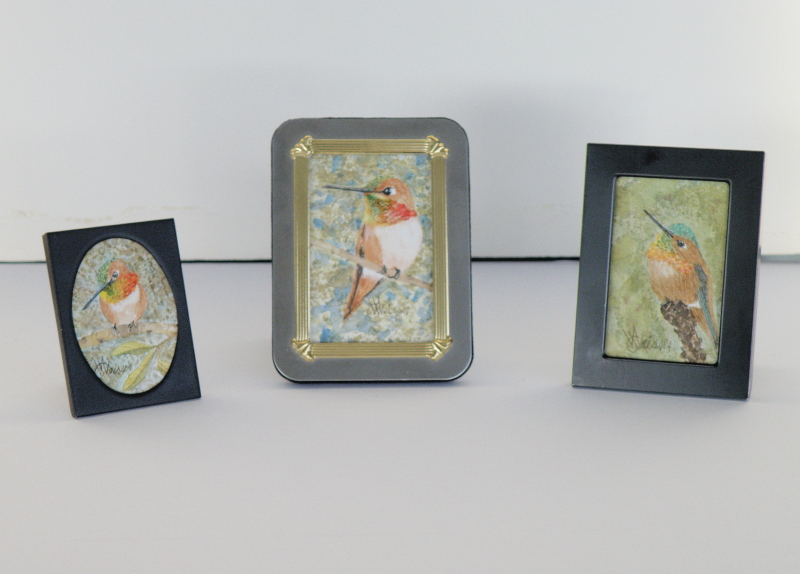
Rufus & Allen’s Hummingbird miniatures, approx. 3.8cm x 5cm (1.5″ x 2″), Arches Hot Press 140 lb. paper
The adult male has a white breast, rufous face, upper-parts, flanks and tail and an iridescent orange-red throat patch or gorget. Some males have some green on back and/or crown. The female has green upper-parts with some white, some iridescent orange feathers in the center of the throat, and a dark tail with white tips and rufous base. Their breeding habitat is open areas and forest edges in western North America from southern Alaska to California. This bird nests further north than any other hummingbird.
The female is slightly larger than the male. Females and the rare green-backed males are extremely difficult to differentiate from Allen’s hummingbird. (source: https://en.wikipedia.org/wiki/Rufous_hummingbird)
[In the photo above, the pre-dawn light produced a less-than-sharp picture. Photography is an artform unto itself. This is a digital image produced by a Kodak Brownie-type picture taker.]
…..draw a bird day
July 8, 2015
Kwakiutl First Nation is a First Nations government based on northern Vancouver Island in British Columbia, Canada, focused on the community of Port Hardy, British Columbia in the Queen Charlotte Strait region.
A Kwakiutl Native legend has it that the eagle once had very poor eyesight. Because it could fly to the highest treetops, however, a Chief asked the eagle to watch for invading canoes. Anxious to assist, the eagle convinced the slug, which in those days had excellent vision, to trade eyes temporarily.
The slug agreed, but when the eagle’s sentinel duties were finished, the eagle refused to trade back eyes. Thus, goes the legend, not only is the eagle’s sharp vision accounted for, but also the slowness of the slug.
source: [http://www.baldeagleinfo.com/eagle/eagle-myths.html]
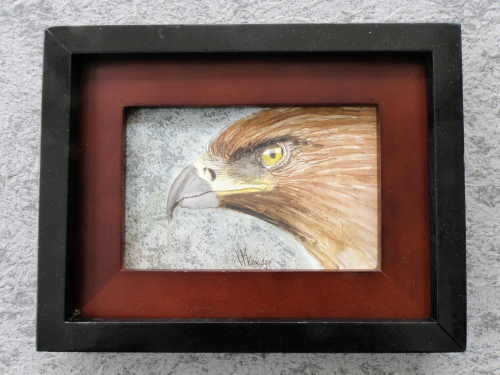
‘Golden Eagle’, watercolour, 9cm x 14cm (3.5″ x 5.5″), Arches 140 lb. Hot Press Paper
Laura, over at www.createarteveryday.com announced a challenge to draw birds today. And ‘Monday,Tuesday,Wednesday’ ‘s contribution was The Nevada State Bird, the magnificent Mountain Bluebird. Kirk’s contribution is The Baltimore Oriole, another gorgeous bird.
heatwave relief
June 24, 2015
IT IS BARELY PAST the first day of Summer and temperatures here in Southern British Columbia, Canada, are scheduled to climb to 40C (104F) and stay there. It is feared the heat and drought affecting California is heading North, Along with such heat, thunderstorm probabilities rise, and they become fire starters. By August there’ll be what weather reports term ‘local smoke’–a haze hanging over everything–accompanied by the sound of helicopters and planes working to douse flames in affected regions close by.
My favourite month is November. It is both an exciting and contemplative month–exciting because any day, any moment I might step out to feel those fortifying winds suddenly becoming the first snow squall. Contemplative, because the fog rising from the closeby Thompson River mixes with wood stove breathings and the last of the leathery oak leaves falling to join the others, invites thoughts on things ethereal and eternal.

“Logging along Jamieson Creek Road”, watercolour, 20cm x 25cm, (8″ x 10″) Arches Hot Press 140 lb Paper, unsold
As a child, there was nothing more beautiful than what I called ‘purple snow’–that snow which signalled to us that we’d best take only one more turn sledding down Dead Man’s Hill (many years prior, legend had it, a man went down its twists and turns standing on his sled and smacked into a maple–back in the old days, when men apparently went sledding). Purple snow meant dinner. Purple snow meant finally discovering just how cold our digits actually were– thawing under a running cold faucet–pins and needles hot pink cold.
And even now, there is nothing to me more beautiful than purple snow. On this 40C second day of Summer, all I can say is, Lord get us through to November.
on display
June 22, 2015
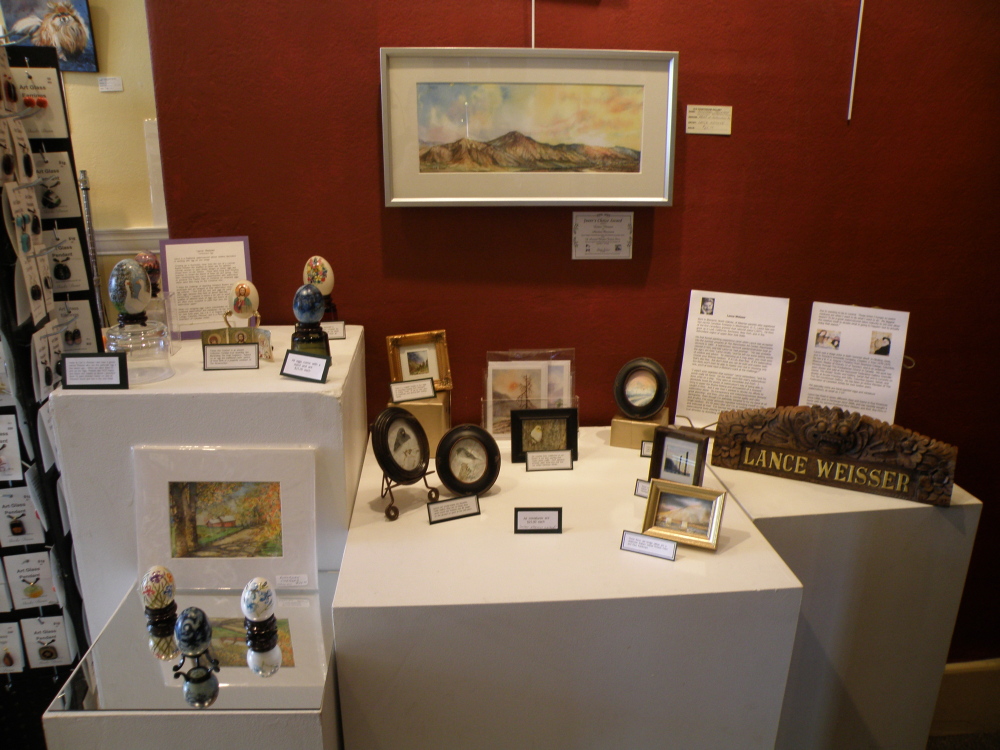
THE OLD COURTHOUSE GALLERY CO-OP and Gift Shop got its start in 2007. The Courthouse itself is a Kamloops, B. C., landmark, built in 1909.
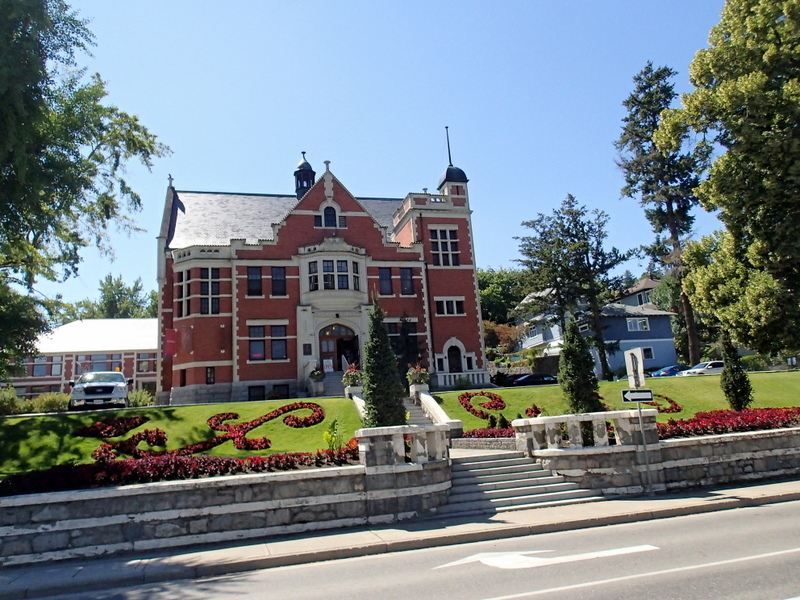
photo: Okanagan Art Review.com
A superb and intact example of the Edwardian Baroque style, its interior demonstrates an Arts and Crafts sensibility.
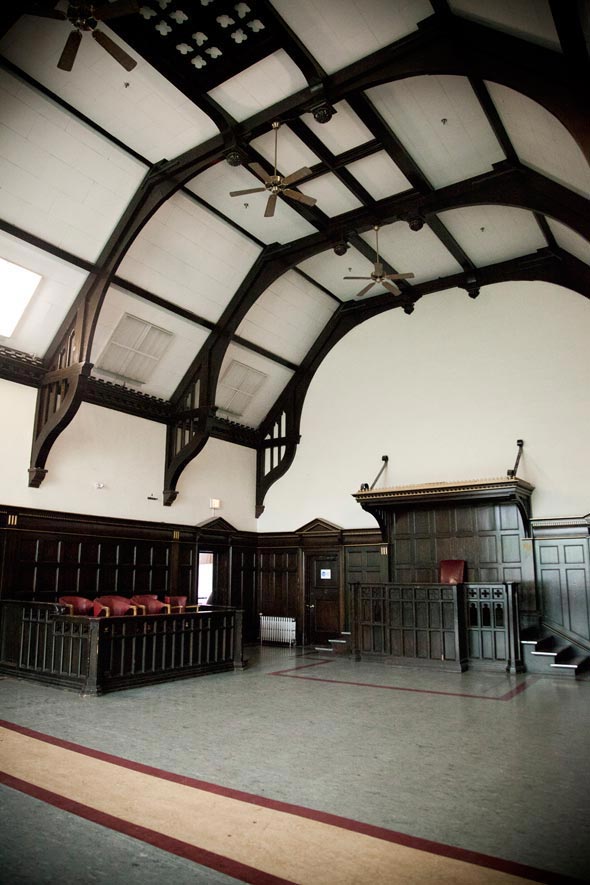
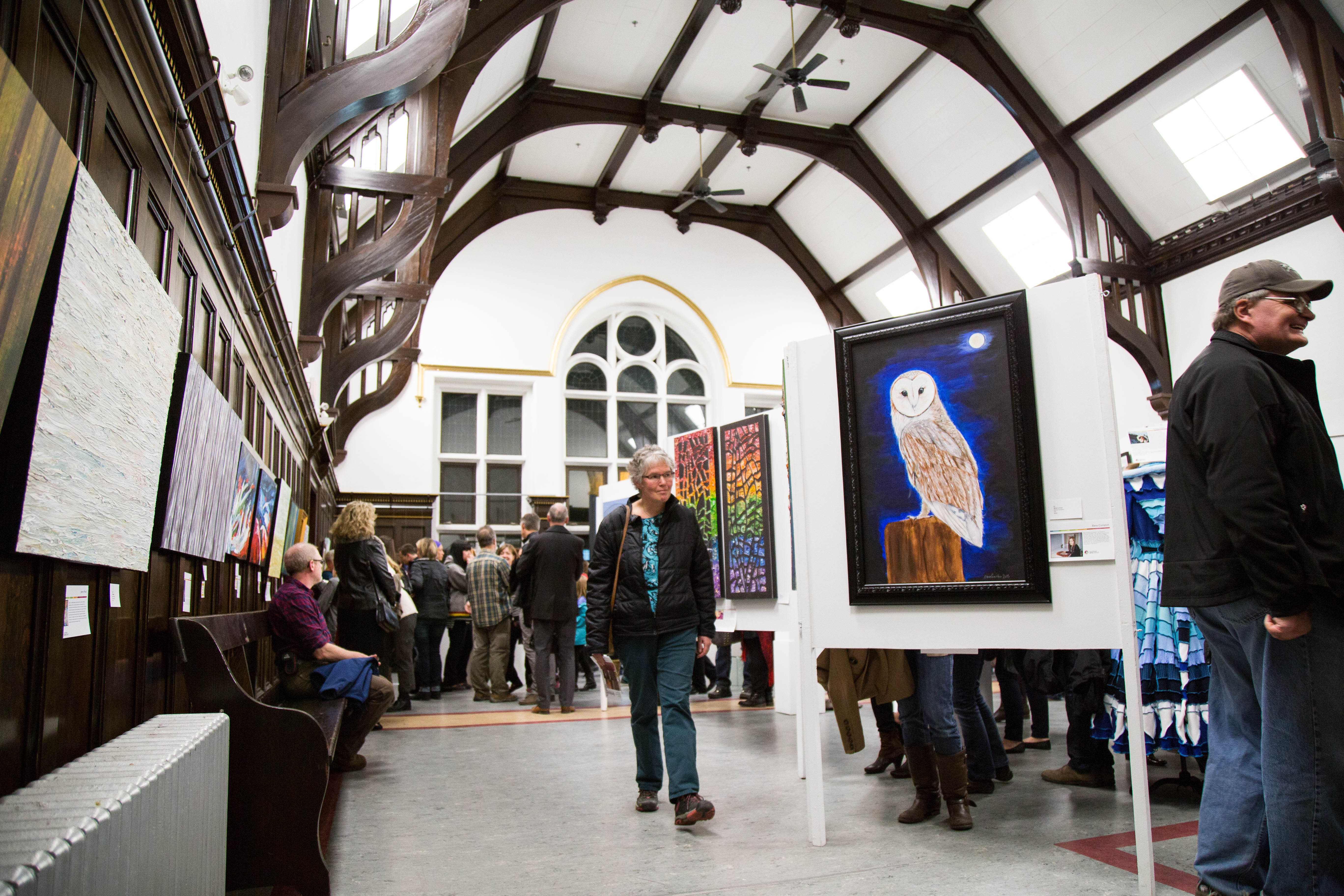
Mainly symmetrical, the building features an elaborate central entry, prominent parapet gables and a corner square-domed tower. It was constructed primarily of local brick, British Columbia stone such as granite, limestone and slate, and wood from local lumber mills. The choice of materials symbolized a commitment to the use of quality British Columbia products, a source of pride in this provincial building. An exceptional level of design and craftsmanship is evident throughout the building. It is one of the most accomplished designs of prominent architects Dalton & Eveleigh, and the stained glass came from the studio of Charles Bloomfield. (source: http://www.historicplaces.ca/en/rep-reg/place-lieu.aspx?id=12791)
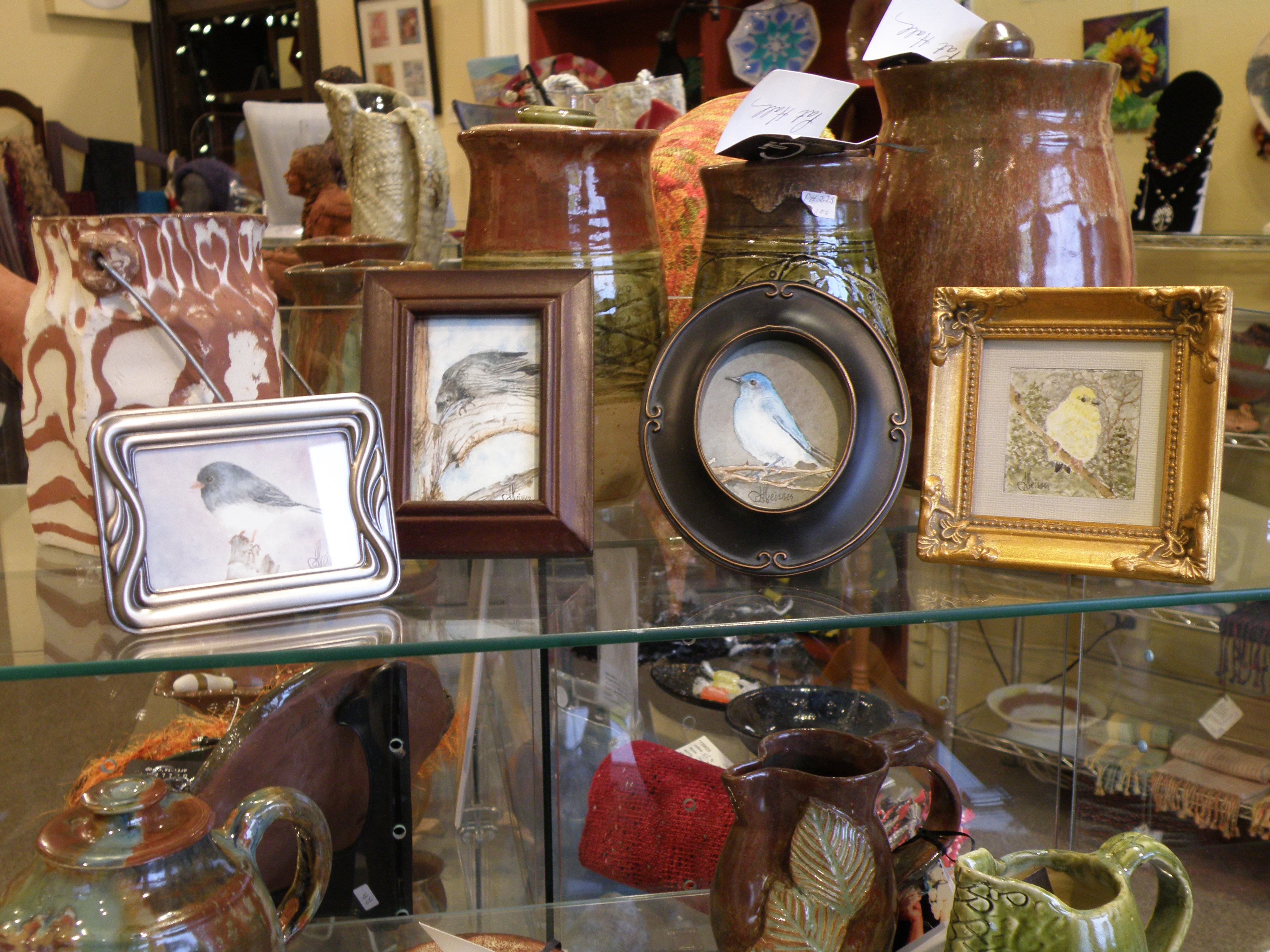
Our Artists’ Co-op now consists of sixteen local artists, whose work is on display within one of the rooms of the original Courthouse. We are a group made up of several potters, glassmakers, jewelry makers, painters, two photographers, one dollmaker, and one weaver. I am currently the President.

Every month we schedule one or two of us to be the Featured Artists who occupy a special area just inside the entrance.
We are open five days a week, all year round, and our biggest event is called Christmas At The Courthouse where we invite and jury in arts and fine crafts vendors to sell their wares throughout the entire building . . .

mountain pine
June 20, 2015
In January 2011, a Pacific ponderosa pine in the Rogue River–Siskiyou National Forest in Oregon was measured with a laser to be 268.35 ft (81.79 m) high. This is now the tallest known pine. The previous tallest known pine was a sugar pine.
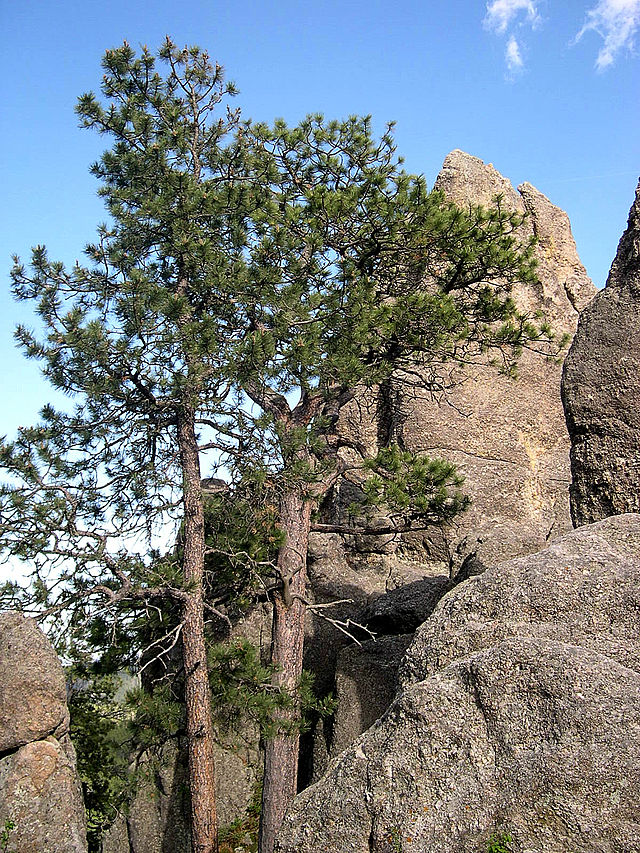
Ponderosa Pine photo by Jason Sturner
The needles are harvested by First Nations and other local artisans, then washed and woven into Ponderosa Pine needle baskets . . .
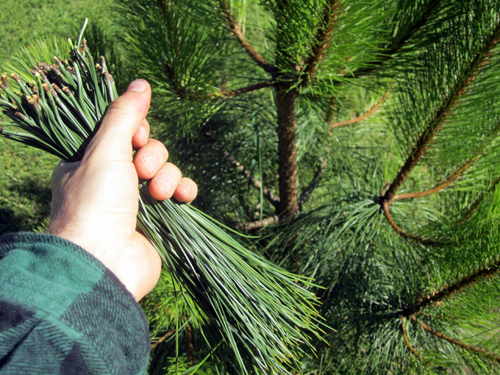

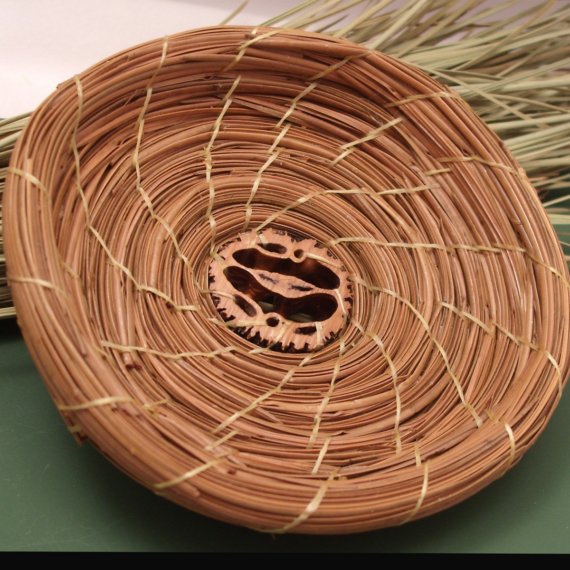
(photos: PineGardenBaskets, Etsy)
The mountain pine beetle is just over six millimetres long (about the size of a grain of rice). But the tiny forest insect has infested huge areas of mature pine around the interior of British Columbia, causing colossal amounts of damage on B.C. forests.
The beetle likes mature pine and mild weather. Because B.C. has more old pine than ever before, and has had several consecutive mild winters, mountain pine beetle populations have exploded to epidemic levels. (source + photo: Government of British Columbia)
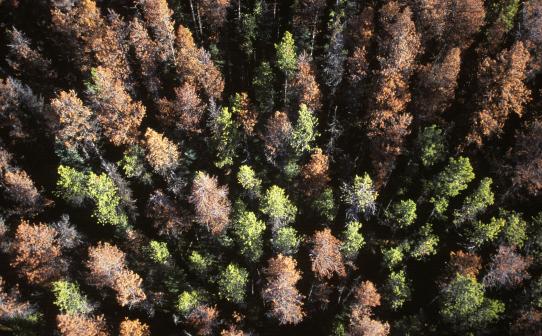
Here in Kamloops, B. C., even pines growing in people’s yards get ravaged–as much as in our great forests. It is a helpless feeling, yet more and more innovative products are being developed from pine beetle timber.
Below is the Richmond, B. C., Olympic Skating Oval, totally made from pine beetle-killed timber. The wood has retained all the pine beetle bores and markings, and has been acclaimed as a ‘truly majestic work of art and design’.
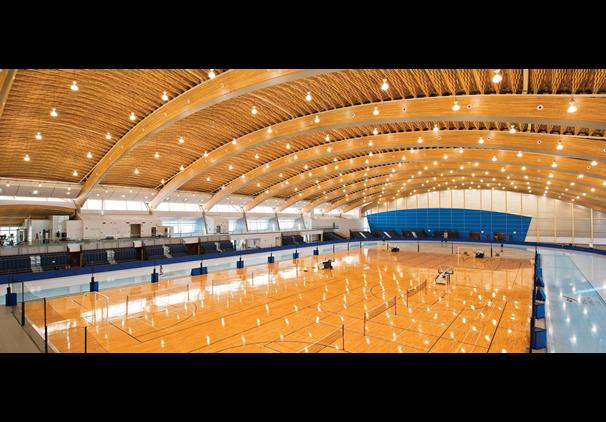
photo: Architectural Review
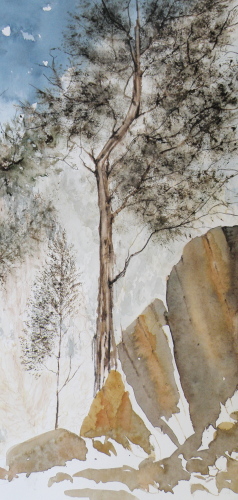
‘Mountain Pine’, (study), watercolour, 15cm x 36cm, 6″ x 14″, Arches Hot Press 140 lb. Paper, unsold
chestnut chickadee miniature
June 16, 2015
The Chestnut-backed Chickadee uses lots of fur in making its nest, with fur or hair accounting for up to half the material in the hole.
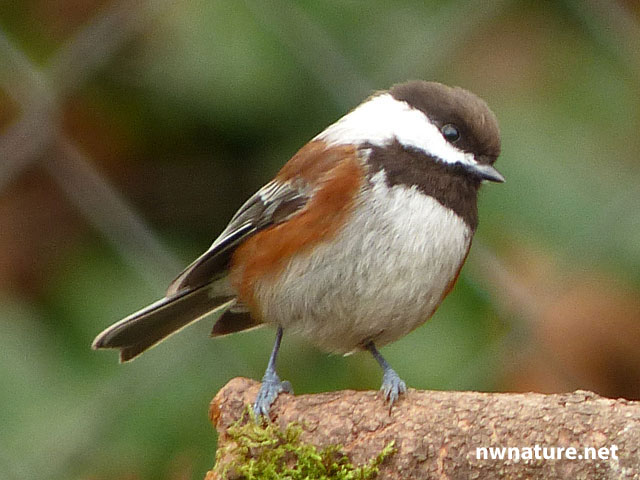
nwnature.net
Rabbit, coyote, and deer hair are most common, but hair from skunks, cats, horses, or cows appears in nests as well. The adults make a layer of fur about a half-inch thick that they use to cover the eggs when they leave the nest. (source: allaboutbirds.org)
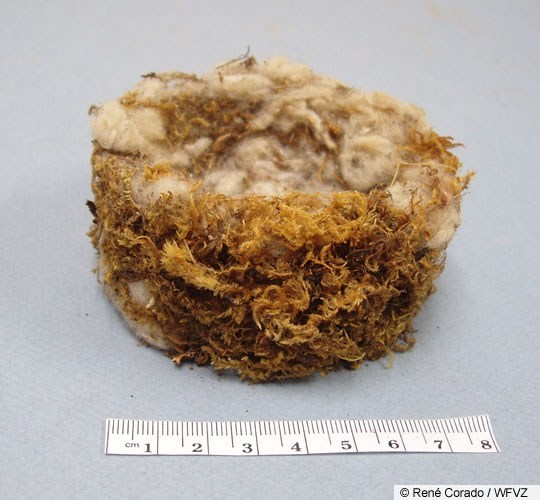 © René Corado / WFVZ
What’s not to like about these chittery, agile, and nimble bits of joy–so accommodating, they’re willing to eat out of an uplifted palm. At feeders, they flit in, impetuously seize a seed, cock their heads and in a mercurial moment are pounding the life out of their shell-encased prize, hammering against a solid branch.
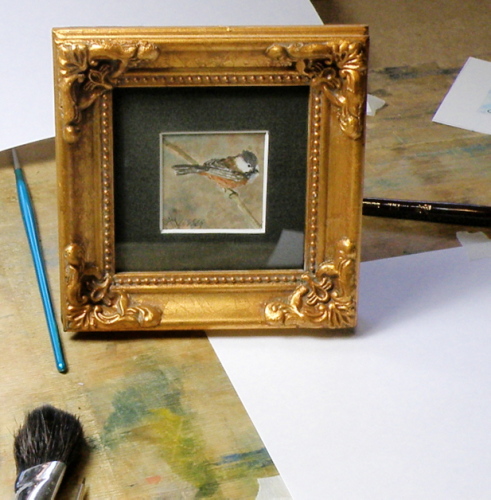
“Chestnut Chickadee”, 2.54cm x 2.54cm (1″ x 1″), watercolour on Arches Hot Press Paper, sold
When annoyed, they chee-chee-chee-chee at any feeder chaos, curtly muscle back in, and sprightly dart back up to pummel their sunflower seed in privacy.
tranquille creek gorge
June 3, 2015
ANCIENT FLOWS OF LAVA have left our regional landscape (Kamloops, B. C.) with dramatic canyons, a single lane dirt road skirting the edges.

‘Tranquille Creek Gorge’, watercolour 23cm x 41cm (9″x16″) Arches Hot Press 140 lb. Paper, sold
MY PAINTING FRIEND MAX drove me through this arid landscape, only 10 minutes outside a city of nearly 100,000. Every so often she’d tell me of cars which had not been successful at executing a snowy, icy, tricky piece of road only to careen down the sides. At one place, the car was still there, making me both dizzy and almost nauseous, leaning over to see its rusting bulk caught between broken pines and rock.
‘MY GOD, WHERE WERE THEY HEADED?’ I’d asked. ‘Home, of course’, Max pointed ahead. And there was a small grouping of houses not far from the road, some fencing in horses or livestock–one had alpacas–and looking semi-deserted, though that was far from the case. Dogs barked at Max’s pickup as we threaded through and headed into yet more wilderness. ‘They take this road to Kamloops and back?’ — it seemed to my chicken, urban-minded guardedness a scary place to build one’s home. ‘Only for shopping, or a night on the town’, Max said. ‘Which is why someone sometimes doesn’t make it home–especially in the Winter.’
geology and art
May 31, 2015
ACCORDING TO GEOLOGIC FINDINGS, Kamloops, B. C., has limestone which dates back 270 million years. The earth itself is estimated to be some 4.5 billion years old. So the rock and sediment of Kamloops is relatively young in comparison, which is due to it having once been part of the ancient Pacific Ocean floor. Fossils in the area show ancient ocean plankton.
THE DOMINANT AND STRIKING, ANCIENT, WORN-DOWN MOUNTAINS within City Limits are the remains of ancient volcanic activity, and are remarkably bare of trees, gaining beauty from sunrises and sunsets, moonlight, and an annual ‘greening’, when the rains of Spring bring out the new leaves of Sagebrush and native grasses.
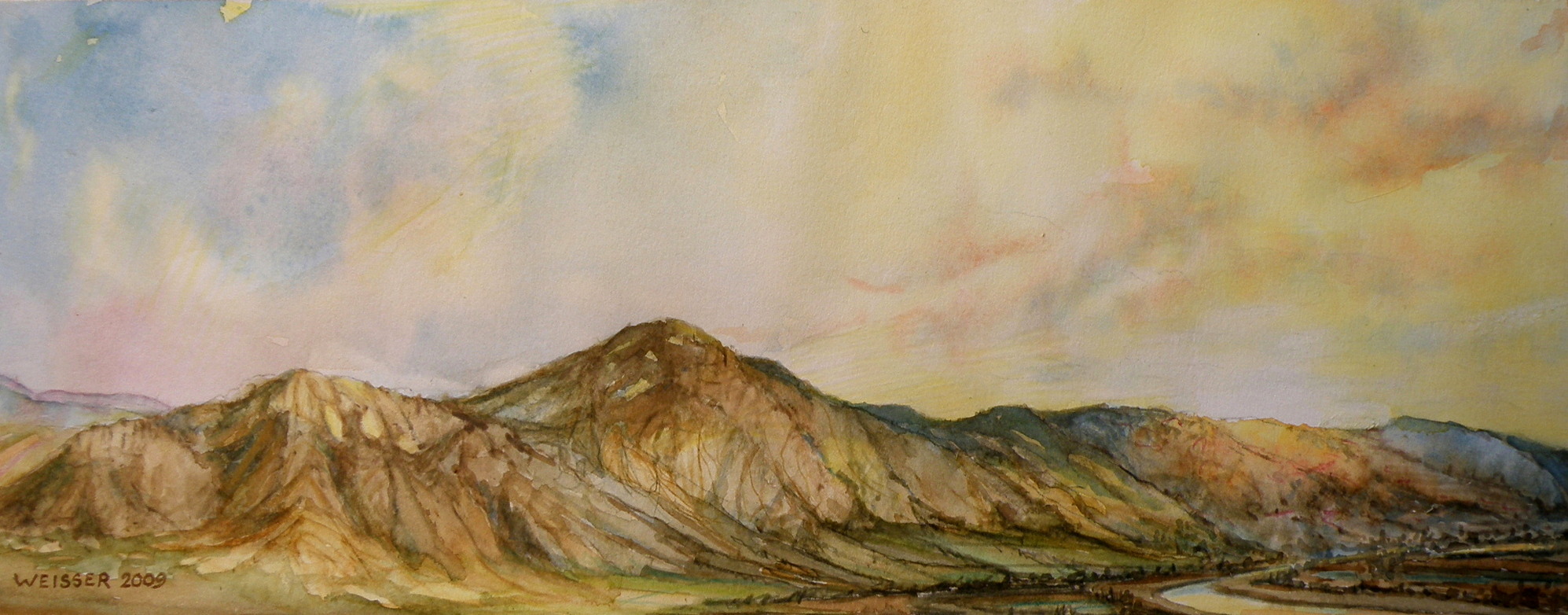
‘Signature Mountains of Kamloops, B. C.’, watercolour on Arches Hot Press Paper 140 lb., R. Foster Collection
finch miniature
May 28, 2015
THE HOUSE FINCH IS A RECENT INTRODUCTION from Western into Eastern North America (and Hawaii), but it has received a warmer reception than other arrivals like the European Starling and House Sparrow. That’s partly due to the cheerful red head and breast of males, and to the bird’s long, twittering song, which can now be heard in most of the neighborhoods of the continent. If you haven’t seen one recently, chances are you can find one at the next bird feeder you come across. (source: Cornell Ornithology)
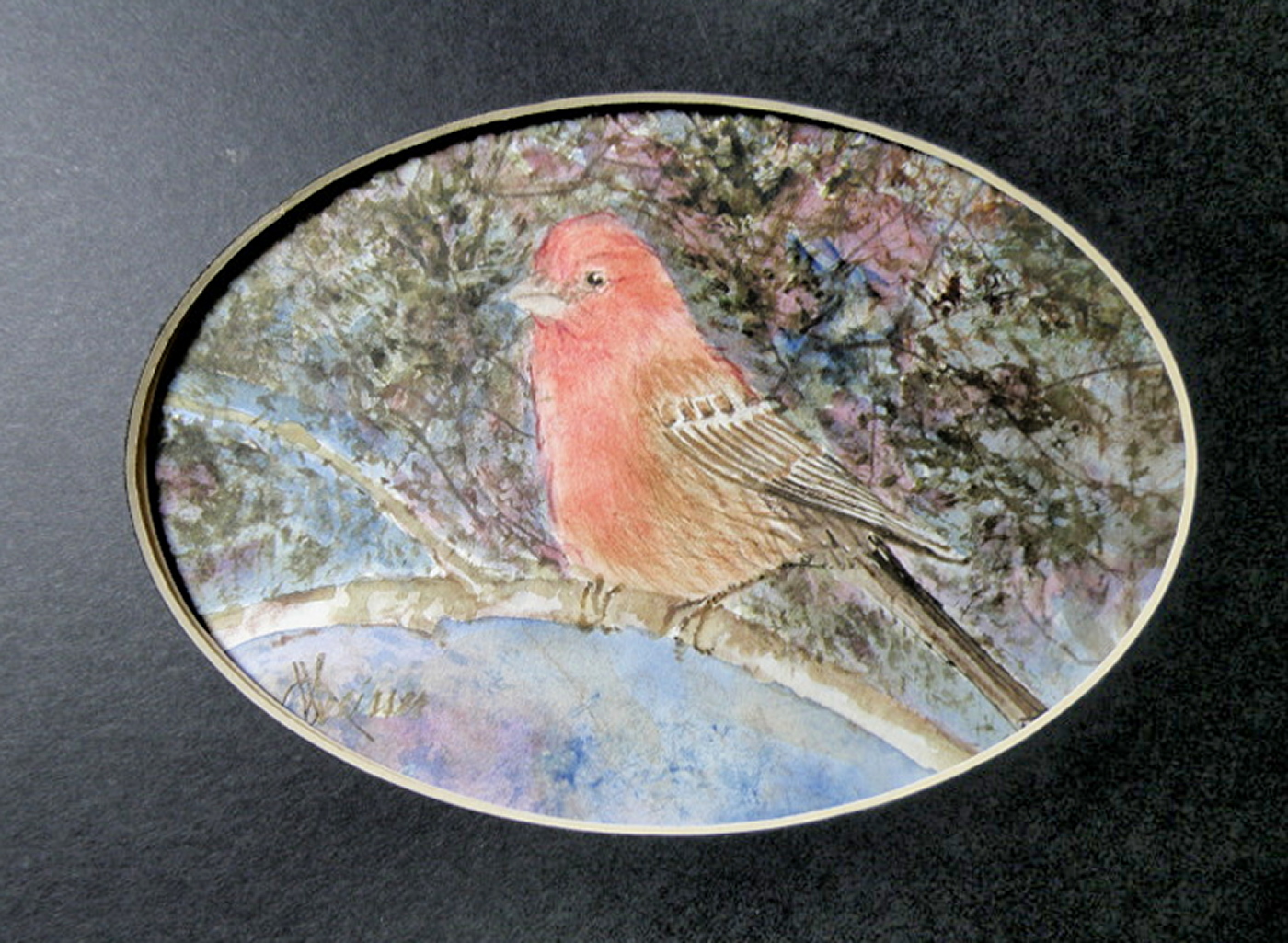
‘House Finch’ 7.6cm x 11.4cm, (3″x 4.5″), watercolour on Arches Hot Press 140 lb. Paper
WHEN WE LIVED IN QUEBEC it was easy to tell the difference between a House Finch and a Purple Finch, simply because one was red and the other was the shade of pickled beets. Truly, to me at least, the Purple Finch was the more impressive, whereas a House Finch sort of came across as a Sparrow who’d fallen into some cherry koolaid.
IN WESTERN CANADA we do not have Purple Finches. The House Finch has become a delight in its own right, particularly because it is indeed attractive, and has truly a most melodious and lovely song. They are not overly aggressive and take turns at the feeders with their usual companions, the Goldfinches.
wee glimpses
May 26, 2015
PAINTING OUTDOORS has a way of getting a person to make judgment calls quickly, and in our area it is quite simply the heat of the day.
KAMLOOPS, B.C., IS UNIQUE IN THAT its mountainous hillsides are grass-covered with considerable sagebrush but little tree growth to the 900m level, creating what is known as an inverted tree line.
IN MOST PLACES TREES WON’T GROW above a certain level due to the lack of precipitation, but in Kamloops, they won’t grow below a certain level due to the lack of precipitation. We are known as The Sunshine Capitol of Canada, receiving over 2,000 hours of sun annually.
IOW, IT IS HOT. And since sun and heat are our landscape’s signature features, painting a local watercolour outdoors demands sitting right the heck out there.
THAT IS WHY IT MAKES GREAT SENSE to me to choose to do this by way of painting miniatures.
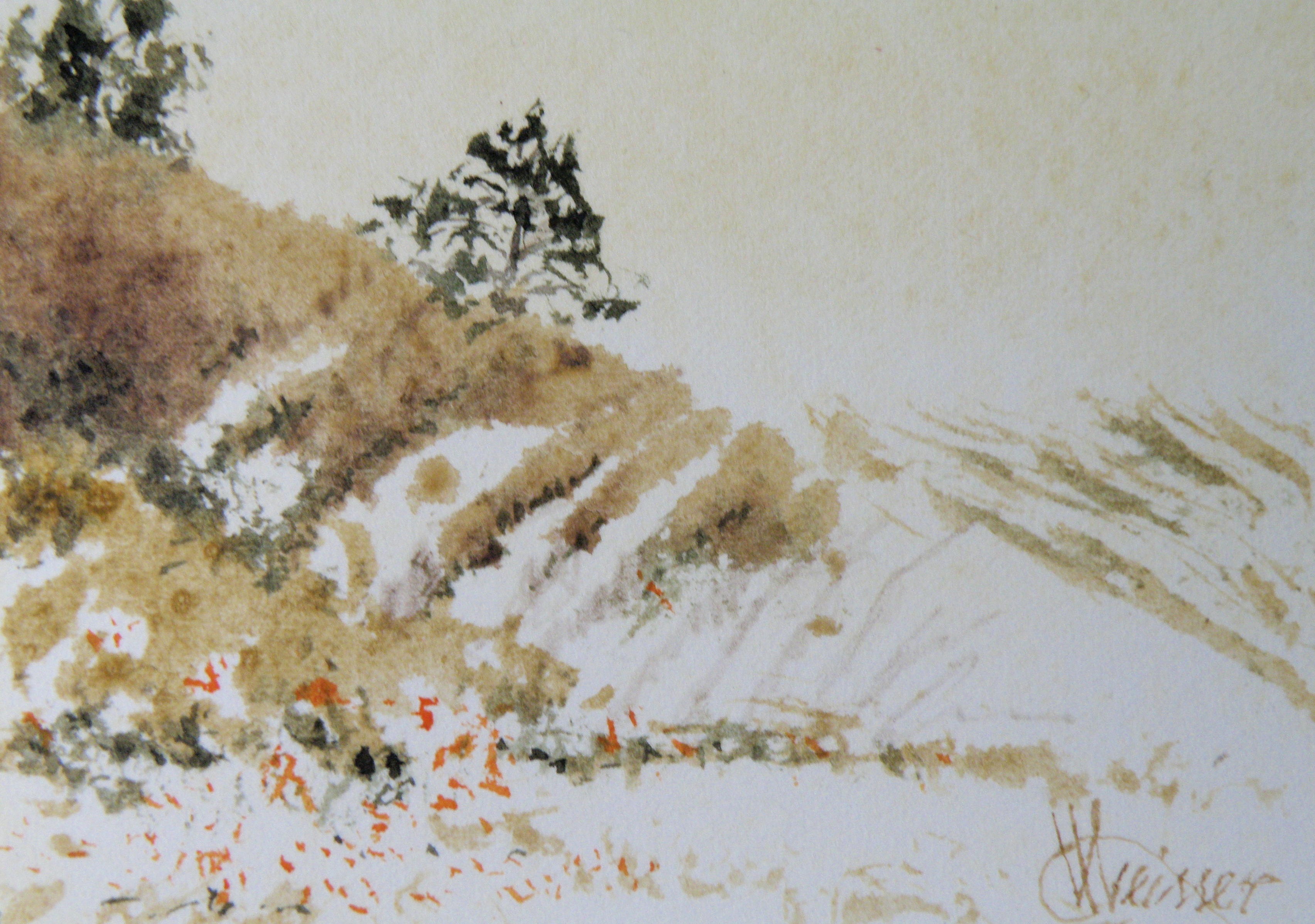
‘A Kamloops August’, watercolour, 6.35cm x 8.90cm (2.5″ x 3.5″), Arches Hot Press 140 lb. paper
MINIATURES demand quick thinking and choosing the elemental–the scene’s compositional essences–getting them down efficiently and thoughtfully, though, at the same time, quickly.
A GOOD MINIATURE can serve as the template for a much larger, studio piece. And good miniatures stand up very well all by themselves. This particular one has been accepted into two different juried Federation of Canadian Artists Shows, including the annual ‘Small, Smaller, Smallest’. It was, in that show, the very smallest of the lot. And that made me very happy!
mountain storm
May 24, 2015
MOUNTAIN STORMS ALWAYS COME WITH high winds and occasionally with hail, and here in Kamloops, British Columbia, are often felt in one part of the city and not in others. Being a city of roughly 90,000, built around, about, and on top of mountainous terrain, the overall elevation is about 350 meters (1,125 ft). There can be terrible flashes and crashes and gusts–much huffing and puffing–with the promised deluge itself being delivered everywhere else but on our crispy, thirsty yard and gardens.
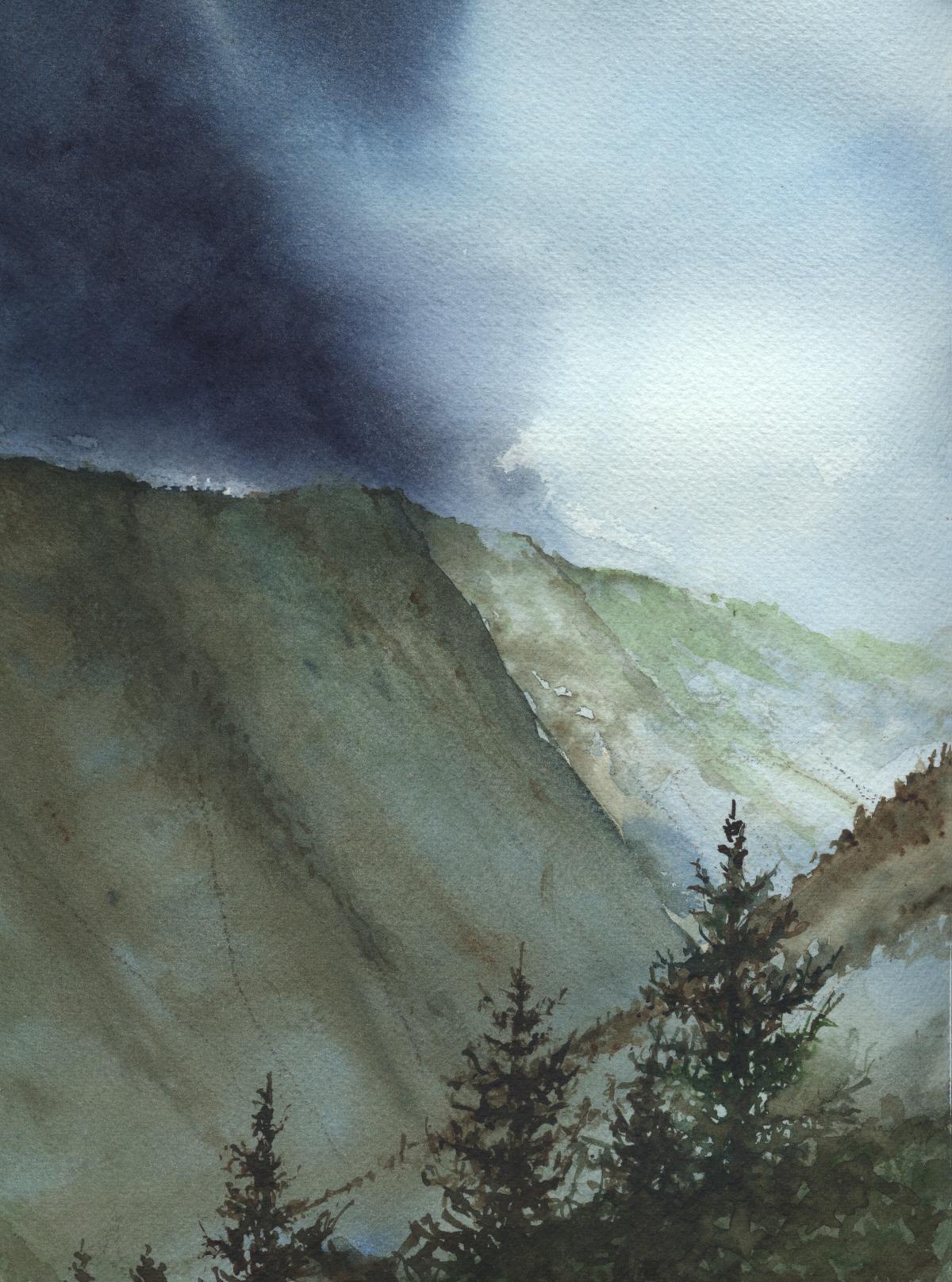
‘Summer Storm’
watercolour, 30cm x 23cm, (12″ x 9″), Arches Cold Press 140 lb. paper,
G.W. Weisser Collection
showstoppers
May 22, 2015
SOME BIRDS ARE JUST LOOKERS. Here in the Southern Interior of British Columbia we have a few worthy of stopping traffic.
NOT BEING MUCH OF A PHOTOGRAPHER–a person who snaps pictures, really–I can only share my photos of some of our local showstoppers, the first being a …..
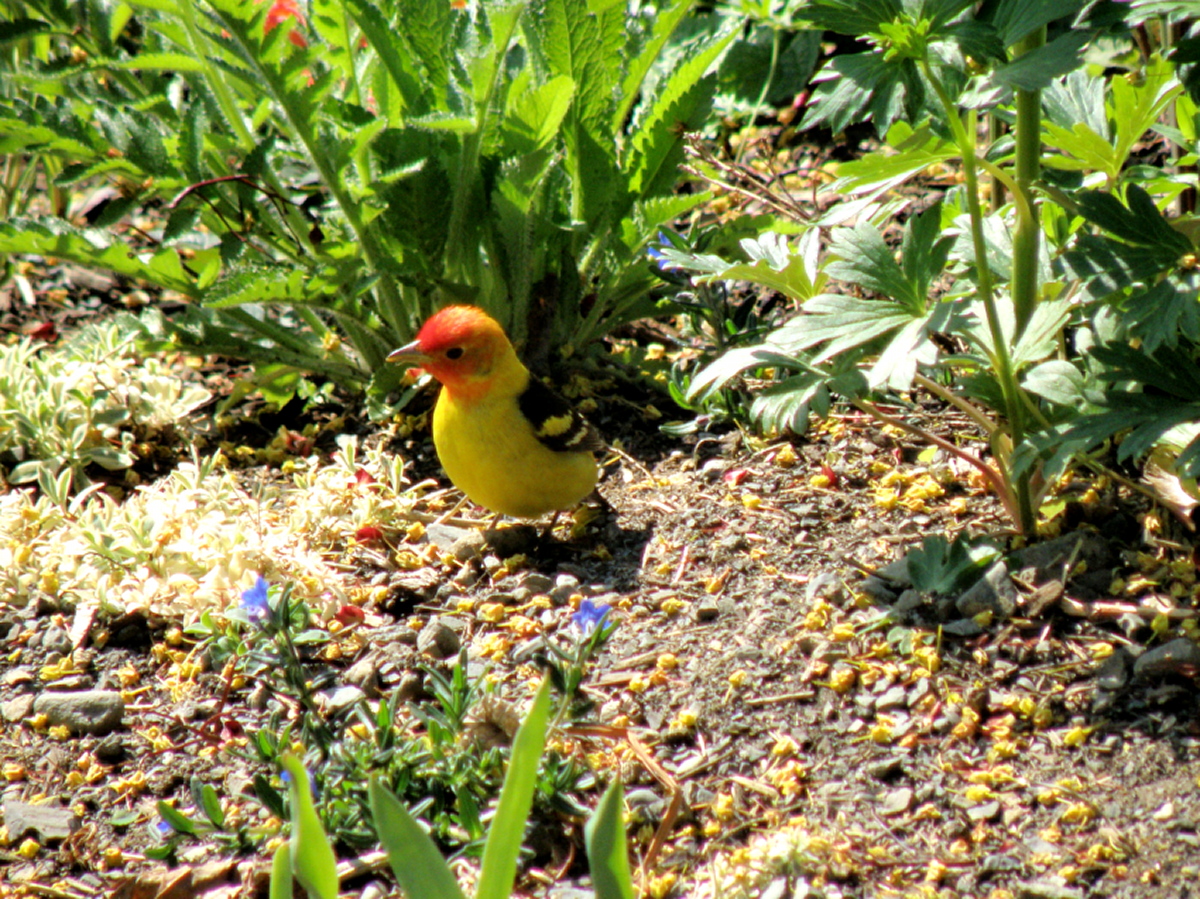
Western Tanager in the front garden
Tanagers come here to nest, as do many songbirds
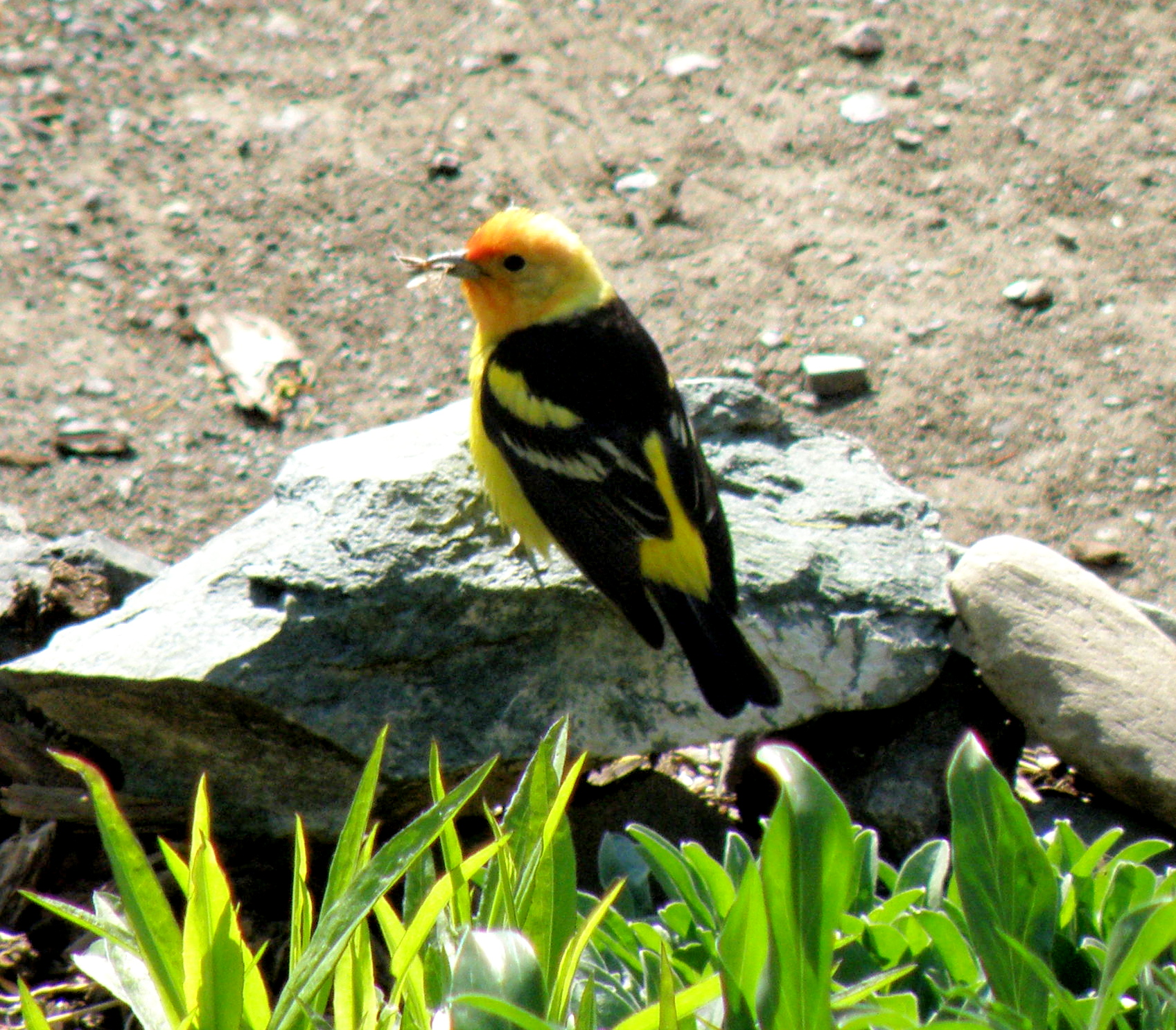
Spring, 2011
ANOTHER LOOKER OF A BIRD is the …..

Pileated Woodpecker, January, 2011
AND A GREAT FAVOURITE OF MINE IS a. . . .
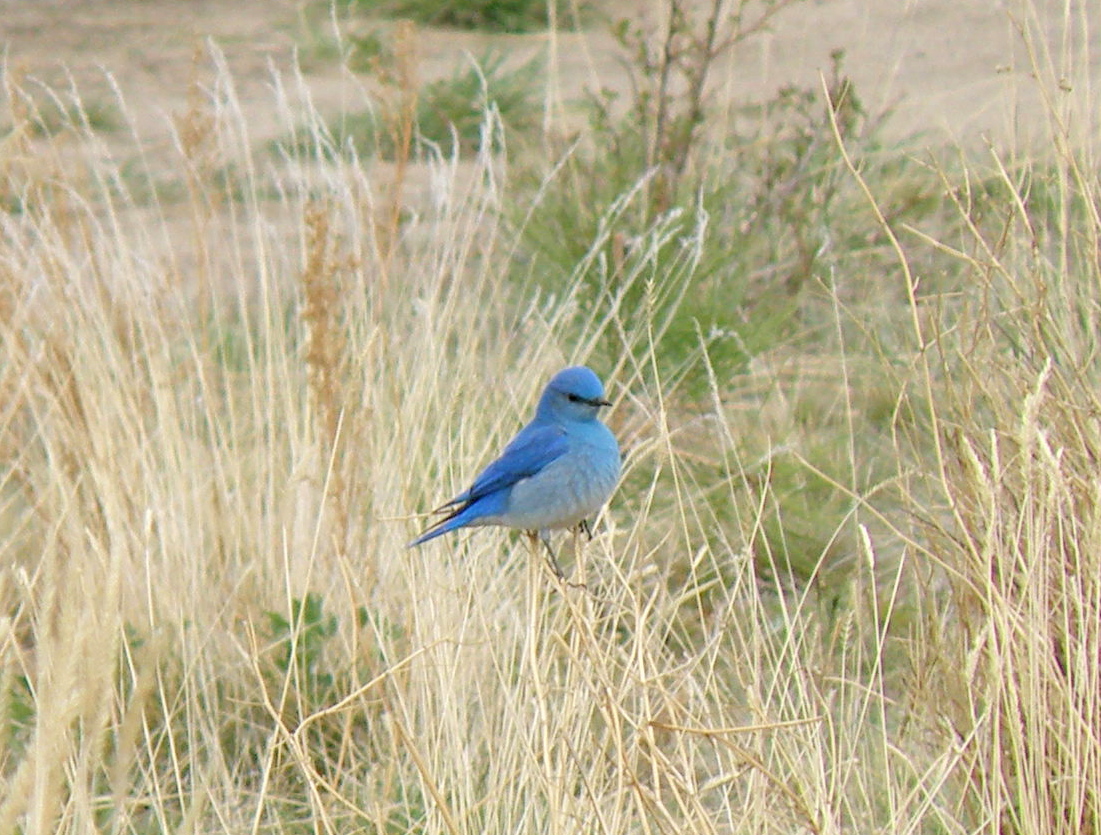
Mountain Bluebird, Summer, 2012
THE MOUNTAIN BLUEBIRD is found here in our abundant grasslands, and are encouraged to remain by our local people building and mounting birdhouses meant especially for them. And truly there are no blues quite as brilliantly displayed as on a male Mountain Bluebird, who, while I was snapping away and adjusting my lense, remained surprisingly still and unperturbed, as though enjoying (and deserving) the attention.

Male Mountain Bluebird, Kamloops, B. C., 2012
RECENTLY I WAS ASKED TO PROVIDE A MINIATURE of a Male Northern Cardinal, a bird not found in Western Canada. Having to rely on images not my own, and hoping the result would do justice to the actual bird itself . . . .
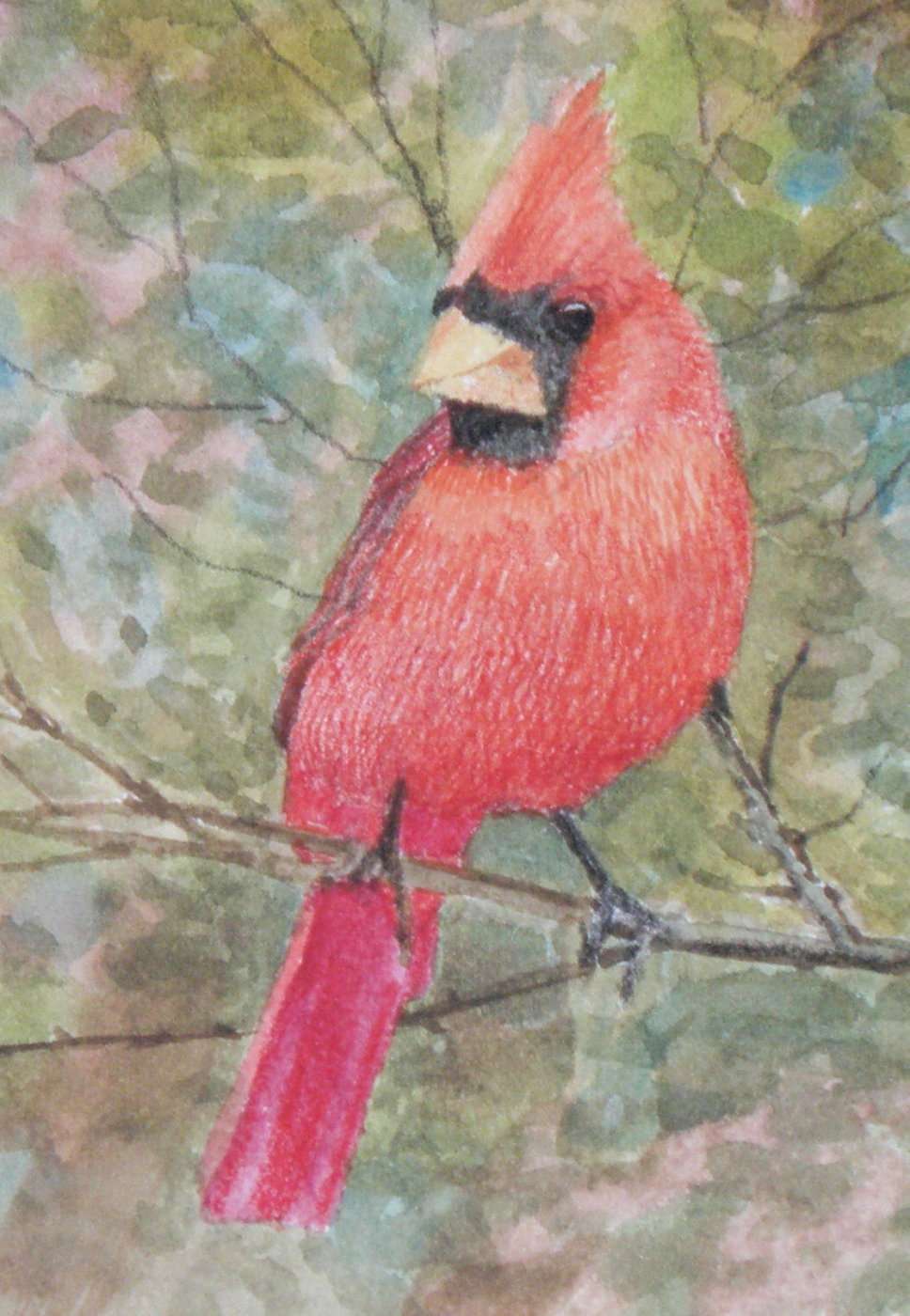
‘Northern Cardinal’ watercolour, arches hot press paper 9cm x 6cm (2.5″ x 3.5″)
IT IS BEING SENT OFF TO a patron in New York City, where I believe a Northern Cardinal might be seen gracing the beautiful environs of New York’s Central Park.
the tranquille creek gorge
May 16, 2015
THE SOUTHERN INTERIOR of British Columbia is a desert-like landscape, plunging steeply into geologically-unique valleys that include rattlesnakes, a ground-creeping variety of prickly pear cactus, sagebrush, and tumbleweed.
I ACCIDENTALLY DISCOVERED the local cacti by casually placing my hand on top of one in our backyard shortly after we’d moved to our current home.
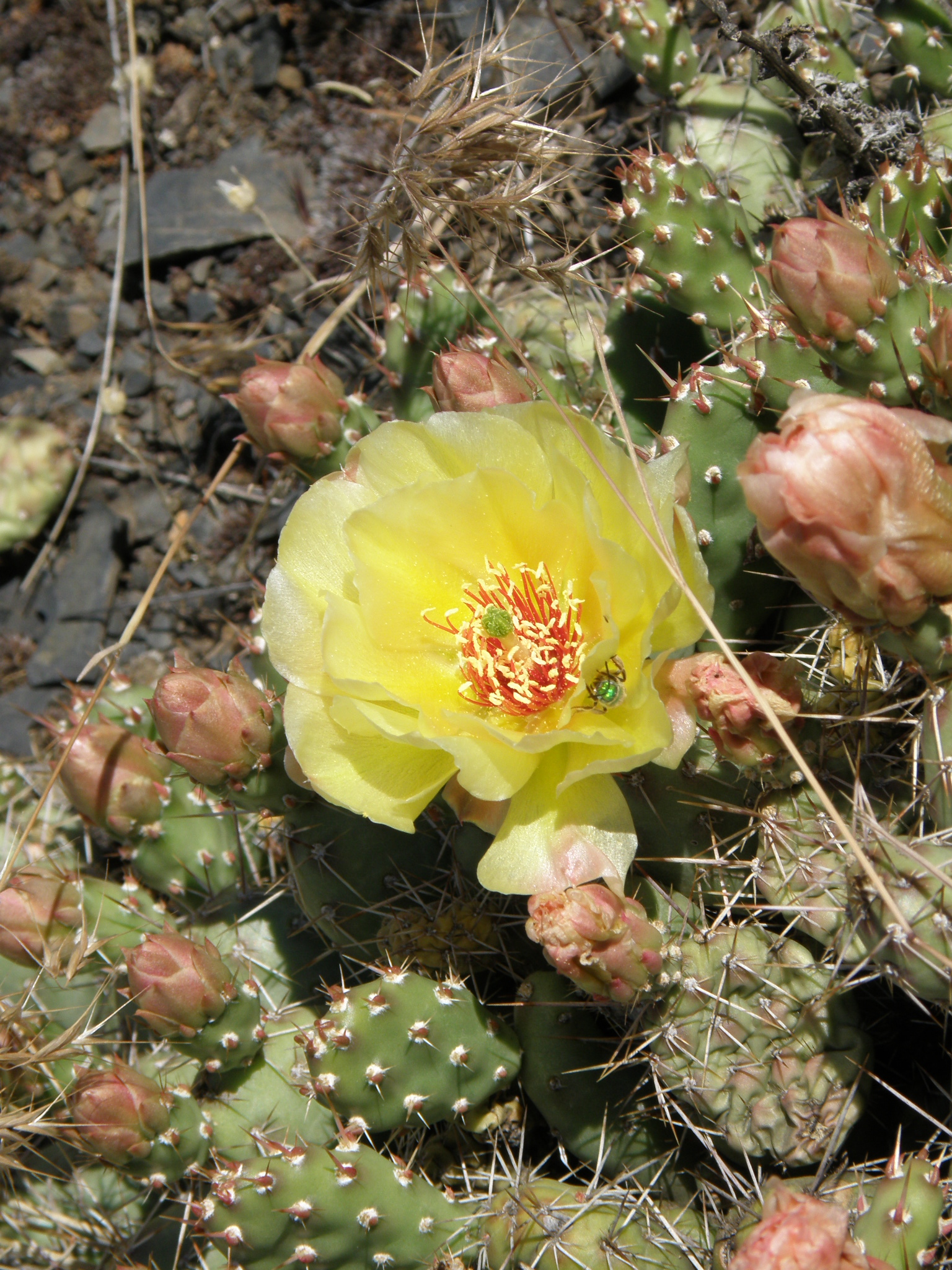
local prickly-pear cactus
OUR BACKYARD as such, is mostly mountain ridge, covered in these low-lying cacti, sagebrush, and outcropping of rock.
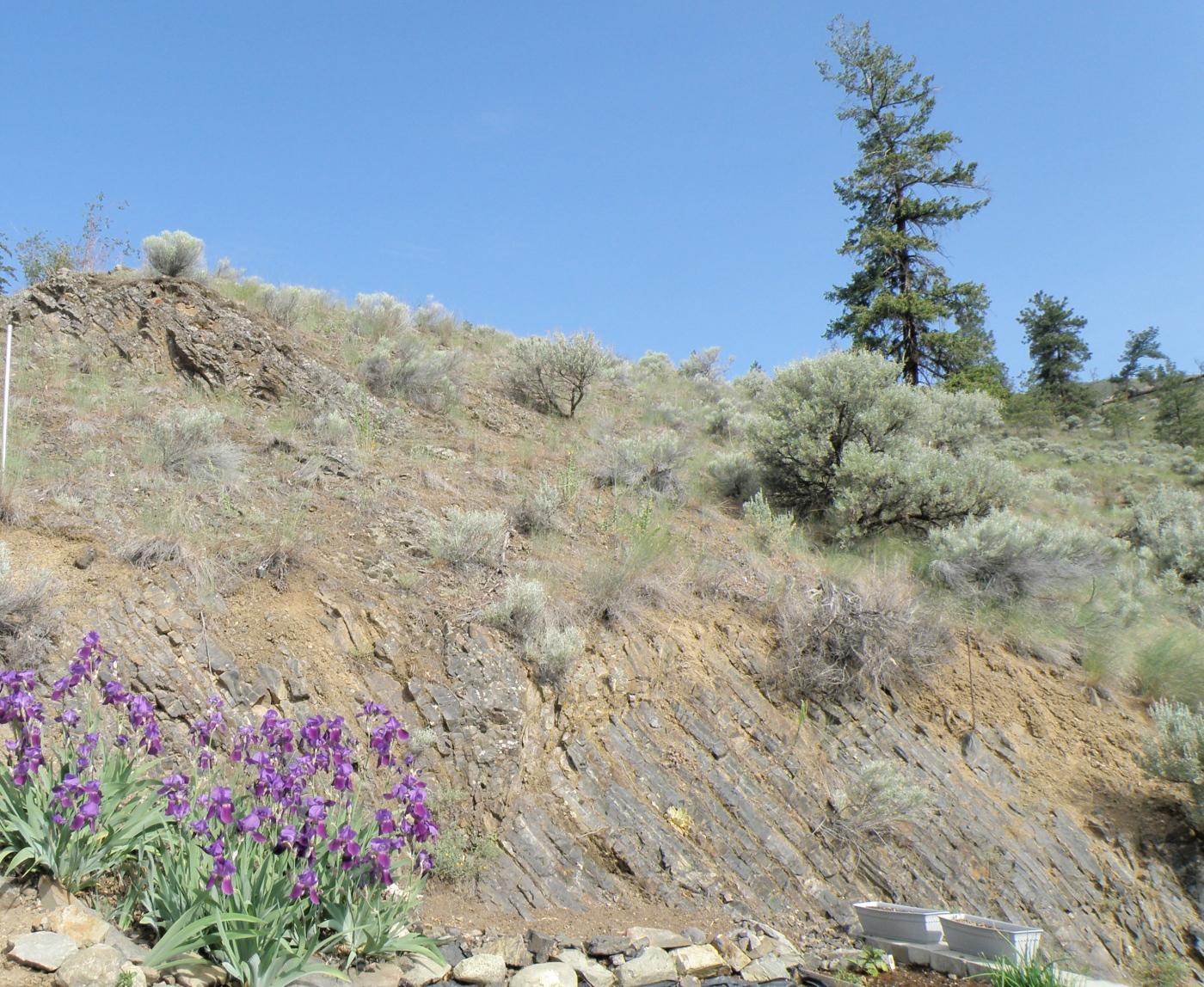
Local terrain
RUNNING UP AND DOWN OUR RIDGE are flocks of Chukar Partridges–a bird which belongs in ‘Roadrunner’ cartoons. Their name is derived from their ‘chuk-chuk-chuk-CHUK-CHUK-CHUKCHUKCHUKCHUK!!!’ call (who needs an alarm clock?). Below is a not-very-good photo of one (they are always on the run, making my camera skills not up to the task)….
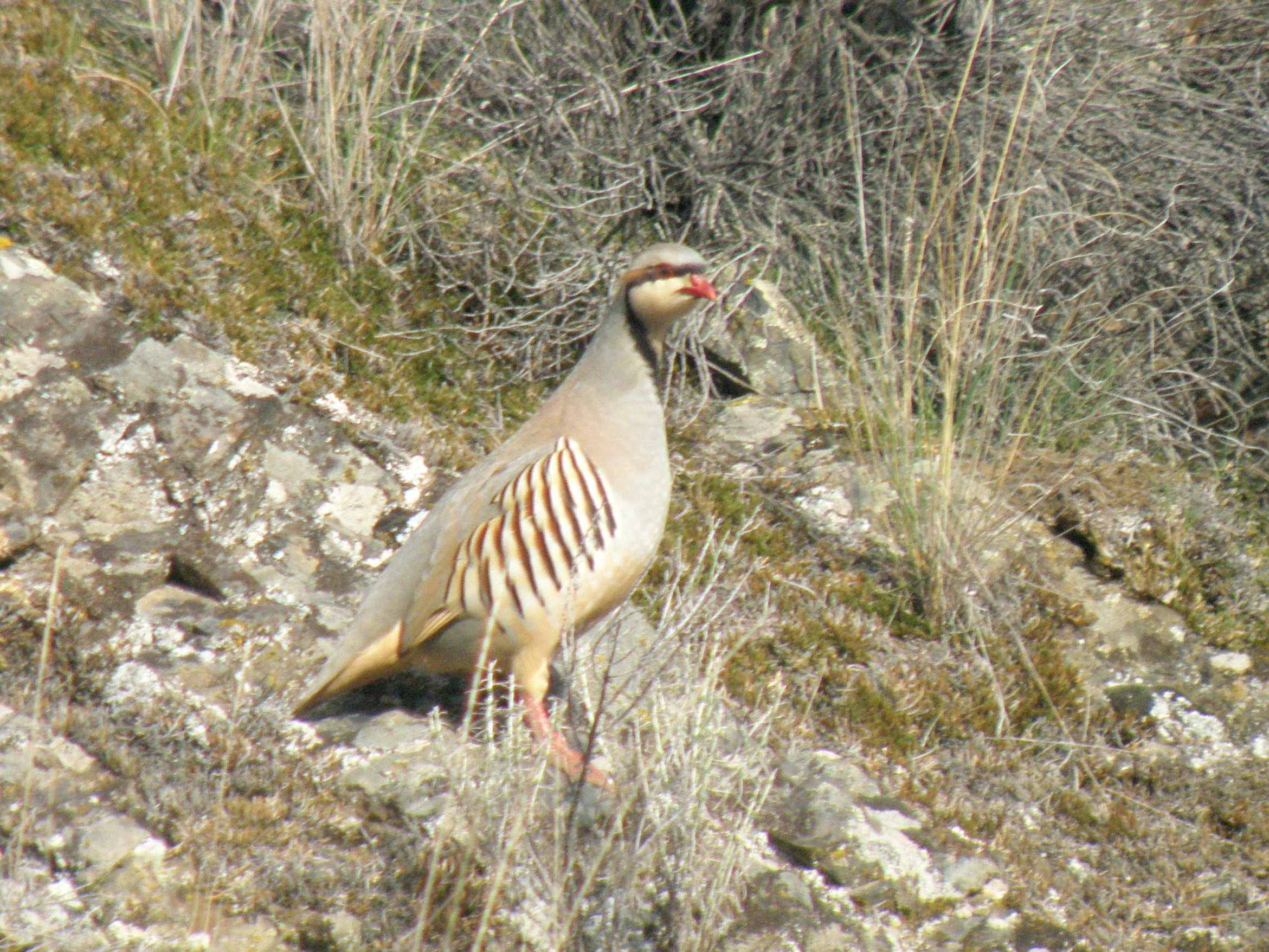
local Chukar Partridge
NEARBY US is a very geologically-dramatic area called The Tranquille Creek Gorge.
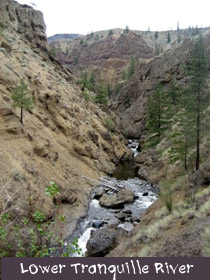
PAINTING THIS TERRAIN ON LOCATION has to be done rather quickly (depending on the time of day), as temperatures can go up to 40C and the sun is relentless due to the lack of trees, and thus, shade….
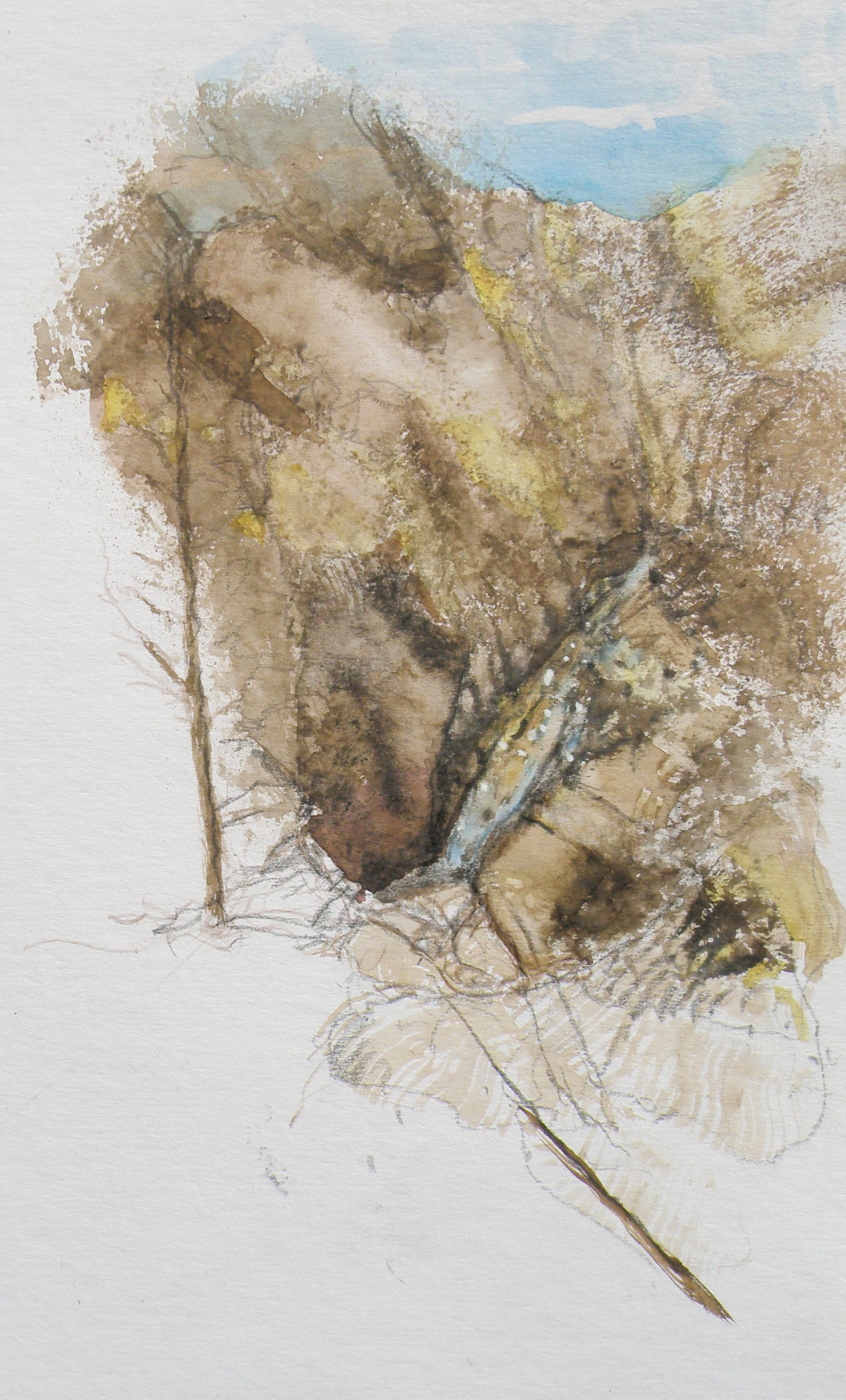
watercolour sketch, tranquille creek
COMING HERE FROM THE WET AND RAINY B. C. COAST, it has taken me years to come to fully appreciate the beauty of an arid area such as ours. But now that my eyes are open to the subtlety, I wouldn’t return to all that green for anything in the world. I’m happy in the depth of our browns (smile).
conveying mood
May 14, 2015
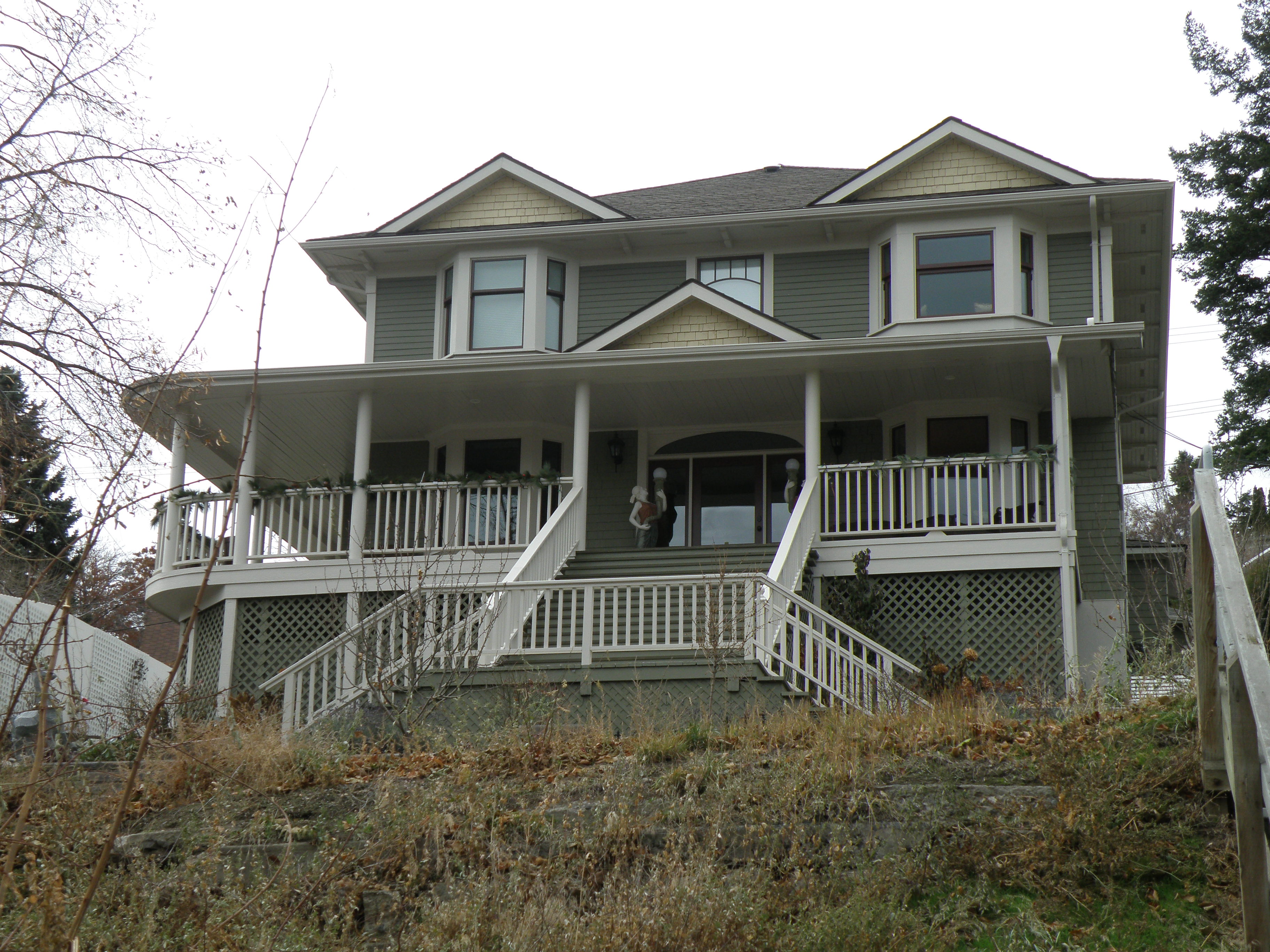
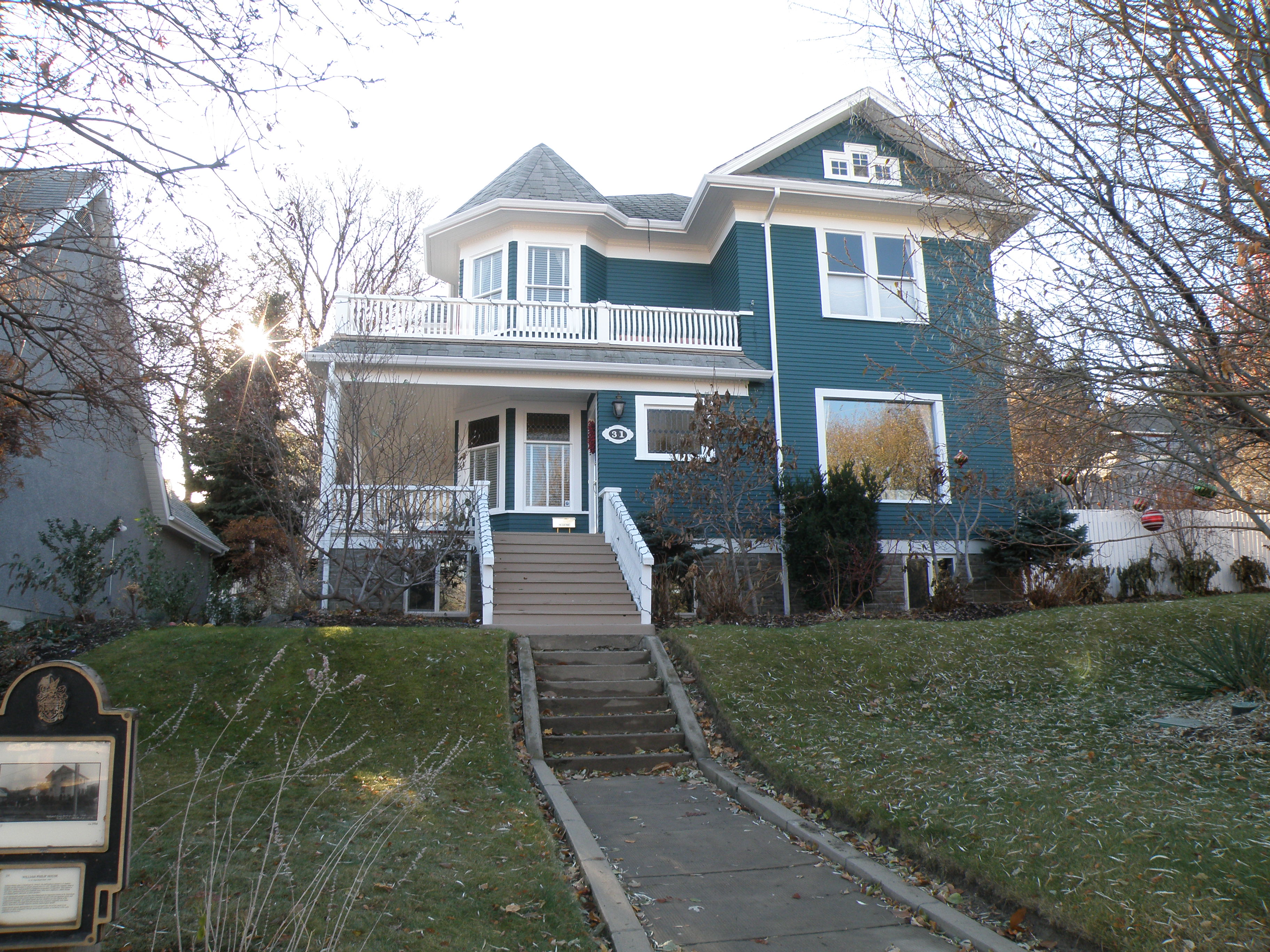
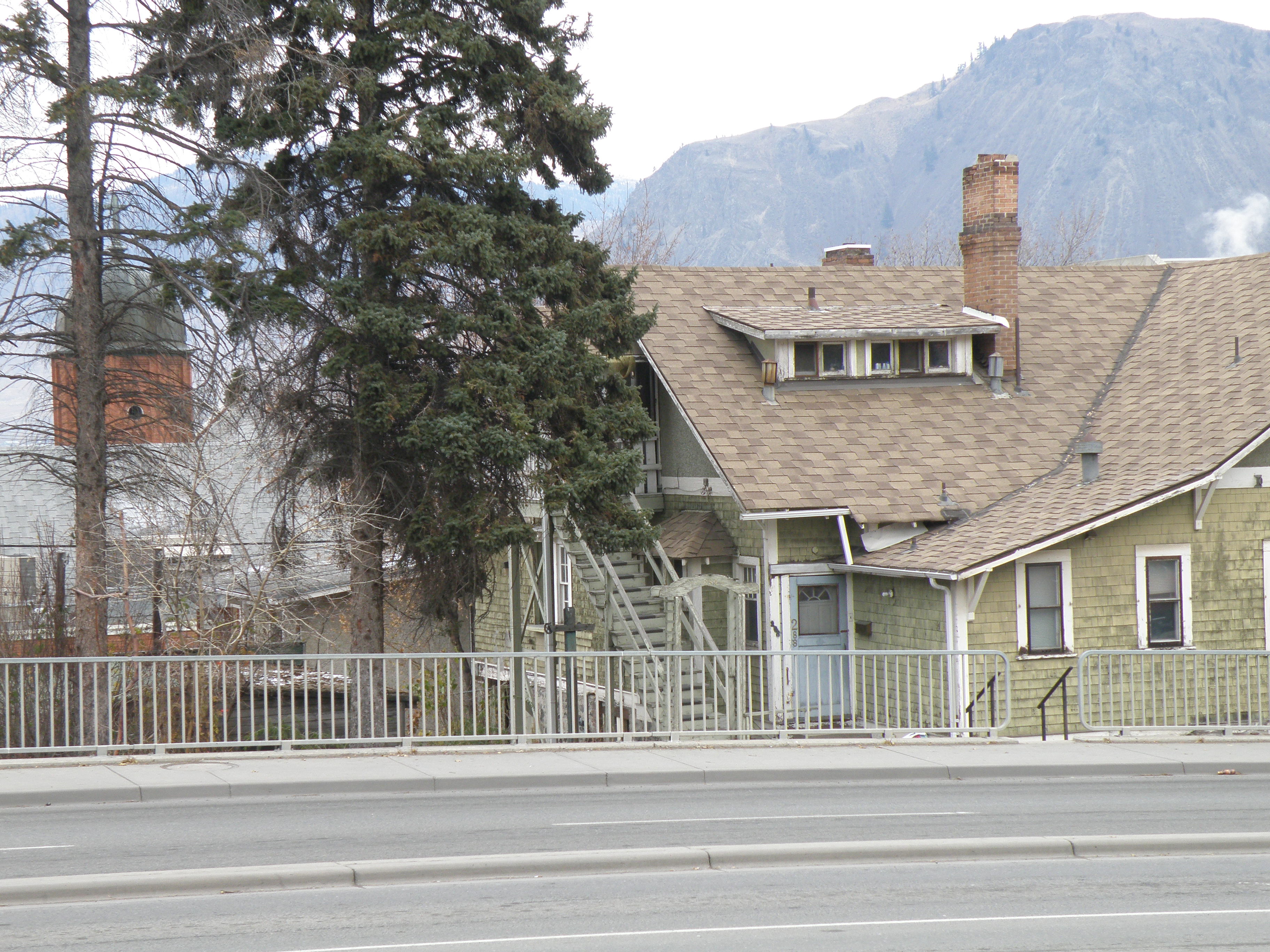
THE HERITAGE HOMES in our city of Kamloops were built at the turn of the 20th Century and are really rather distinctive, reflecting a very decided Victorian panache. Here are a couple which have been perfectly maintained….
PAINTING-WISE, the more interesting homes are, for me, the ones which have been given up for rooming houses, and therefore rather neglected….
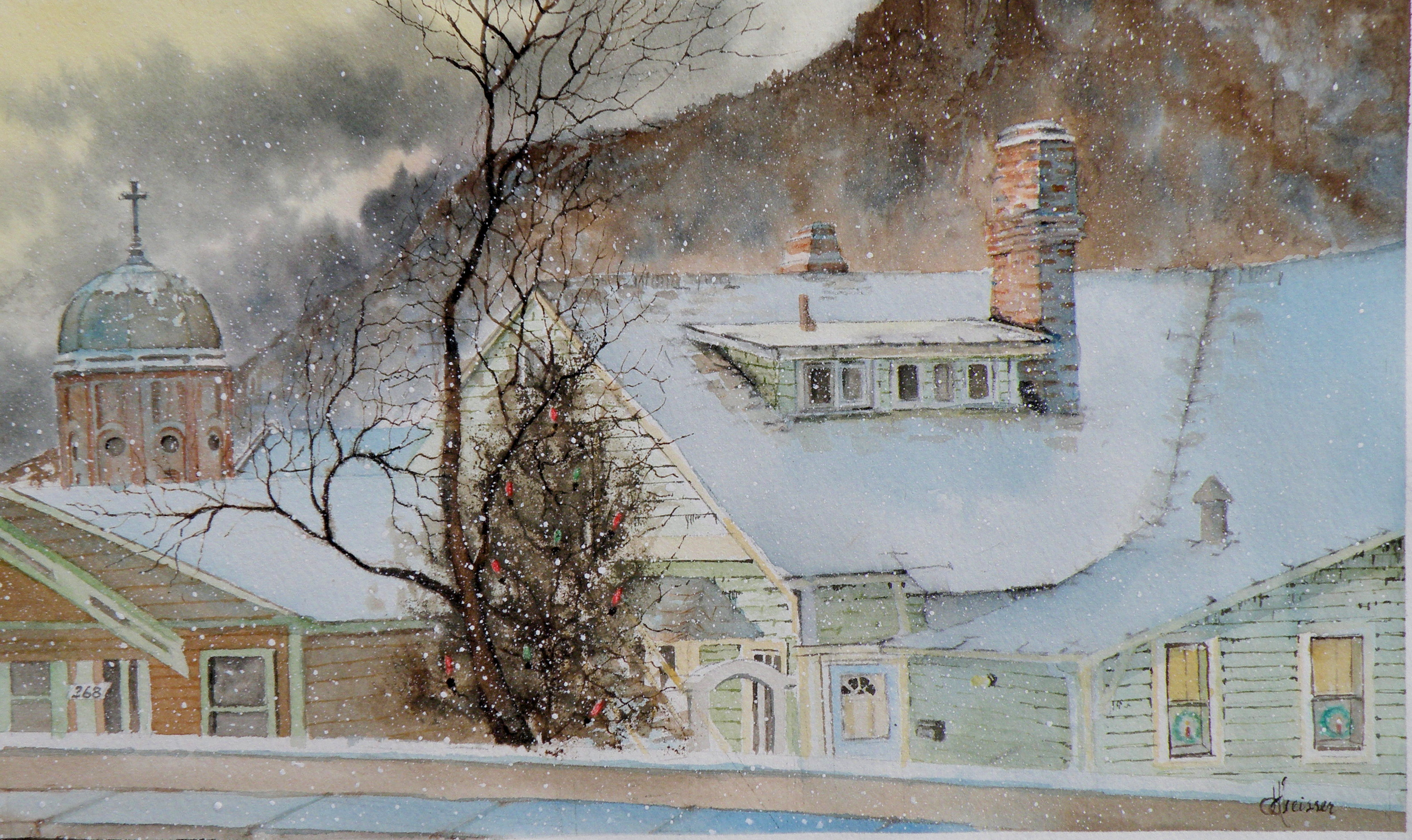
‘Columbia Street Noel’, 7″x12″, watercolour, (sold)
THE OBJECTIVE is to successfully convey a particular mood to the viewer–in this case, a certain melancholy–a fragile attempt at dressing-up a once-proud home in the midst of frigid temperatures and icy snow.
The buyer of this painting saw it in the Gallery and exclaimed that her parents had had this house built, and immediately claimed it for her own. It suddenly made me wish I hadn’t been quite so accurate about painting in the worn and shabby details.
tortured brushes
May 12, 2015
THE BEST BRUSHES–in my wacked estimation–is a dollar store packet in the crafts section, next to those garish tubes of glitter and such. The second those poor things get home, they undergo an Edward Scissorhands attack that is not pretty.
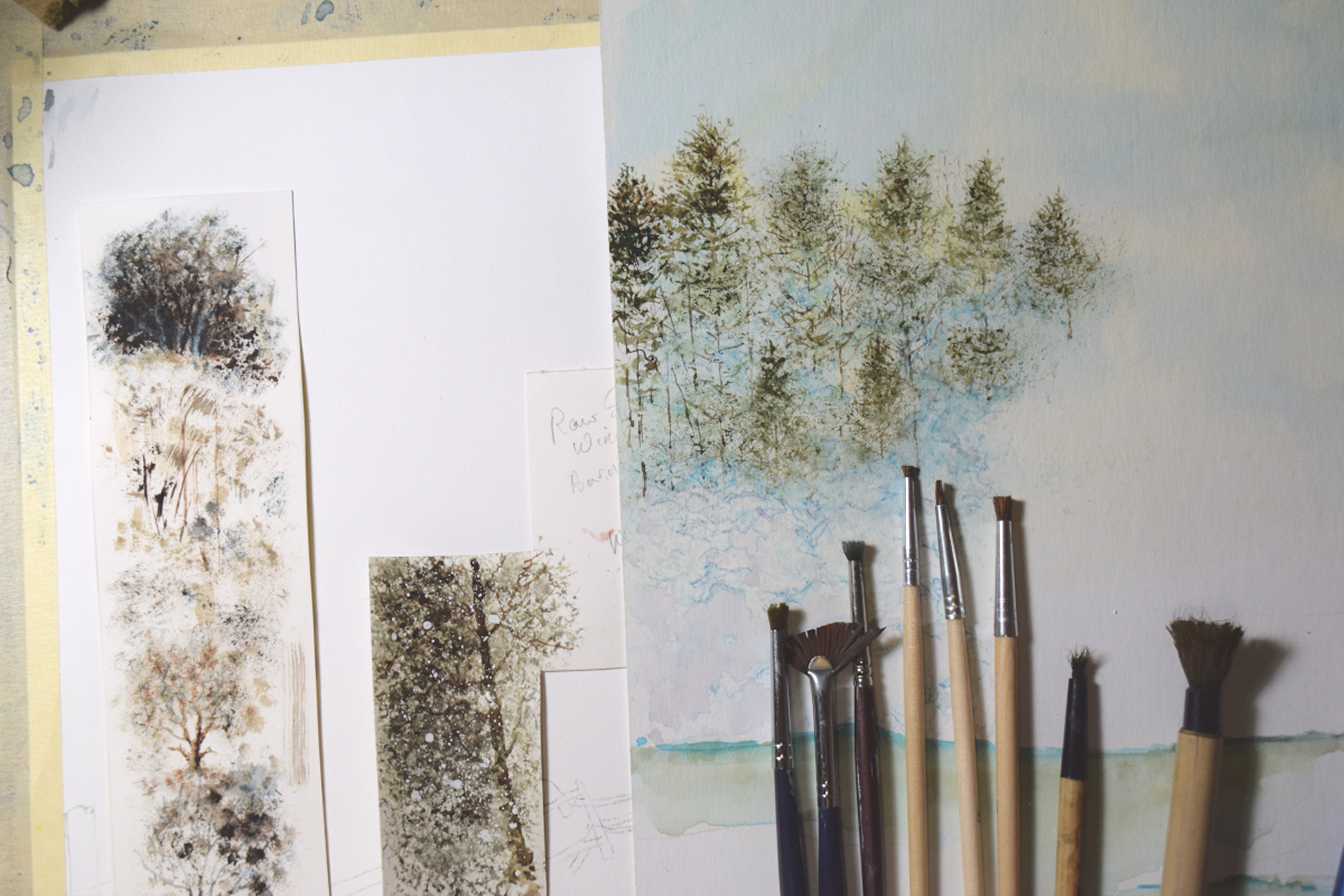
SECOND-HAND STORES also usually have some wonderful, pathetic-looking excuses for brushes, pretty much being handed out for free.
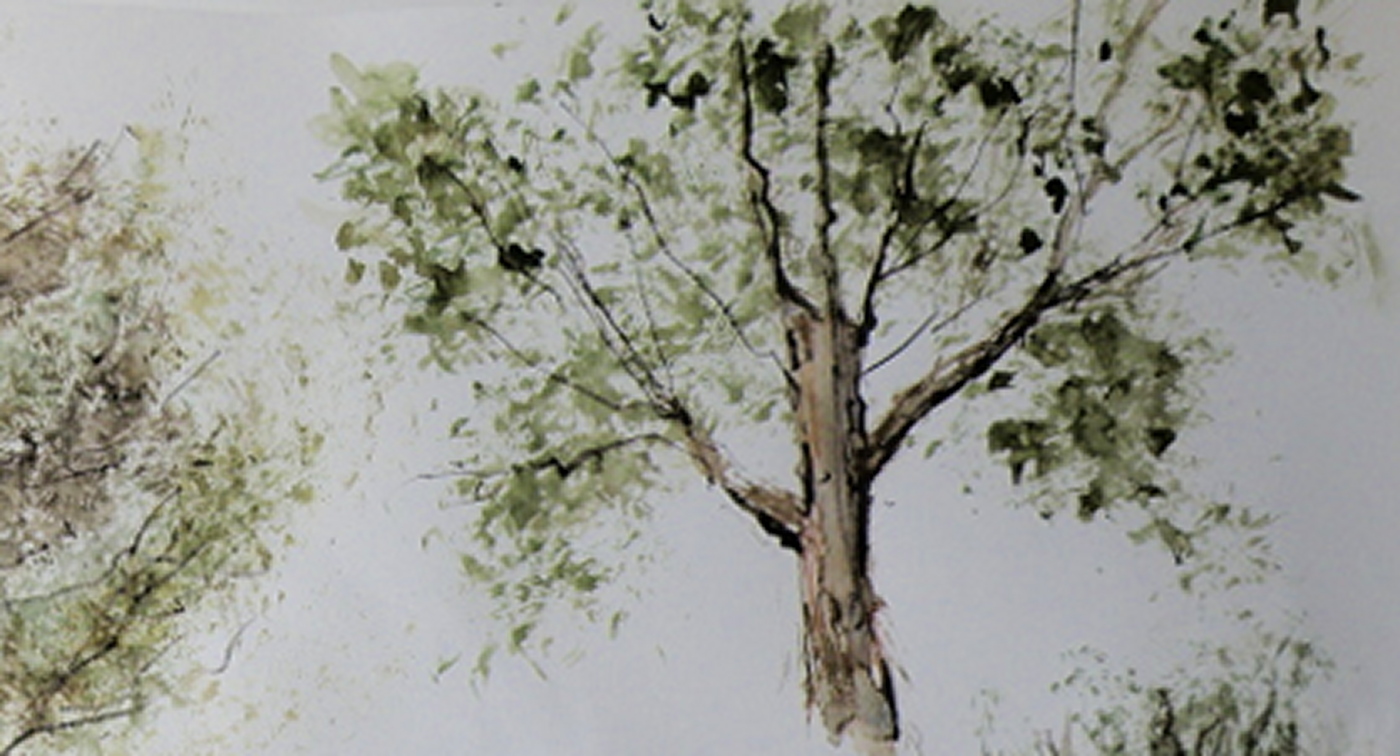
VERY FEW BRUSHES I own get to keep their original shape except ones sized 0, 00, 000, and 0000. For some additional fine work, a nib pen loaded with watercolour does well also. But for large areas, chopped-up, hippie-freak brushes are like, tubular, man.

FORGET SABLE–even squirrel is too refined–woodchuck, maybe–and those synthetic sponges on handles used to paint walls with are good, too.
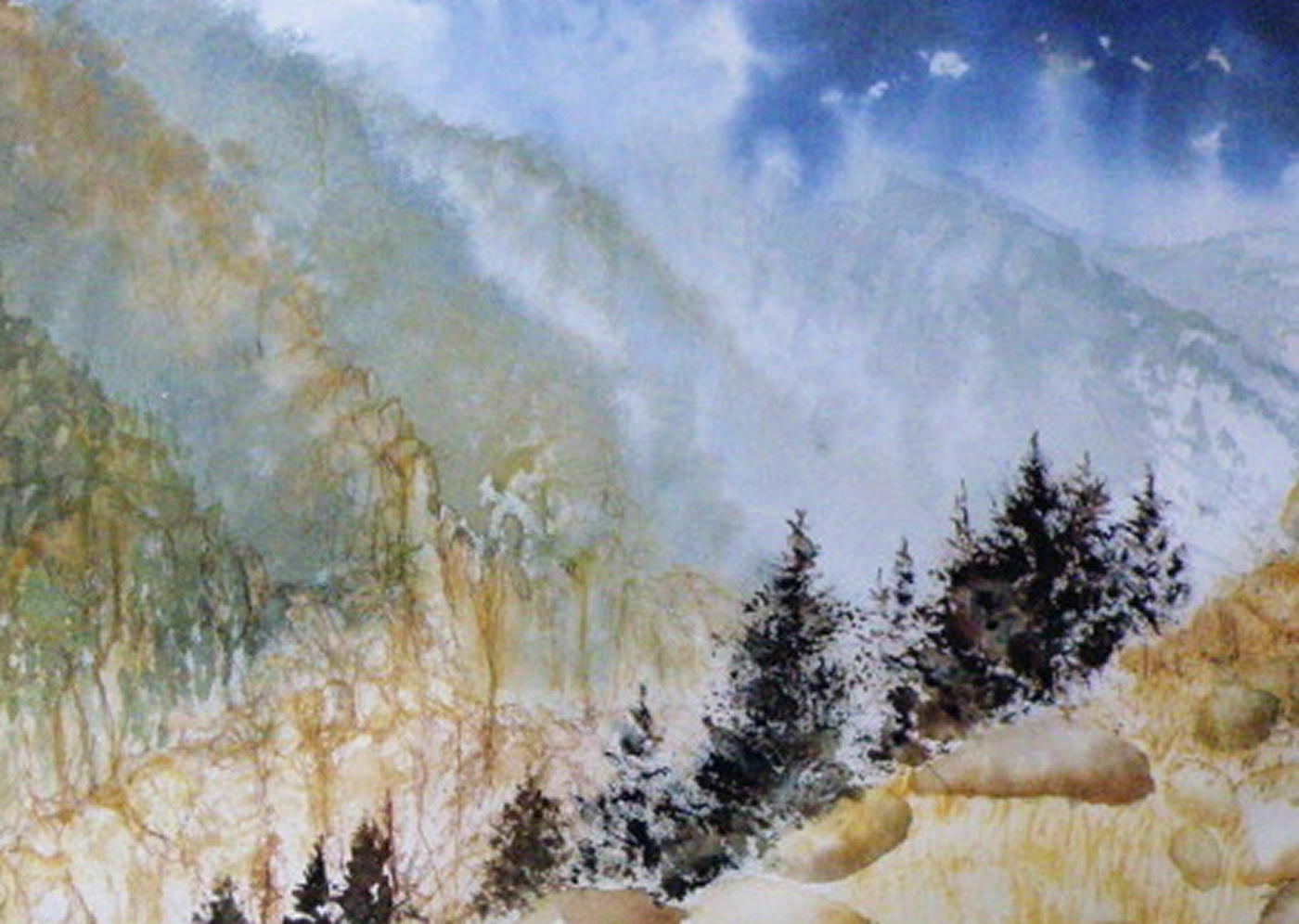
‘Mountain Mists’, 20cm x 28cm, Arches hot press 140 lb paper
THE TRUE ENJOYMENT OF PAINTING comes when viewing how another painter’s personal and unique need for self-expression realises itself in ways personal and unique. Interaction with the subject demands an approach which only the painter her/himself knows is right.
 weisserwatercolours