painting night
May 18, 2015
THERE IS A FASCINATION surrounding night, when all is cloaked in darkness and the earth dons a mysterious manteau.
WE SEE, and yet we don’t. Depicting night is a painting fascination because I personally do not have a firm visual anamnesis of what exactly night ‘looks like’.
FOR EXAMPLE, is the moon really white–or silvery? Or is it, rather, lemony–or perhaps, blue?
A NUMBER OF RENOWNED NORTH AMERICAN PAINTERS made the depiction of night their signature subject. Some, like the famous Western painter, Remington, chose to depict moonlight as a bit of each, including even at times, degrees of green….


IT IS SOMEWHAT OF A MYSTERY as to what our eyes truly see, in terms of chromaticity, when looking at night, and particularly, moonlight. Painting night offers an enjoyable challenge: convincing viewers that what has been painted corresponds to their personal, nightly experience.
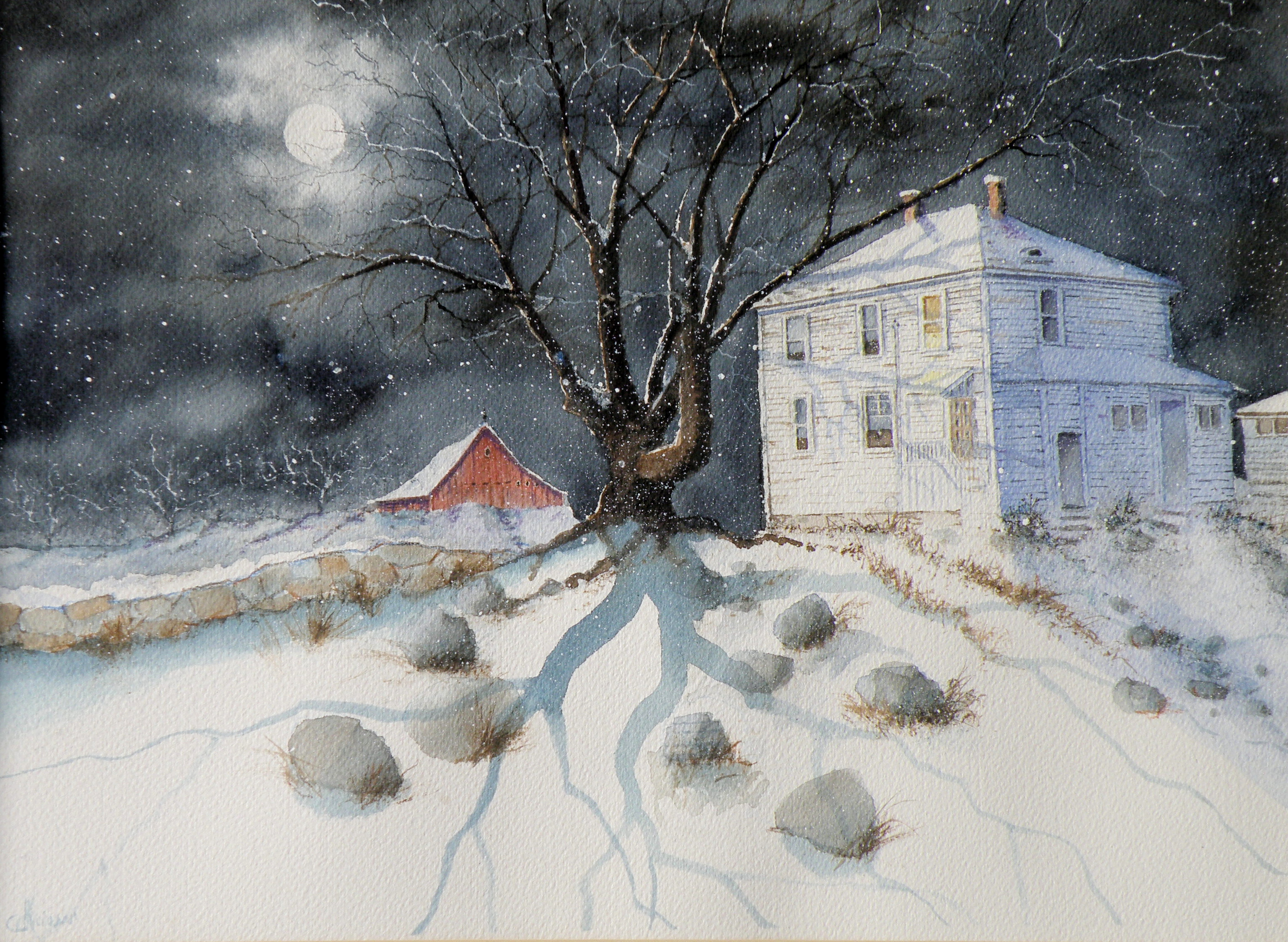
‘Up Late’, watercolour, Arches Hot Press Paper, “14×18”, (sold)
THIS IS ANOTHER heritage home in Kamloops, known locally as Fort House, because it was built on land originally used as a Fort by The Hudson Bay Company when Kamloops was established in 1812. At present, this early 20th century farmhouse is a rather rundown rooming house.
The Common Raven (corvus corax)
April 21, 2015
THE COMMON RAVEN is amply represented in British Columbia and enjoys the distinction of co-existing with people for thousands of years, to the point where–in Haida Nation tradition–the Raven has god-like qualities. It was the Raven which released the Sun from its little box–made the stars and moon–and even brought people out of the earth in order to populate a party being thrown. But in traditional stories Raven doesn’t actually create (make things out of nothing), so much as steal, exchange, rearrange and redistribute and generally push things around into new combinations. If that isn’t humanlike, I don’t know what is, lol.

“Spring Thaw”
watercolour on art board, 20 cm x 28 cm (8″ x 11″), sold
In Kamloops it is against the law to feed them, as well as crows. A buyer of my work named Joan pours bags of cat kibble into her elaborate and large cement bird baths in the Winter and revels in their continuous, noisy presence. The neighbours? not so much. When they report her, she just pays the fine and keeps at it.
Spring means….bunnies
April 17, 2015
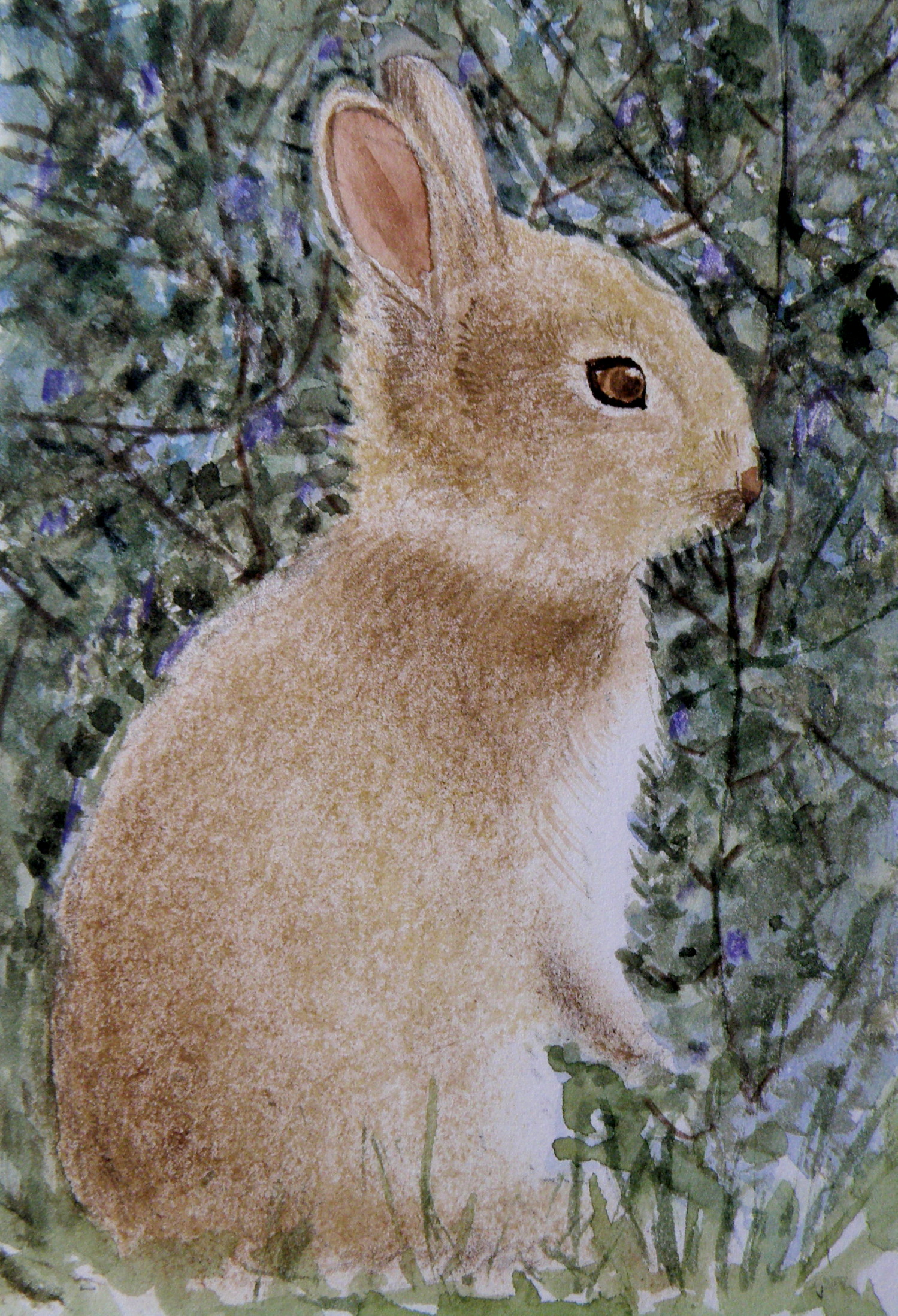
Finished work….”Logged-In”
April 16, 2015
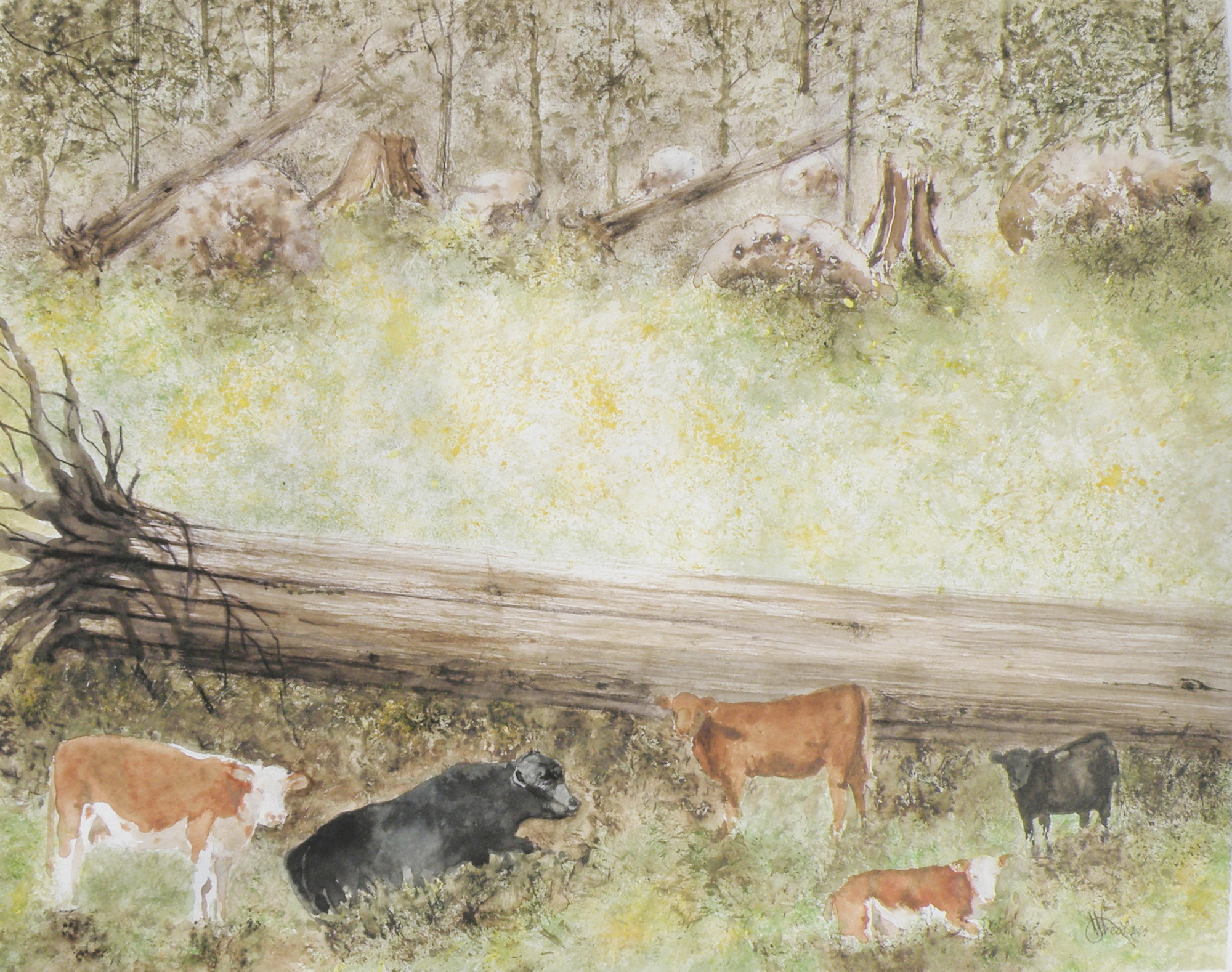
“Logged-In”, 25.5 cm x 35.5 cm (10″ x 14″), Watercolour on Arches 140 lb Hot Press paper, (donated to Kamloops Art Gallery Annual Art Auction)
painting progression 4 . . . “Cows”
April 15, 2015
THESE ARE BEEF COWS, Herefords, the breed most favoured by ranchers in our region. Their origins descend from small red cattle introduced by The Romans in ancient Britain, along with breeds from old Wales, their subsequent nurtured evolution taking place in Herefordshire where the Hereford is king. Today more than five million pedigree Hereford cattle exist in over 50 countries.

BECAUSE THE LARGE FALLEN CEDAR is indicated with only a minimum of brushwork it is necessary to help give it size, weight and substance through the simple use of shadow.
painting progression 3 . . . . “Cows”
April 14, 2015
THE SUBJECT MATTER comes from this photo, very quickly taken when we’d stopped the car on the dirt road running through The Dewdrop Valley (just outside the city limits of Kamloops) after I’d yelled, ‘Cows!’
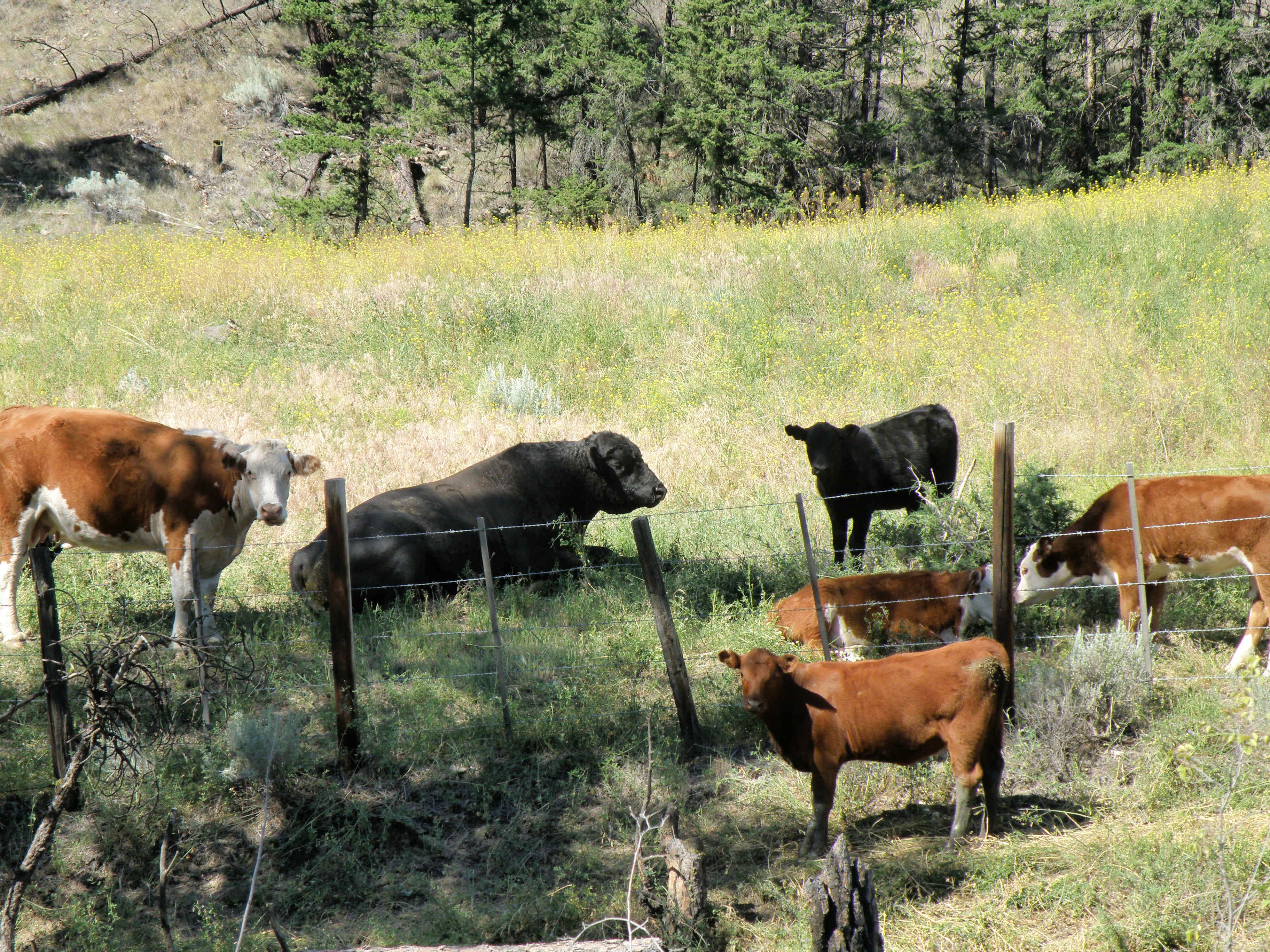
This grouping was described to me by my friend Max as a perfect example of a bull and his harem–and the ‘harem’ got nervous and didn’t remain in place very long once I began snapping pictures. The bull couldn’t have cared less what I was up to, and just lay there chewing.
The very prominent tree in the painting is placed to provide focus. Rather than leave in the barbed wire fence (in front of them), a natural enclosure is placed behind to sneak a storyline into the scene (the best grass lies out of reach)—that, and taking out the wire fence gives a more natural feel to the setting.
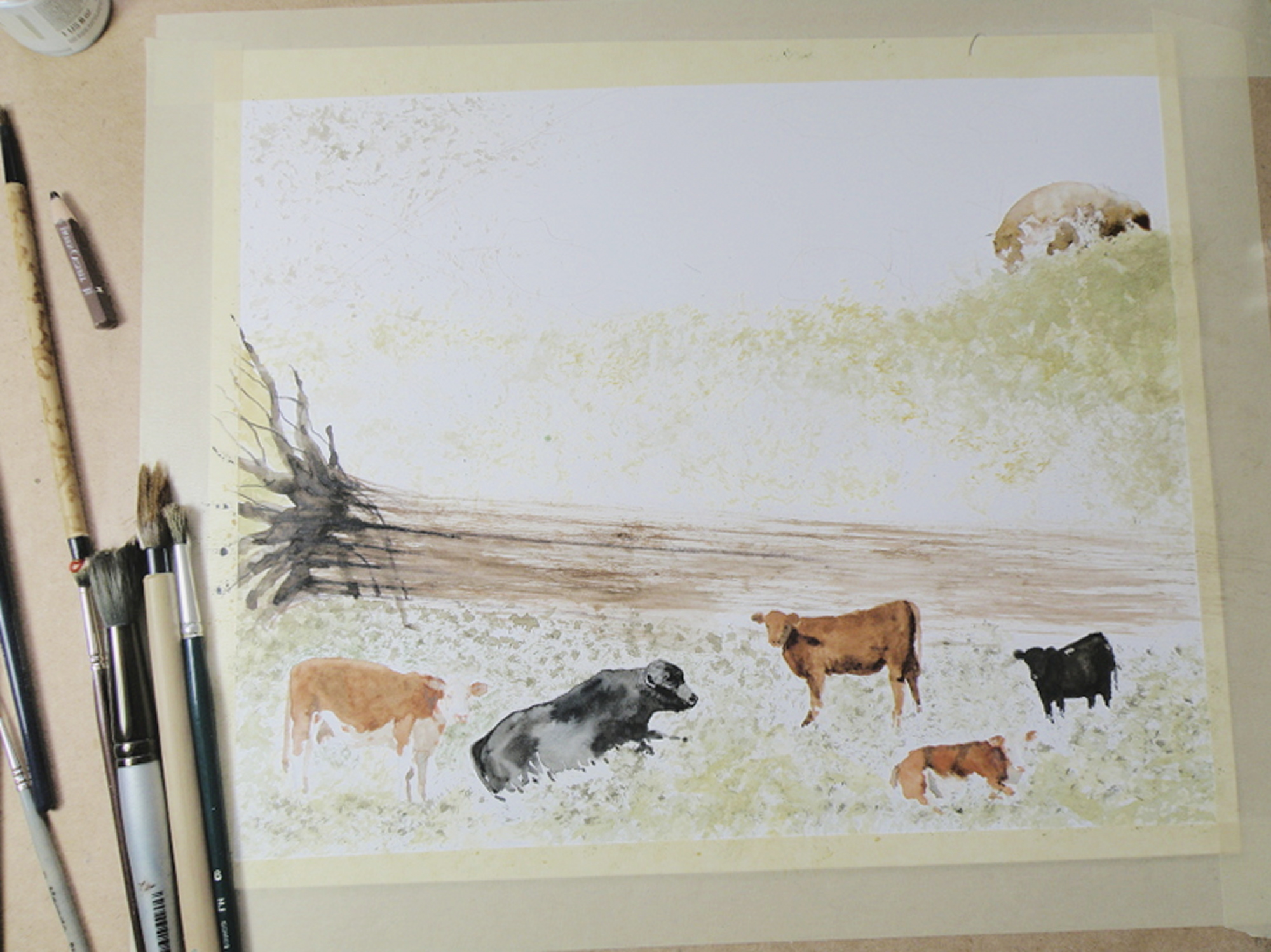
IN THIS GRASS RICH region, cattle roam all over boulder-strewn and mountainous terrain throughout the Spring and Summer. They are finally rounded up on horseback in classic cowboy style in the Autumn. Because of this, the beef from Kamloops is renowned for its organic, grass fed superior flavour and quality.
painting progression . . . 2 “Cows”
April 13, 2015
THE PAPER IN USE HERE is a very smooth-surfaced one called Hot Press (140 lb.) by the French Company, Arches (a very old watercolour paper maker). Hot Press paper has virtually no surface texture at all and is slightly cream-toned. When papers are this smooth, the paint initially floats on top before being absorbed. This floating quality creates effects a rough surfaced paper can’t deliver.

So Hot Press paper looks and feels pretty much like dollar store poster paper–smooth, shiny, and about the same thickness. And because it is not a heavy paper, and because it is so smooth, Hot Press watercolour paper cannot take a lot of scrubbing out if mistakes are made. The painter needs to be rather confident about the strength and amount of pigment to use before putting brush to paper. So because I am always a bit tentative when beginning to paint something as challenging as an animal, I gain confidence by always having a scrap piece of watercolour paper handy to try things out on first. Once I see how to do it on a scrap piece of paper, then I have confidence to do the same thing on the painting itself.
It needs to be stressed that Arches paper is superb and bears absolutely no comparison to poster paper when paint is applied to it. The weight (140 lb) is how thick the paper is. 300 lb. paper is very thick and therefore can take a lot more scrubbing and multiple washes, without losing luminosity. The downside is that 300 lb. watercolour paper is quite a bit more expensive. And when I work on very expensive paper, I am too aware of its cost. That makes me somewhat nervous about possibly ruining the painting. So I usually choose 140 lb. paper because if it gets ruined, I am not that concerned, and so therefore approach the painting with more boldness which gives a better result.
Painting progression 1. . . ‘Cows’
April 11, 2015
THE DEWDROP VALLEY is a local site and part of a much larger area near Tranquille River and the Tranquille River Gorge. In essence, the Dewdrop is really rocky, hilly, grass-and-tree- covered pasture for cows and cattle during the Spring and Summer months. The Kamloops Thompson Nicola Shuswap Region is no-nonsense cowboy rancher country, complete with serious Rodeos and horse and rider cattle round-ups in the Autumn.
This is the first of recording daily progress towards completing a watercolour depicting a typical scene in The Dewdrop Valley . . . .
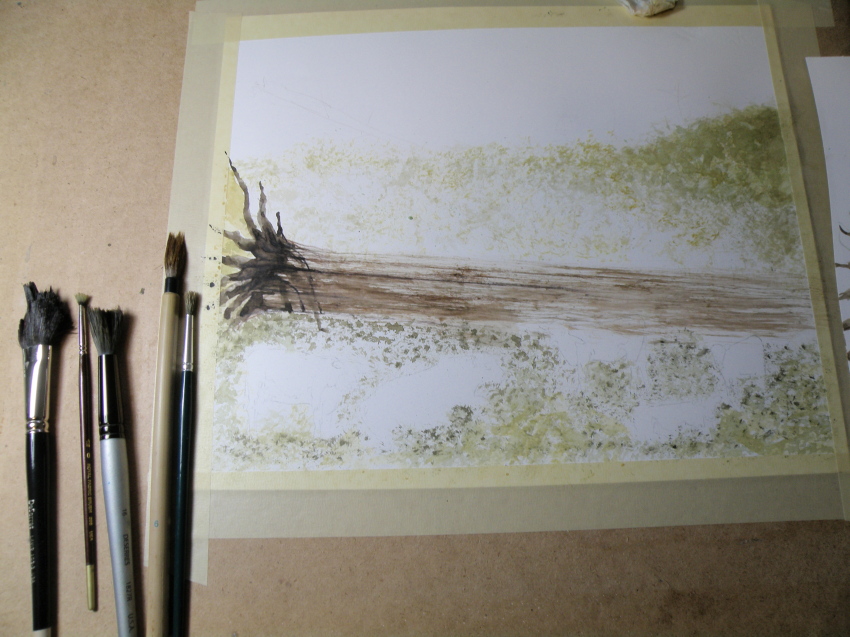
ON DISPLAY are a fine collection of tortured brushes. Some are from dollar stores or second hand bargain stores, and as soon as they get into the spare bedroom cum studio they’re cut up with scissors. None of them cost more than $2, and who knows what they’re made of–Moose? Sasquatch hair, perhaps. Each, however, is priceless.
Miniatures: Chipmunk
April 10, 2015
AS CHILDREN we always gravitated towards Chipmunks, squatting in total stillness with extended hands, hoping one would overcome its natural wariness and take the peanut being offered. The sprightly flicks of tail and peppy darts forward to snatch the gift–so quickly and deftly we didn’t see or feel it leave our palm–only added more charm to their compact, large-eyed, tiny bodied allure. On the other hand, the Grey Squirrel was just a nuisance. I guess size and colour made all the difference in our juvenile minds between one rodent’s mystique and another’s ho-hum plainness. We didn’t entice Squirrels. We threw sticks at them. Their raiding our bird feeders didn’t win them any points, either, I must say….
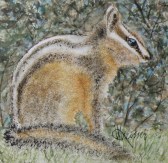
watercolour, 10cm x 10cm (4″ x 4″), art board
New bird miniatures
April 6, 2015
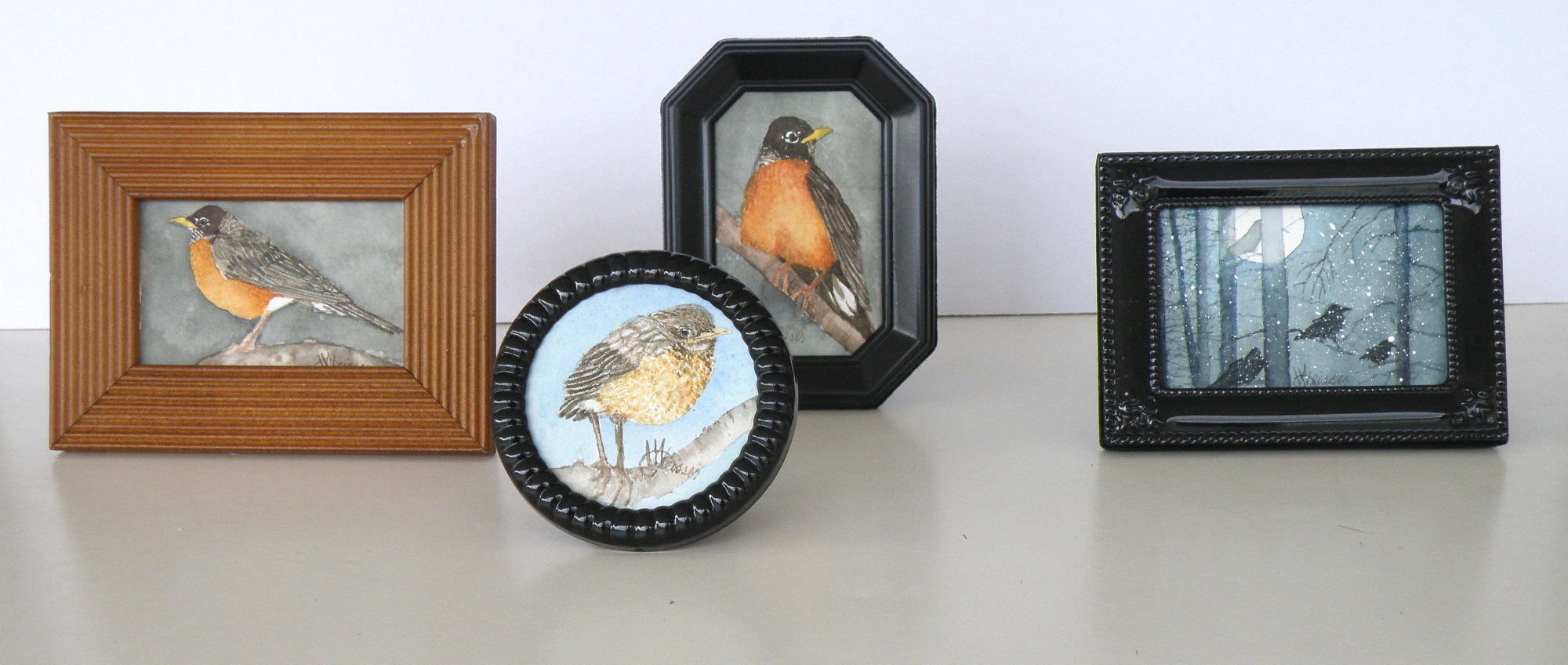
The image sizes here are approximately 5cm x 8cm (2″ x 3″). I use a pair of rather strong magnifying glasses when working this small–the kind you find on display at pharmacies (around here they’re referred to as ‘cheaters’). So when working on a tiny miniature they are an enormous help, until I turn to go check on something in the kitchen and walk into the wall, lol.
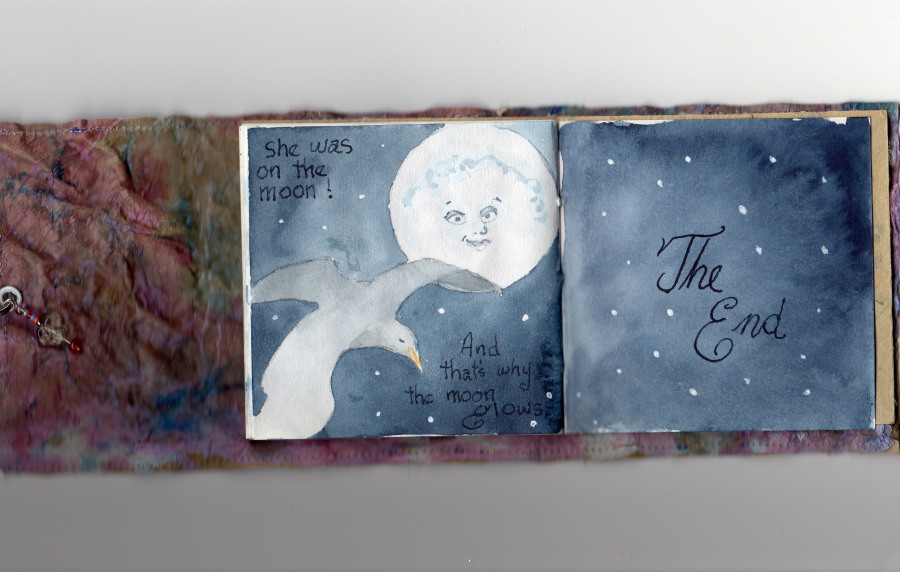
Moral: don’t mess with Mother Nature (or the Ocean Man).
~~~~~
Aneleise (Ane) at her Grandparents’, age 8. . .

. . .’why the moon glows’ by Ane Jones (age 8)
March 31, 2015
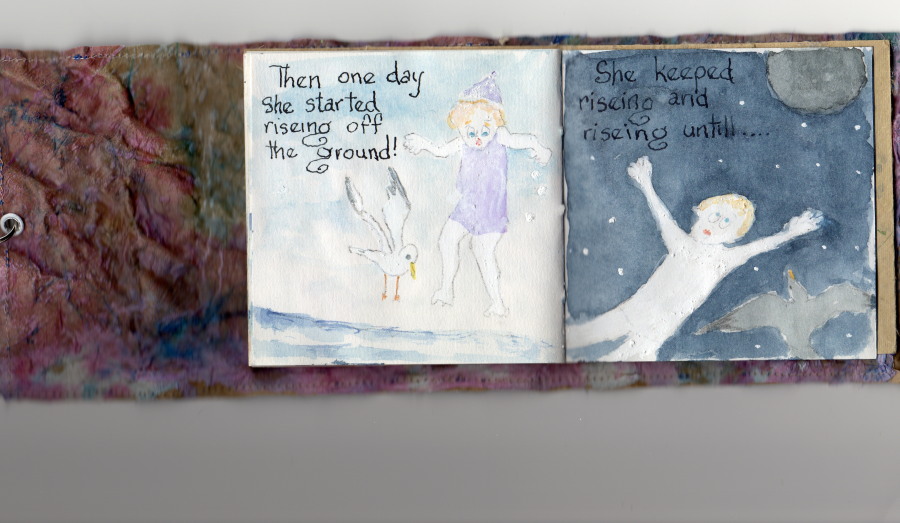
……’why the moon glows’, by Ane Jones (age 8)
March 30, 2015
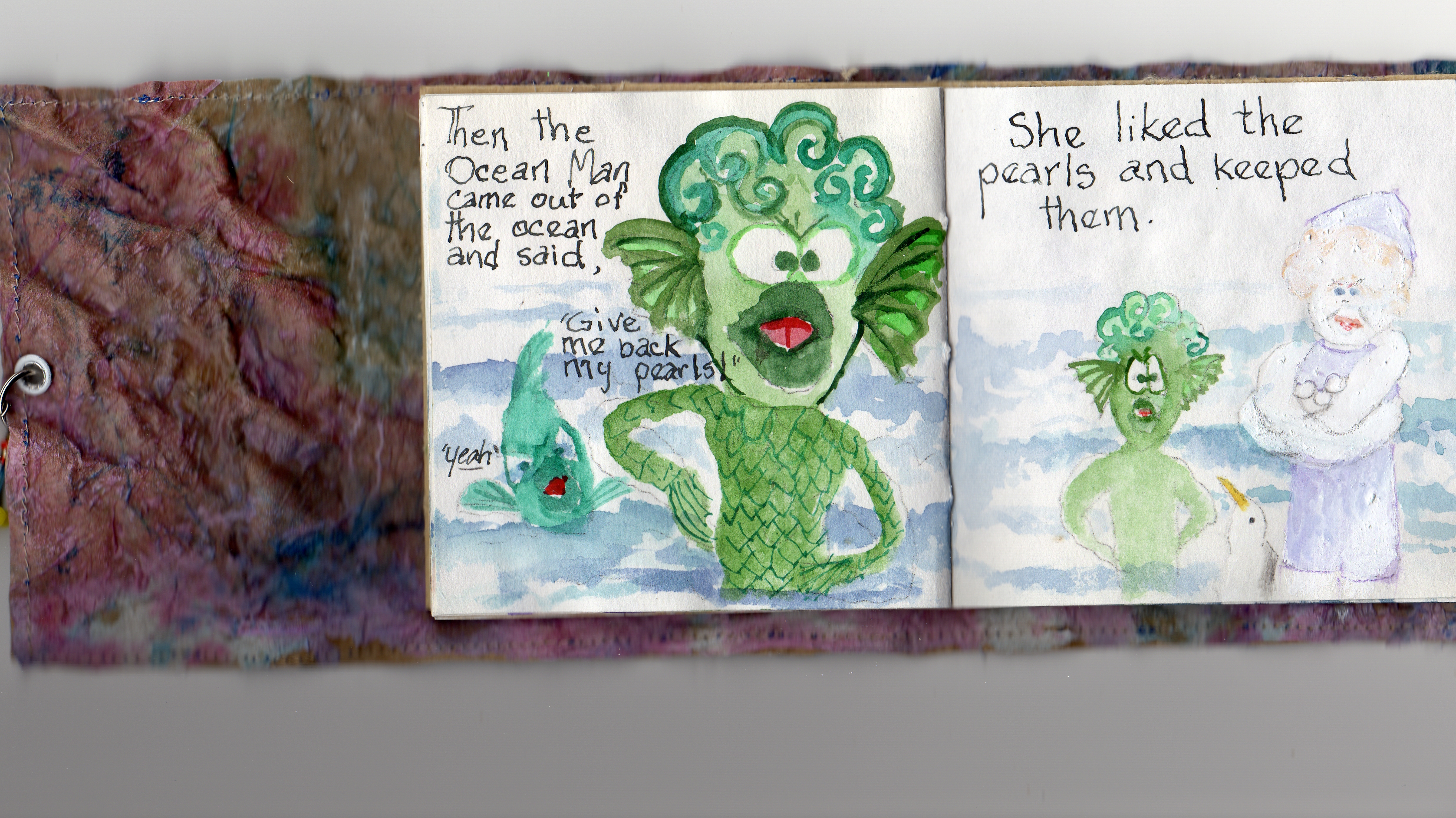
……’why the moon glows’, by Ane Jones (age 8)
March 29, 2015

……’why the moon glows’, by Ane Jones (age 8)
March 28, 2015

……’why the moon glows’, by Ane Jones (age 8)
March 27, 2015
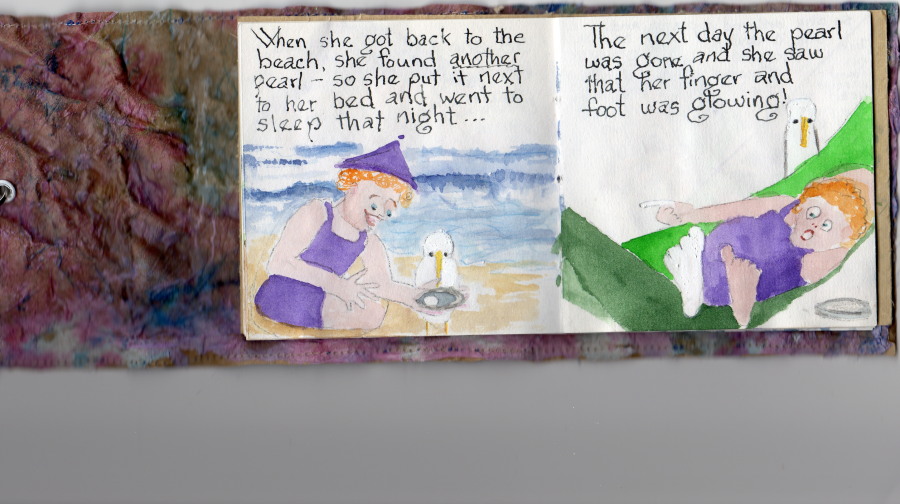
……’why the moon glows’, by Ane Jones (age 8)
March 26, 2015

……’why the moon glows’, by Ane Jones (age 8)
March 25, 2015
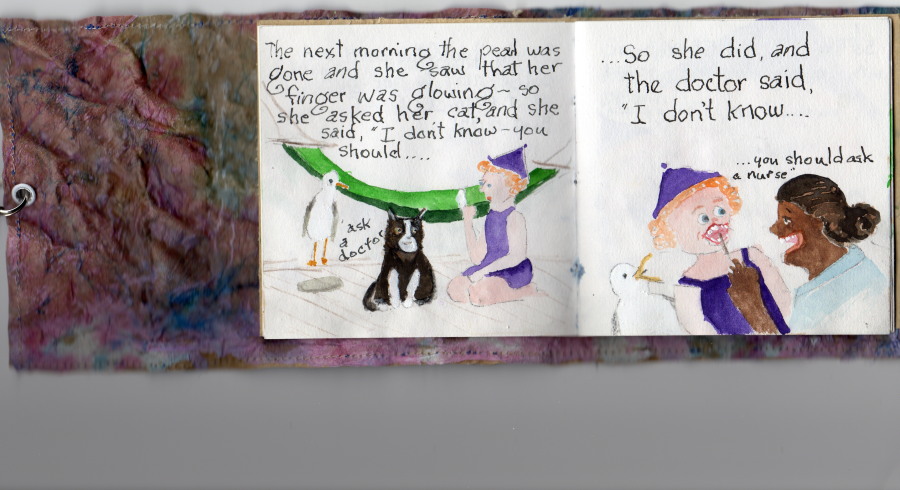
……’why the moon glows’, by Ane Jones (age 8)
March 24, 2015
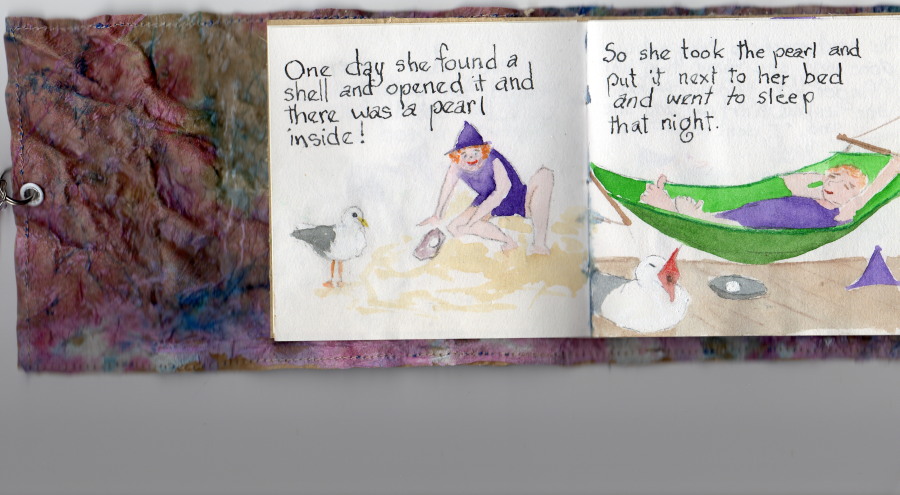
……’why the moon glows’, by Ane Jones (age 8)
March 23, 2015

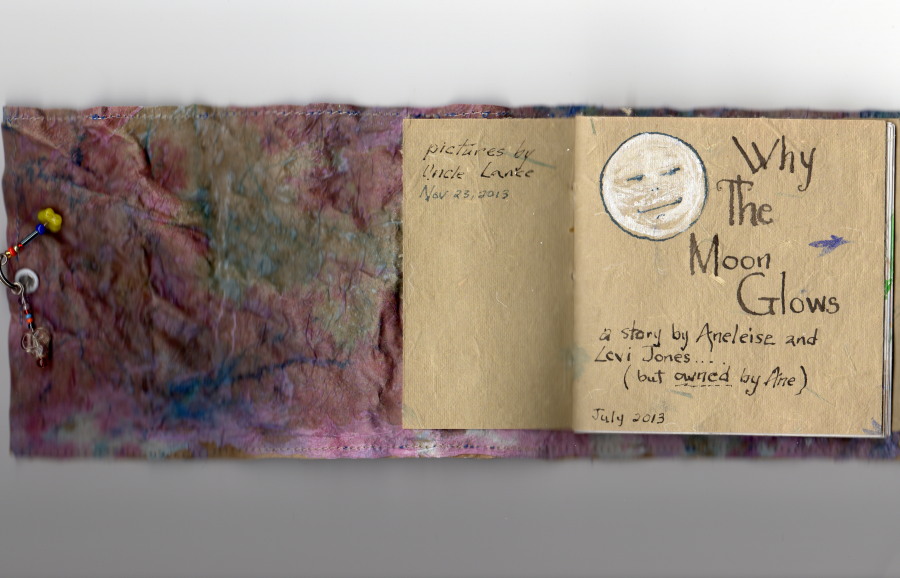
‘Why The Moon Glows’ by Aneleise Jones
March 22, 2015
MY GREAT NIECE, Ane, age 8, was lying around with brother Levi making up another of their stories. Because their parents judiciously decided their home would be television-free, Aneleise, Levi and Caleb make up a lot of stories and sometimes act them out as well. That particular day, I told Ane that if she wrote out a story for me to take home, I would do the pictures for it.
She grabbed some lined notebook paper and a pen. Fifteen minutes later the pages were in my hands in time for Ane to join her brothers going crazy outside in the hammock. So this– Ane’s own grammar and spelling kept intact for future smiles–is her story (which–though made up between herself and her brother–she declared in front of him is OWNED by her)…..
Miniatures
March 20, 2015
THE DARK-EYED JUNCO ignores the feeders hanging in the red maple just beyond the front window, shunning the bossy finch rabble bumping one another off the perches. A Junco will head below, delighting in the shower of sunflower crumbs spit from Goldfinch beaks, already shelled, served on a bed of fresh snow.
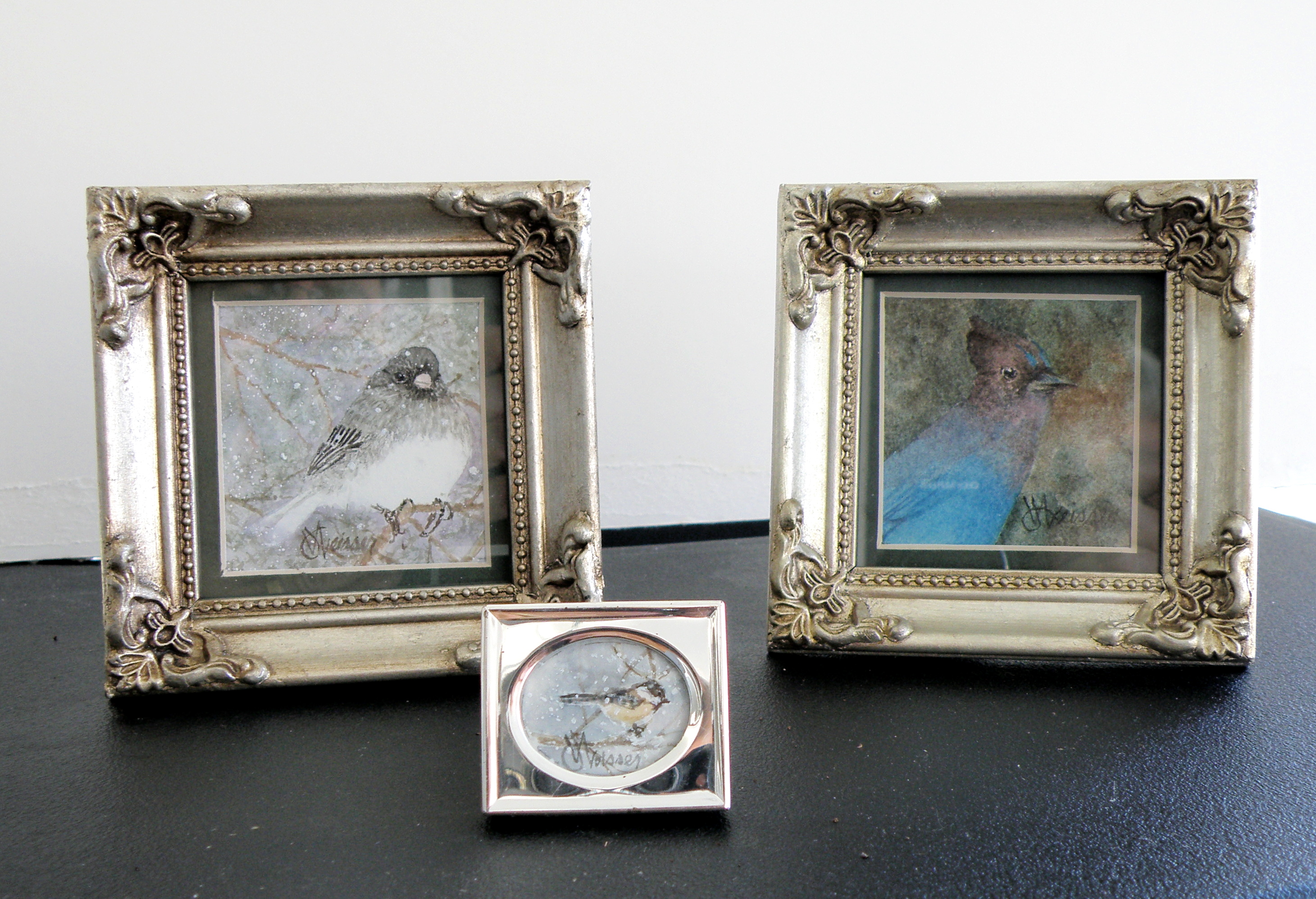
STELLAR JAYS have the tact and grace of a sociopath. Self-absorbed to the point of being incognizant there even are other lifeforms, they bray and scatter seed as though perpetually going through puberty. Once chaos has been accomplished, they go over to our neighbour, Brenda, and do the same with her feeder.
BLACK-CAPPED CHICKADEES dart in to claim a single seed, flit to a branch, hammer the shell apart, then dart in again–chee-cheeing a mantra as though making merry to themselves alone.
2″ x 2″, and 1/2″x 3/4″ , watercolour on Arches 140 lb. Hot Press Paper
Same subject, different take…
March 17, 2015
THE OLD SCHOOLHOUSE is once again the subject……

THIS TIME around, a horse was to be included, which meant it could not be a nocturnal scene, as that would be an odd addition to a night painting. The choice was made to have only a single horse, even though horses are most often seen in pairs or groups, being a social animal…..
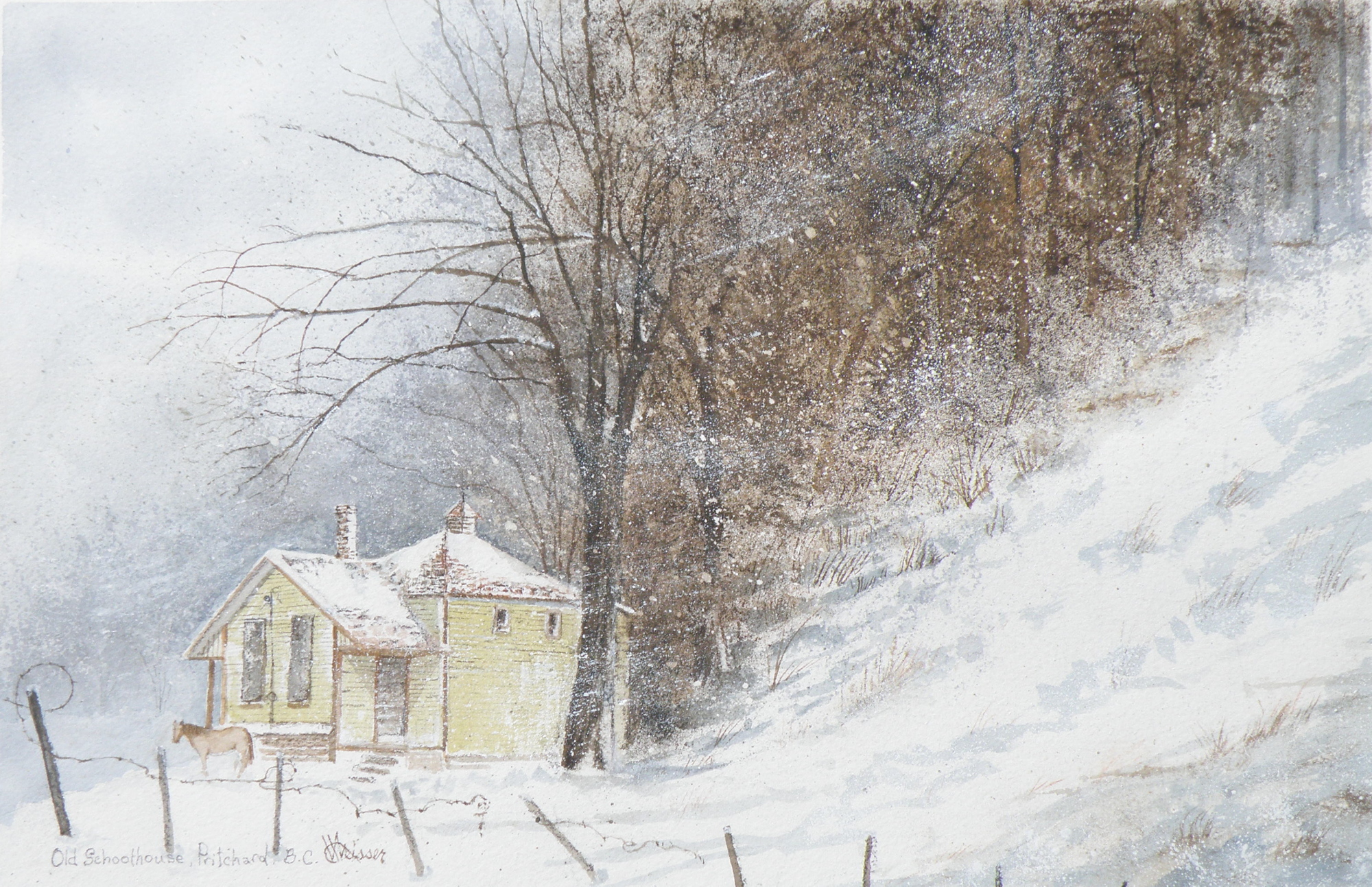
THE DECISION over depicting a single horse was selected as adding to the feeling of isolation: a lone horse beside an abandoned school in a lonely, forgotten field in the dead of winter……
“FROZEN IN TIME”
watercolour, 12″ x 15″, 140 lb. Arches Cold Press Paper, Kamloops Courthouse Gallery, Kamloops, British Columbia http://www.kamloopscourthousegallery.ca
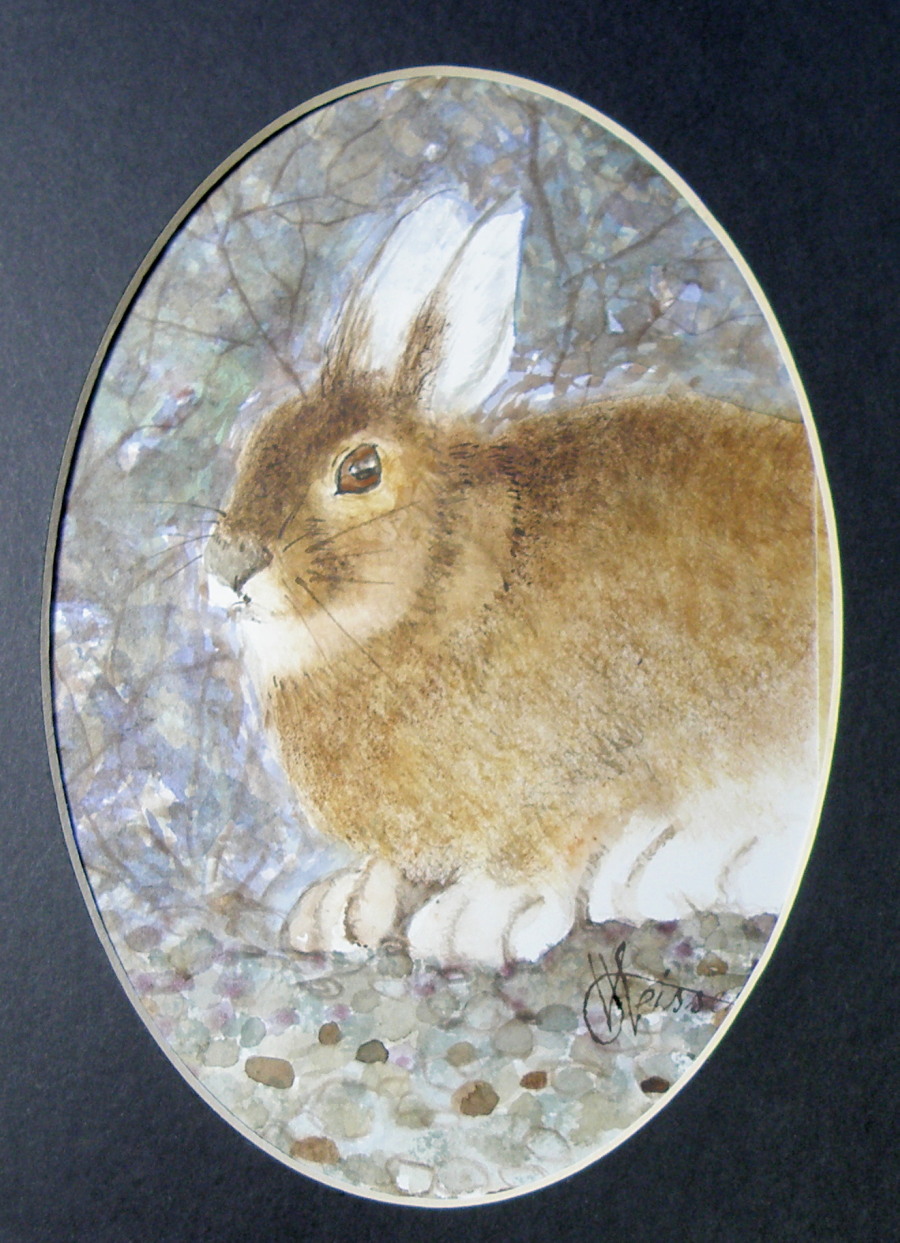
Arctic Hare
March 11, 2015
 weisserwatercolours