New bird miniatures
April 6, 2015
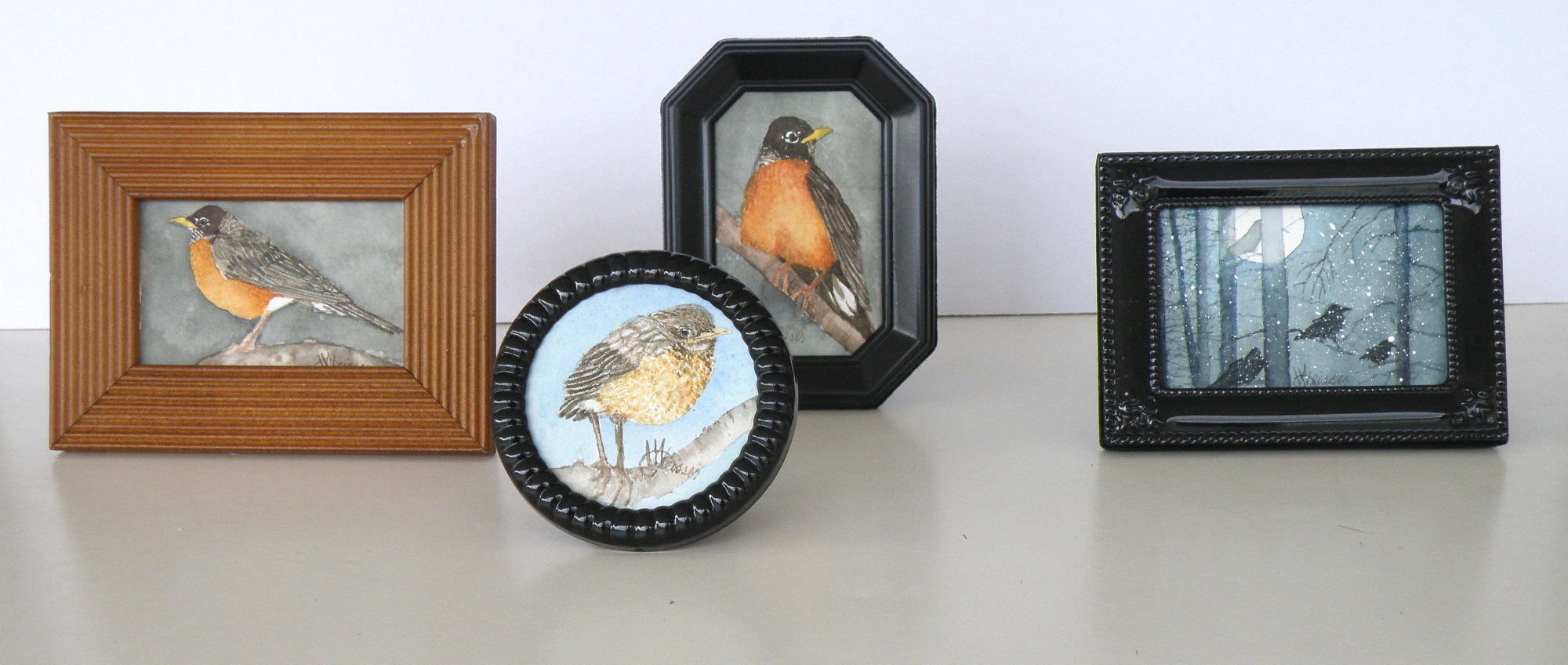
The image sizes here are approximately 5cm x 8cm (2″ x 3″). I use a pair of rather strong magnifying glasses when working this small–the kind you find on display at pharmacies (around here they’re referred to as ‘cheaters’). So when working on a tiny miniature they are an enormous help, until I turn to go check on something in the kitchen and walk into the wall, lol.
A FEW LAST COMMENTS about this painting…..there is a decided difference between nature and the art of depicting nature. Mother Nature is not only a hoarder, but not interested in housekeeping nor pruning, encapsulating, or boiling-down. She wants it all, all the time, and enjoys lavishing on us the plentitude of what happens when everything we look at, at any given moment, reproduces at will and overwhelms us with dozens–and even thousands–of itself.
FOR THE LANDSCAPE PAINTER the challenge, always, is to take Nature and make it into Art. It is the very human discipline of paring down, re-arranging, configuring and composing. What separates raw Nature from the art of painting is having a limited space, with only two dimensions, which is ultimately going to end up on a wall inside a human-made space. That restrictiveness requires moving trees and clouds and birds about in order to have a sense of balance or sense of wonder or sense of drama. It means the painter must dare to alter time itself, put limits on colour, and restrict amounts of what is naturally before the painter’s eyes.
MAKING ART is similar to the difference between looking at a field of wheat and sitting down to a loaf of freshly-baked bread. What happens between those two events is the act of altering something to create something else.
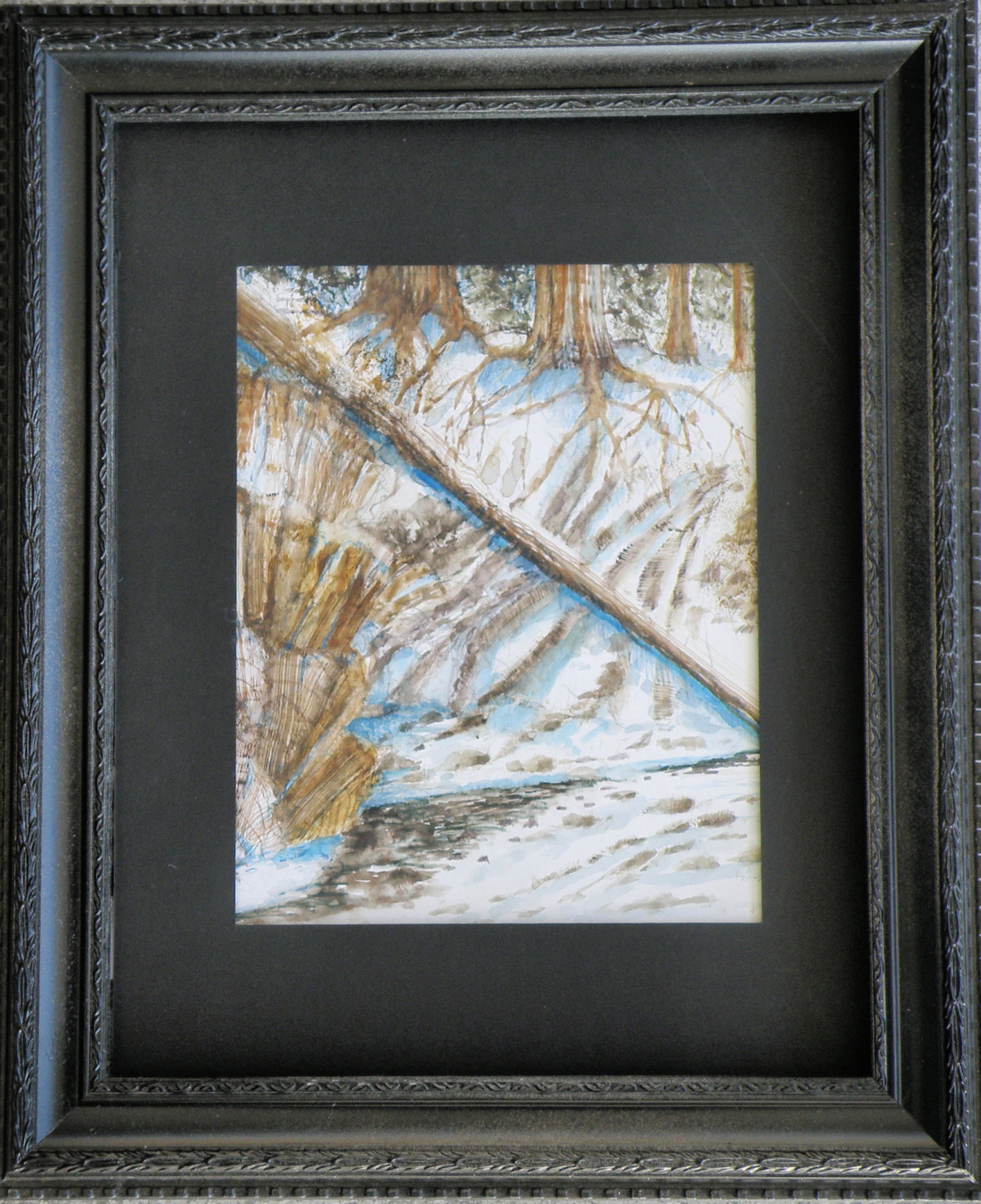
THIS PAINTING is not what the photograph of this scene looks like. For many years I struggled with whether I was ‘allowed’ as a painter to do anything other than depict Nature as it presented itself to me. Sitting out on some stoney ground, I would suddenly find myself slavishly working at painting the weeds between cracks of rock, then painting the seed heads on the weeds to look exactly like what my eyes saw, when really I knew the larger purpose of sitting there in the hot sun was not to pay attention to weeds, but to paint the distant mountains above and beyond them. By the time I’d gotten away from doing weeds justice, I was so hot I had to fold up my equipment and go back to the car. And I went home with a painting of weeds between rocks and a big expanse of white paper above them.
THAT DOESN’T HAPPEN ANYMORE. I have learned that I must take what is presented to me and do with it as I wish to do. That is the work of a painter.
A PHOTOGRAPHER has a whole different set of challenges because a lens is very different from a human eye (it can’t do half of what a living, ‘breathing’ eye can do) and from human imagination (once it has seen what is before the eye) . But I have noticed some irony happening between the worlds of photography and painting. In the past, painters often worked very diligently to make a painting ‘look like’ a photograph. These days, with technological photo-shopping manipulation, a photographer seems more or less obsessed with trying to make a photograph look like a painting. I am not convinced either enterprise is worth spending all that amount of time on.
IF A PAINTER WISHES TO BE A PHOTOGRAPHER, then don’t go trying to make a painting into a photograph. Do go and take courses and buy equipment and learn how to take photographs and do the work a photographer must work at in order to eventually become a photographer. And IF A PHOTOGRAPHER WISHES TO BE A PAINTER, then leave the photo-shopping manipulation apps alone and do take courses and buy equipment and learn how to paint paintings and do the work a painter must work at in order to eventually become a painter. They are two distinctly separate and inherently different artforms and–in my flawed way of viewing things–should stay that way.
AND YOU…what’s your view? Tell me how I’m missing things you’ve discovered!
Painting progression 3…. ‘Jamieson Creek Thaw’
April 4, 2015
BECAUSE WATERCOLOUR is such a watery, transparent, delicate medium–one which must always allow the paper it’s laid on top of to breathe through it–one which traditionally doesn’t use white pigment, but relies on the paper to be the white of the painting–BECAUSE of this (and more) the challenge of the watercolour student is to convey an illusion of texture, without the ability to actually build up a surface texture.
WERE WATERCOLOUR PIGMENT applied so thickly as to create an impasto-like texture on the paper beneath, it would lose its luminosity and look pasty, muddy, dull–worse, it would crack. Watercolour pigment only works when the paper beneath dazzles through it and brings life to the pigmentation. In other words, watercolour as a medium is more the business of staining paper than it is a business of building up layers and coats of daubs, stipples, slatherings.
THAT’S WHY CARE is required to not apply so many washes that the luminosity of the paper receeds and eventually provides no life at all. And that’s why the whites of the paper must be thoughtfully reserved and left untouched in key areas–the crests of waves; the moon; snow; clouds; a picket fence–and skill taken to paint AROUND these places to let the paper be the white.
SO….a student of watercolour (me) learns early-on that (s)he will be a student of the medium for life–that mastery is illusive–and failures, many. A good piece is approached very thoughtfully, noting where the paper will be left to serve the function of white (pigment) and painted around. Then the student will also have to gather enough courage to apply exceedingly dark washes in one ‘go’, while maintaining a sense of secure, carefree animation in order to present an immediacy and liveliness in the final piece.
THE DEATHKNELL of a failing, dying work of watercolour is finicky overworking of areas, and a refusal to accept what happened when water joined pigment joined brush joined paper. It is NOT a medium for those who love to micro-manage or be in control.
THE STUDENT OF WATERCOLOUR has to be more a Peter Pan than a child wanting to grow up–loving the thrill of what happens when ‘danger’ is courted, yet having the assurance that daring will win the day. However, that daring and search for adventure–on the surface of a good piece of paper–will only be pulled off if it is backed by enough experience to have a good hunch about what will happen when such-and-such is tried.
ATTEMPTING what remains beyond one’s ability isn’t courting danger–it is ignoring it. Trying to fly without thinking happy thoughts will give a person a broken bone. Within the bounds of representational art–(i.e. wishing to have a tree ‘look like’ a tree)–a painter cannot ‘pull off’ a landscape with lots of shadows if (s)he has yet to study them in some depth. Trying to do a scene which includes far far more than what one yet learned how to interpret is an invitation to frustration and wanting to give up watercolour for say, acrylics (oh, my).
AND SO FOR MYSELF, I know by this time that I must confine my attentions to learning about how corn grows, what it feels like, looks like, behaves like, before I can throw my abandonment into rendering a watercolour of winter corn in January. Not only that, but I must also have studied the qualities of snow–the qualities of what a winter sun does to shadows of corn stalk–the blues, the purples. And only then can a learned abandonment bring about a possible reward.
IT TAKES A LONG TIME to find the right paper, the right brushes, the right working pallet of colours, the right approach and the right subject matter. Knowing what can be done when paper is sopping wet–and what can’t–depends on who made the paper, how thick it is, how textured it is, how stretched it is, how quickly it will dry. Knowing when to wait until the paper is exactly wet or damp or dry enough to throw one’s energies at it, comes (usually) through ruining (many pieces of) good paper.
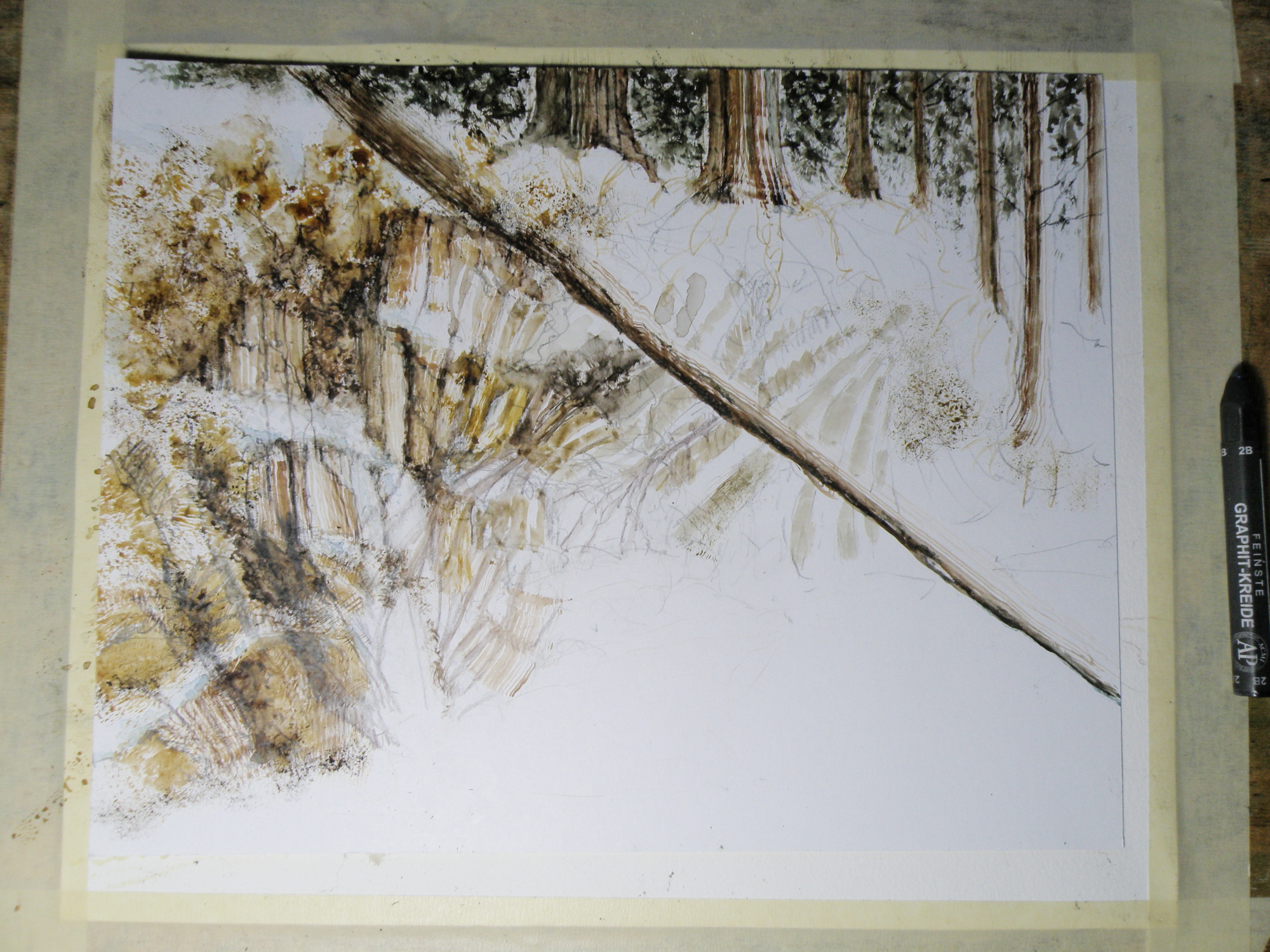
HERE IS THE LATEST DEVELOPMENT of the subject of Jamieson Creek in a February thaw…..
TOMORROW will (hopefully) provide a photo of the finished piece!
Painting progression 2…. ‘Jamieson Creek Thaw’
April 3, 2015

Painting progression 1…. ‘Jamieson Creek Thaw’
April 2, 2015
JAMIESON CREEK is about a 15 minute drive from our home, along a dirt logging road. The Kamloops, British Columbia, region is a geologist’s dream come true, featuring some of the oldest mountains in Canada. As a student of watercolour, I am fascinated by stone and rock, particularly because it is so challenging as a subject.
This is Jamieson Creek, taken four years ago around February, early March….
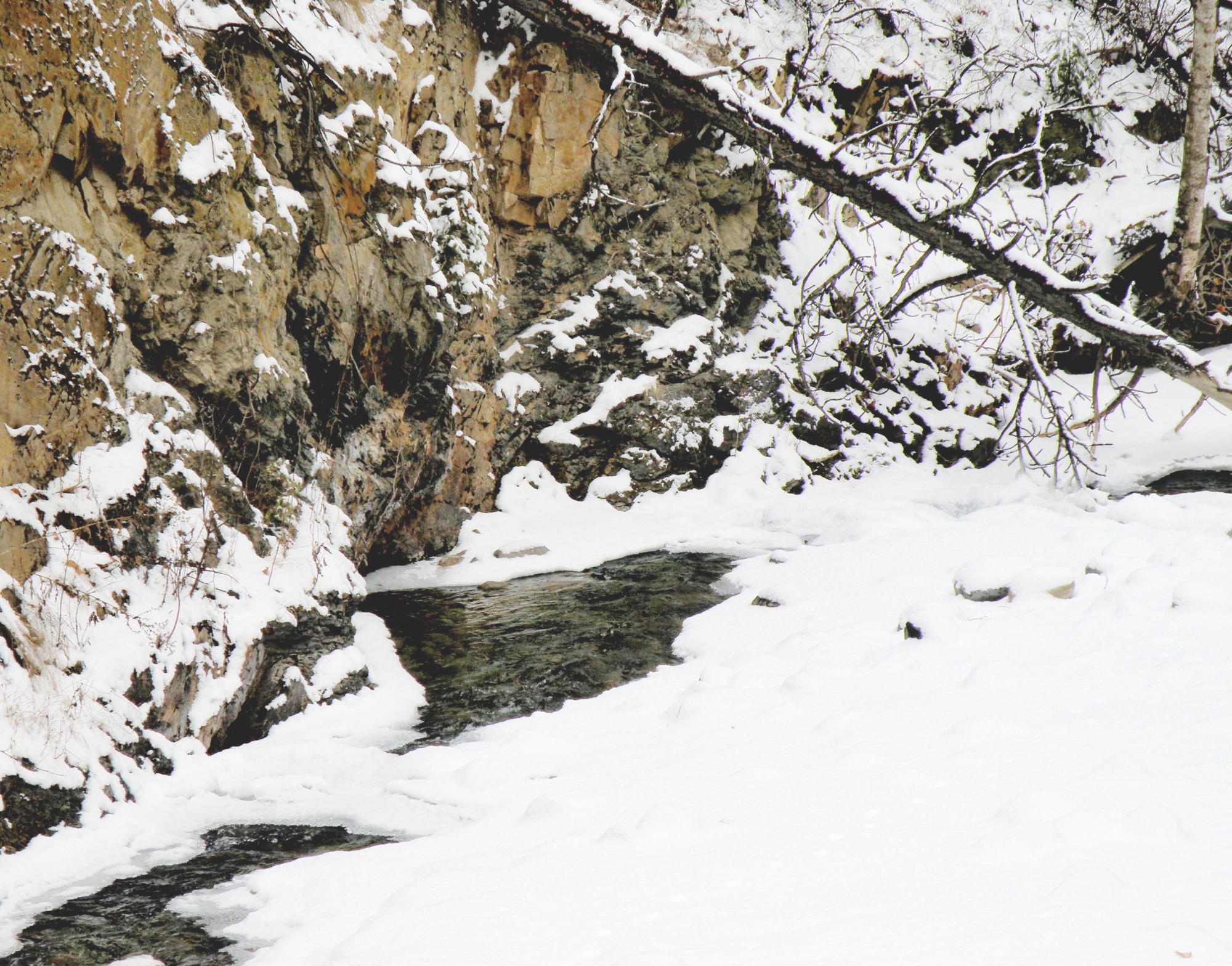
And here is my initial drawing of the subject…..

As you can already see, photography is not my gift (which is why I paint, lol)–so forgive the darkness. It was taken, pre-dawn in the spare room which serves as a studio.
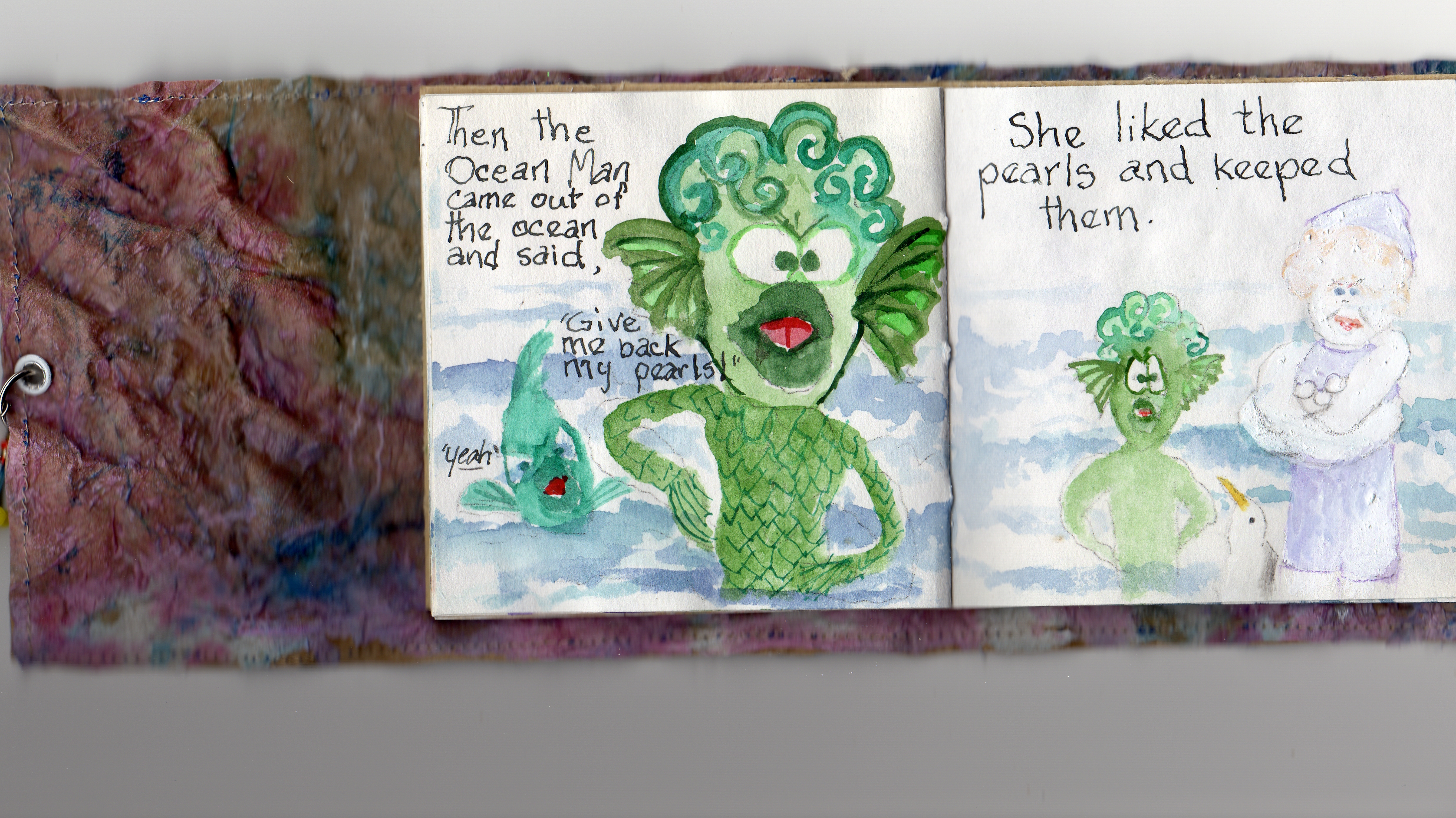
Moral: don’t mess with Mother Nature (or the Ocean Man).
~~~~~
Aneleise (Ane) at her Grandparents’, age 8. . .

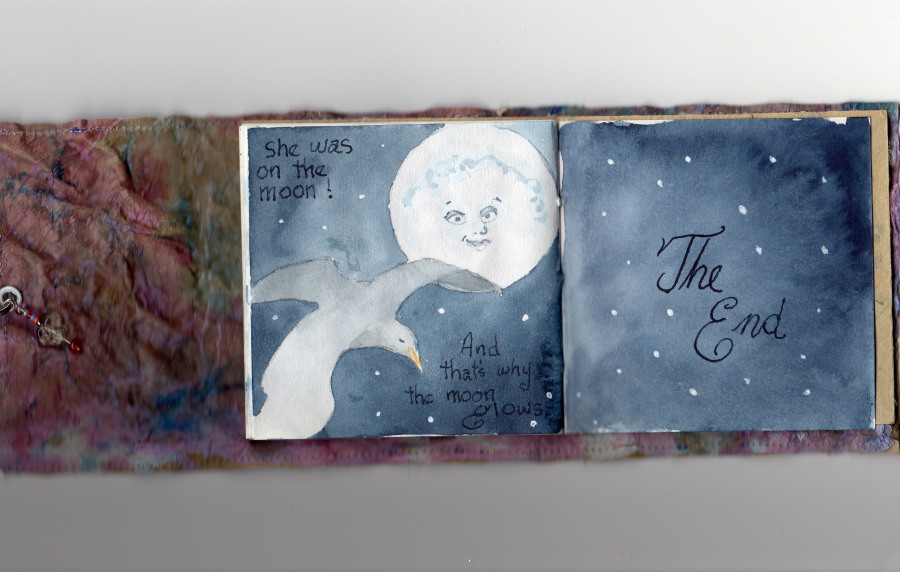
……’why the moon glows’, by Ane Jones (age 8)
March 30, 2015
……’why the moon glows’, by Ane Jones (age 8)
March 29, 2015

……’why the moon glows’, by Ane Jones (age 8)
March 28, 2015

……’why the moon glows’, by Ane Jones (age 8)
March 27, 2015
……’why the moon glows’, by Ane Jones (age 8)
March 26, 2015

……’why the moon glows’, by Ane Jones (age 8)
March 24, 2015
……’why the moon glows’, by Ane Jones (age 8)
March 23, 2015

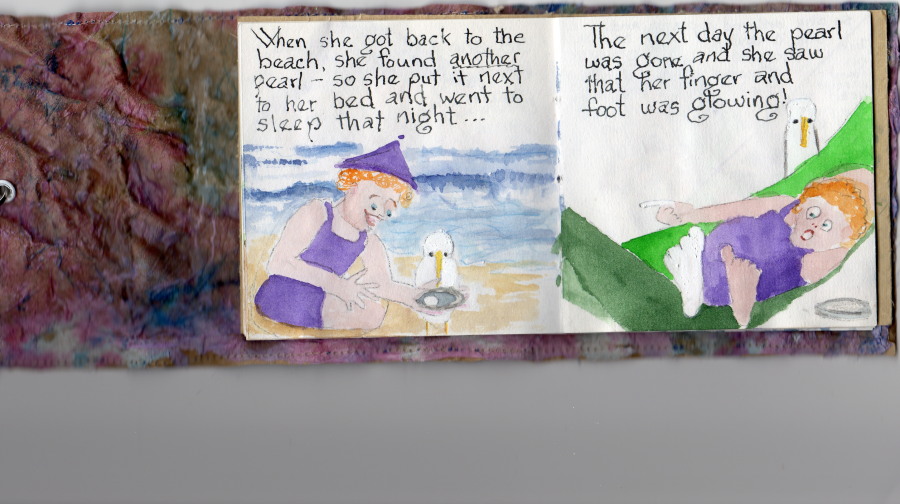
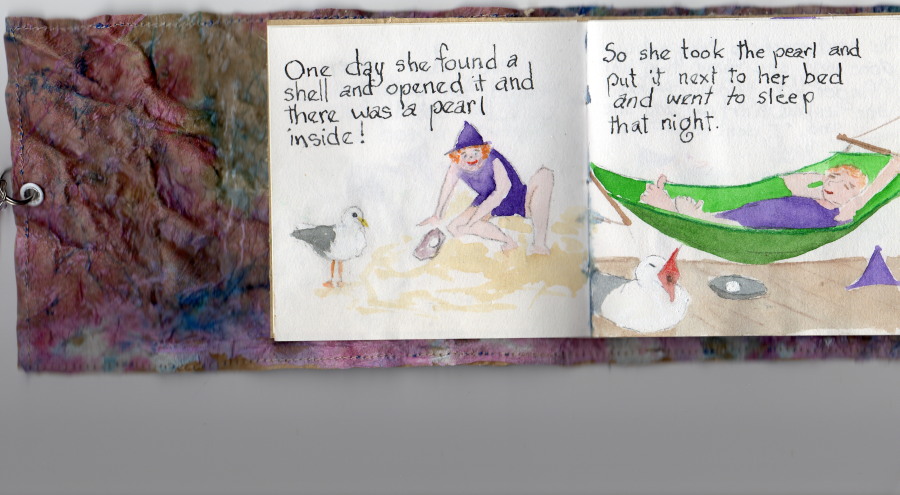
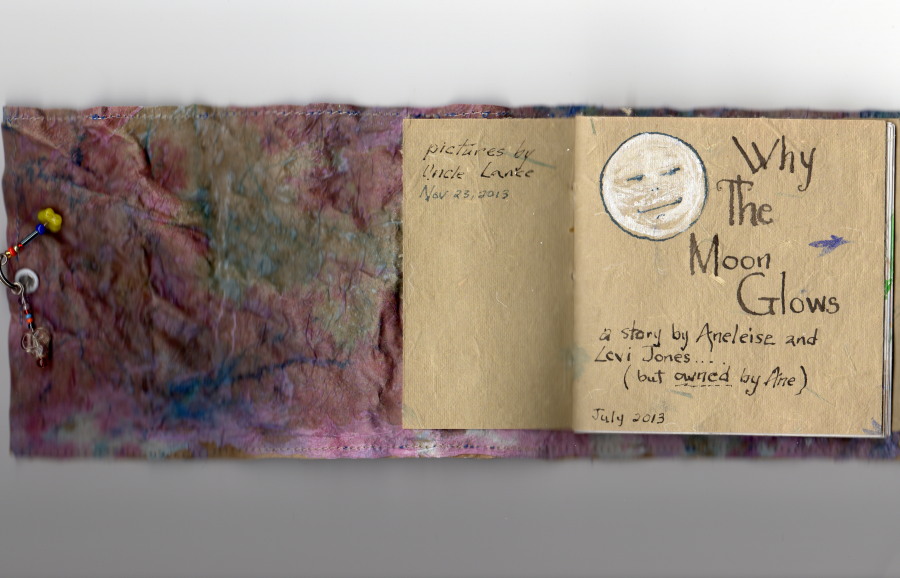
‘Why The Moon Glows’ by Aneleise Jones
March 22, 2015
MY GREAT NIECE, Ane, age 8, was lying around with brother Levi making up another of their stories. Because their parents judiciously decided their home would be television-free, Aneleise, Levi and Caleb make up a lot of stories and sometimes act them out as well. That particular day, I told Ane that if she wrote out a story for me to take home, I would do the pictures for it.
She grabbed some lined notebook paper and a pen. Fifteen minutes later the pages were in my hands in time for Ane to join her brothers going crazy outside in the hammock. So this– Ane’s own grammar and spelling kept intact for future smiles–is her story (which–though made up between herself and her brother–she declared in front of him is OWNED by her)…..
Miniatures
March 20, 2015
THE DARK-EYED JUNCO ignores the feeders hanging in the red maple just beyond the front window, shunning the bossy finch rabble bumping one another off the perches. A Junco will head below, delighting in the shower of sunflower crumbs spit from Goldfinch beaks, already shelled, served on a bed of fresh snow.
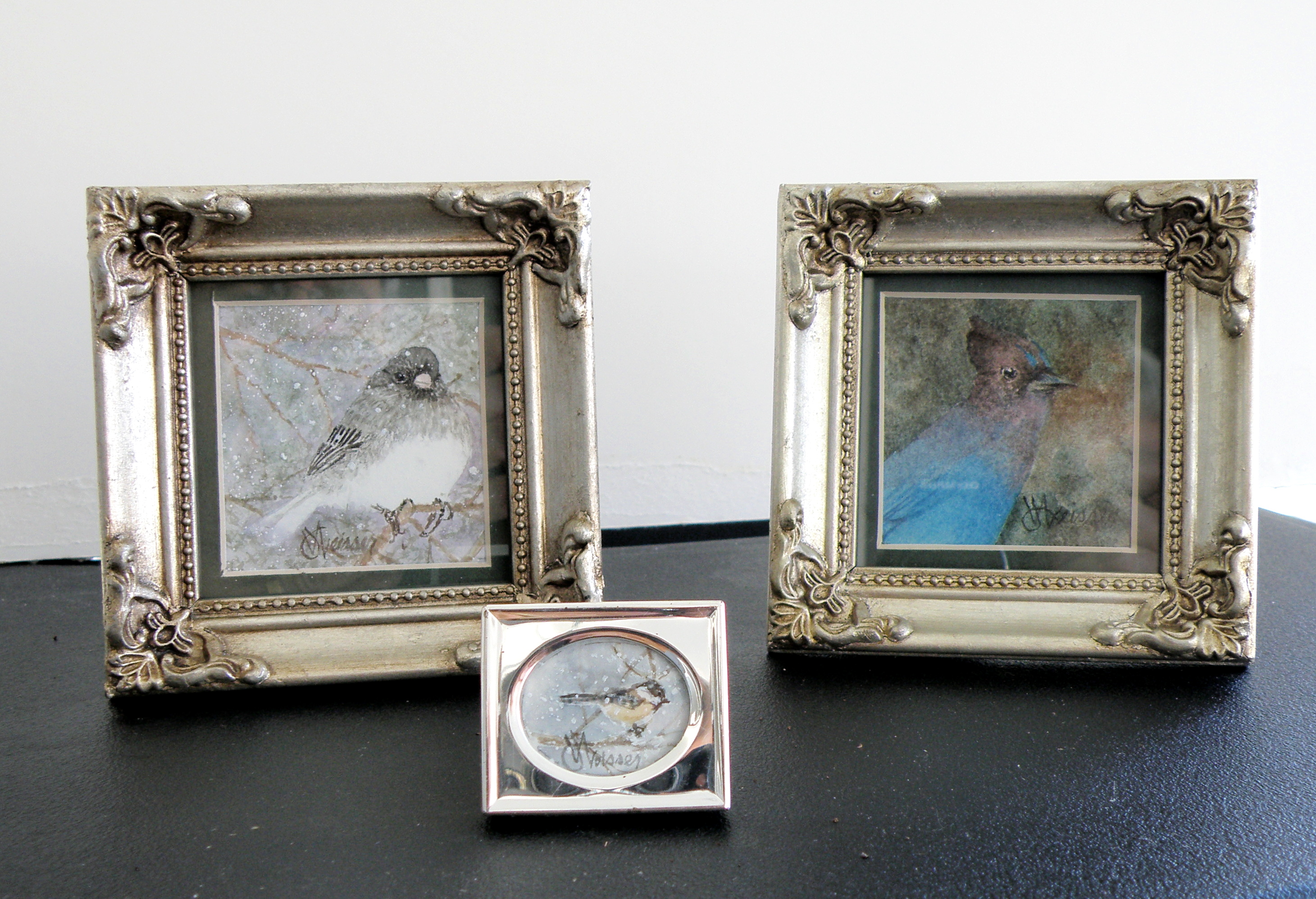
STELLAR JAYS have the tact and grace of a sociopath. Self-absorbed to the point of being incognizant there even are other lifeforms, they bray and scatter seed as though perpetually going through puberty. Once chaos has been accomplished, they go over to our neighbour, Brenda, and do the same with her feeder.
BLACK-CAPPED CHICKADEES dart in to claim a single seed, flit to a branch, hammer the shell apart, then dart in again–chee-cheeing a mantra as though making merry to themselves alone.
2″ x 2″, and 1/2″x 3/4″ , watercolour on Arches 140 lb. Hot Press Paper
Same subject, different take…
March 17, 2015
THE OLD SCHOOLHOUSE is once again the subject……

THIS TIME around, a horse was to be included, which meant it could not be a nocturnal scene, as that would be an odd addition to a night painting. The choice was made to have only a single horse, even though horses are most often seen in pairs or groups, being a social animal…..
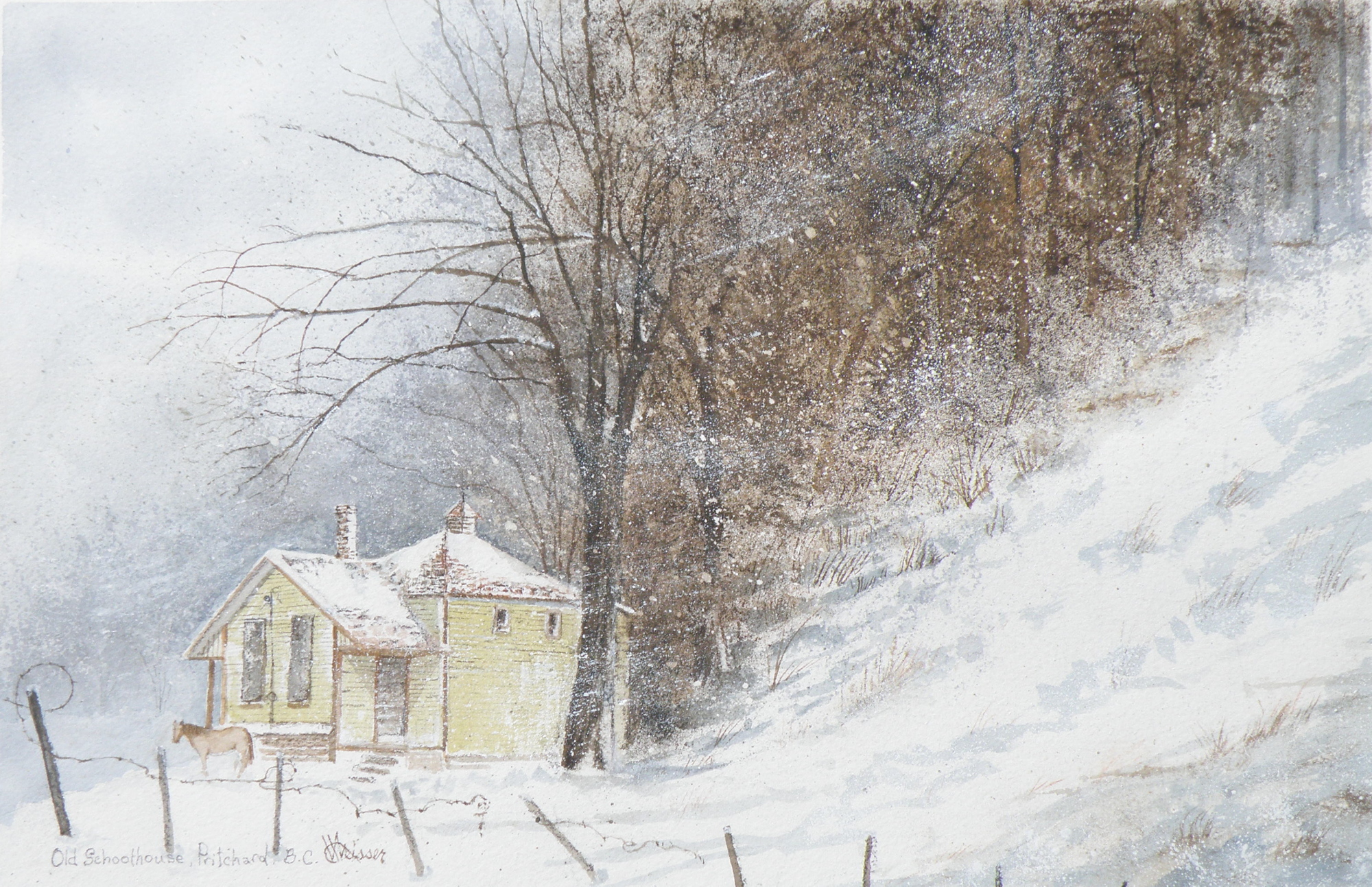
THE DECISION over depicting a single horse was selected as adding to the feeling of isolation: a lone horse beside an abandoned school in a lonely, forgotten field in the dead of winter……
“FROZEN IN TIME”
watercolour, 12″ x 15″, 140 lb. Arches Cold Press Paper, Kamloops Courthouse Gallery, Kamloops, British Columbia http://www.kamloopscourthousegallery.ca
Painting progression 5
March 16, 2015
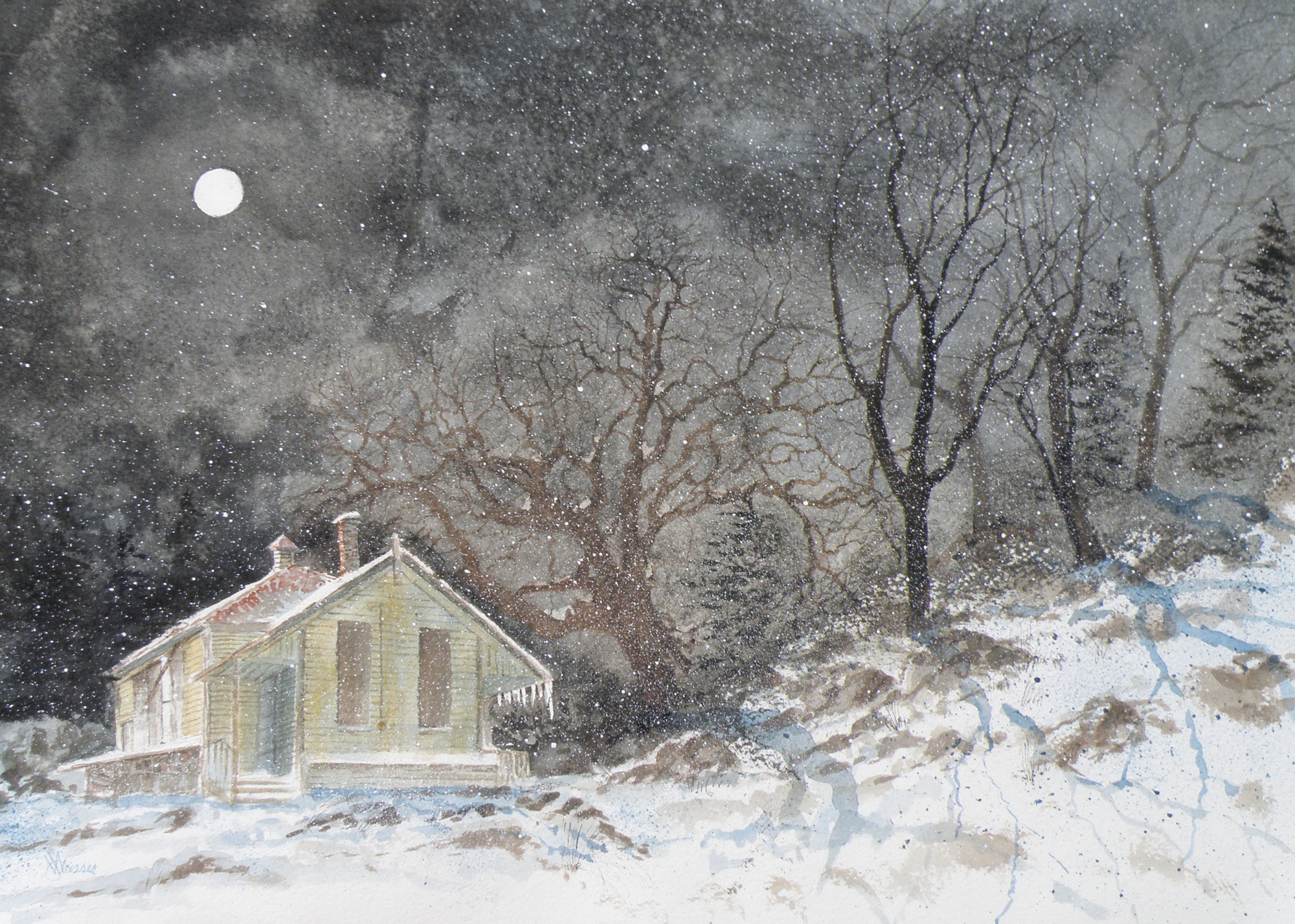
THE FINISHED piece–“Abandoned Schoolhouse, Pritchard”. The rocks needed darkening and definition. Pines were added. Spattering of snow was used to unify the whole and add a feeling of movement.
Painting progression 4
March 15, 2015
MORE TREES needed adding. The suggestion of rocky outcrop is introduced. The aging building is blocked in. Shadowing completes this phase…..
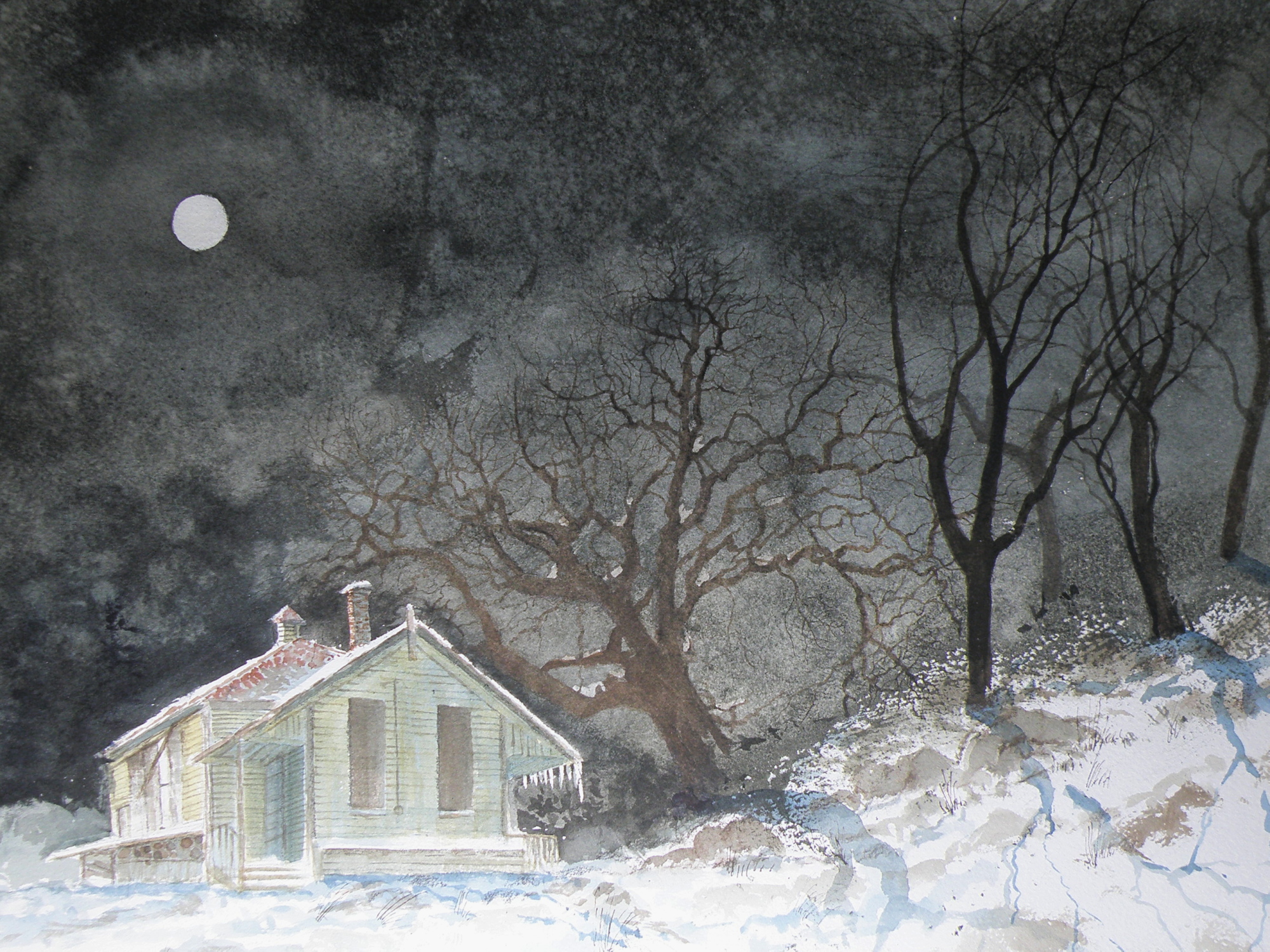
Painting progression 3
March 14, 2015
THE MOON and schoolhouse roof were masked, then a wash applied in the sky areas.
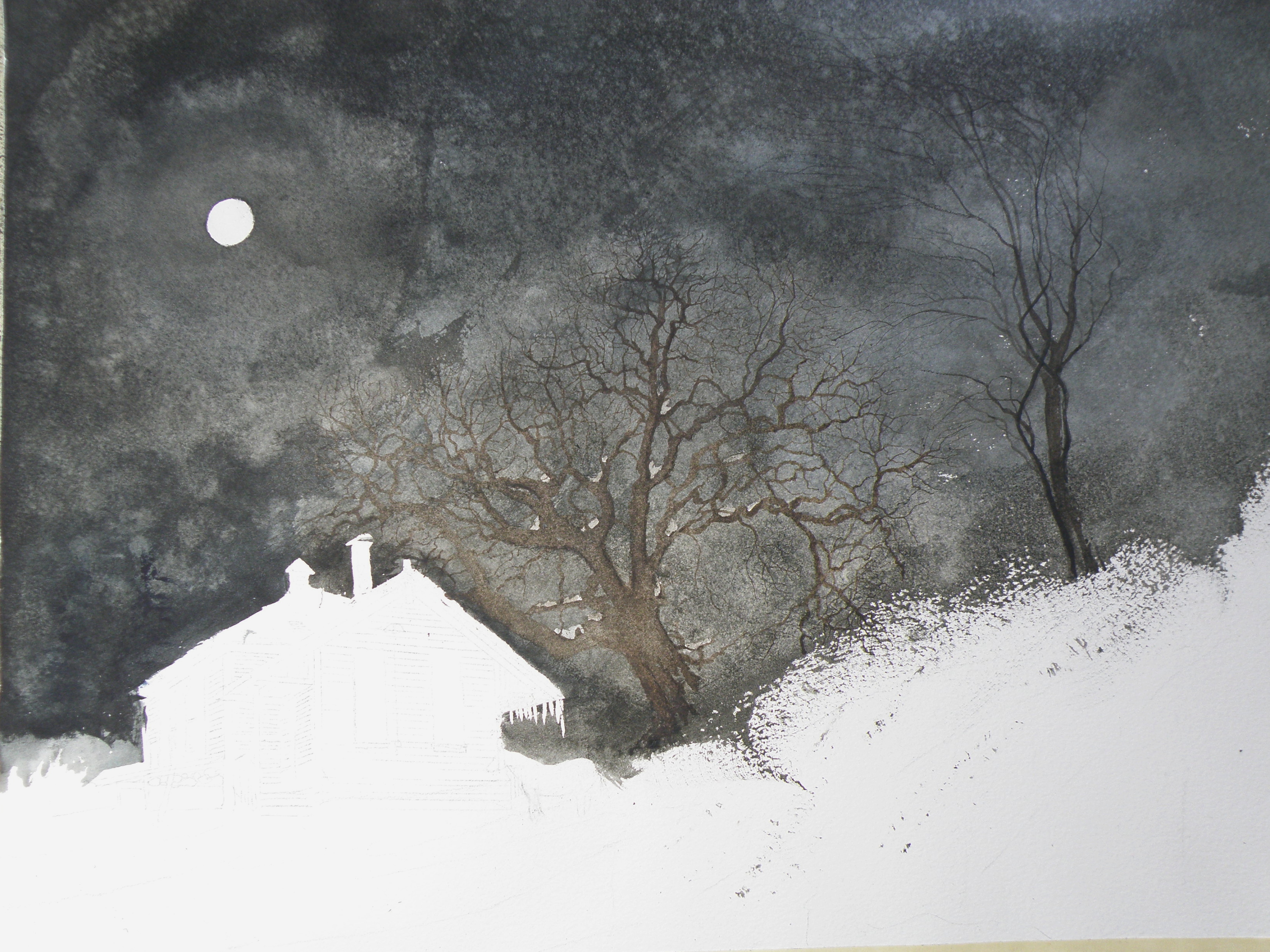
Once done, a decision was made to next eliminate the horse, it becoming an unintended focal point if left in. (A lone horse standing at night in front of an abandoned school in bitter cold would be incongruous).
Painting Progression 2
March 13, 2015
TREES are painted in very dark and the watercolour pigment tempered a bit in order to have it resist being completely taken away by an overlay of secondary wash.
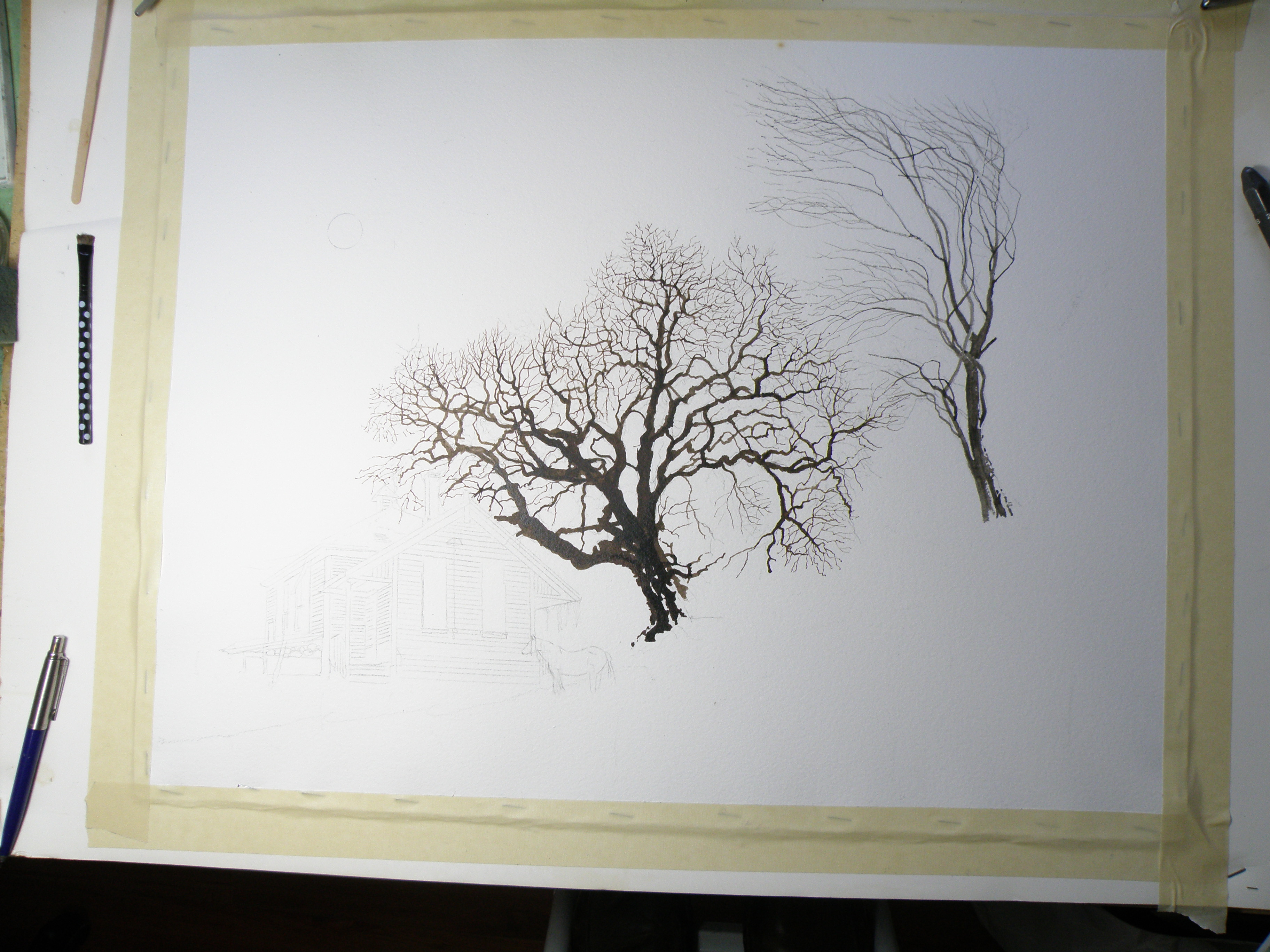
Painting Progression 1….
March 12, 2015
THERE WAS an old schoolhouse in the Township of Pritchard, British Columbia, just down the road from my friend Shiela. 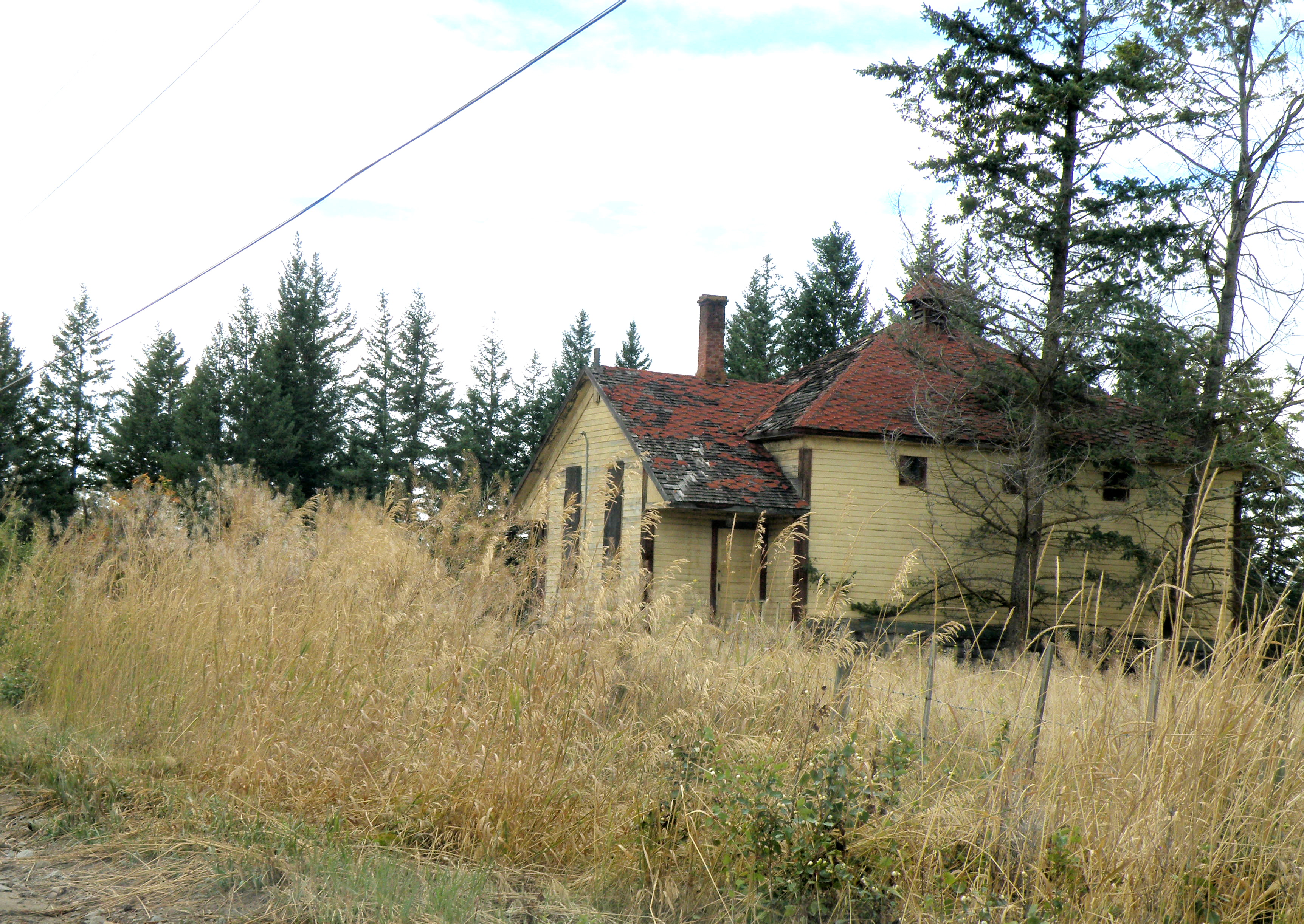 It was kept on a corner of field by a rancher who had attended it, hoping someday someone would see to its restoration. Eventually it was torn down, but not before I was able to photograph it. And I have painted it several times, choosing to situate it where I please….
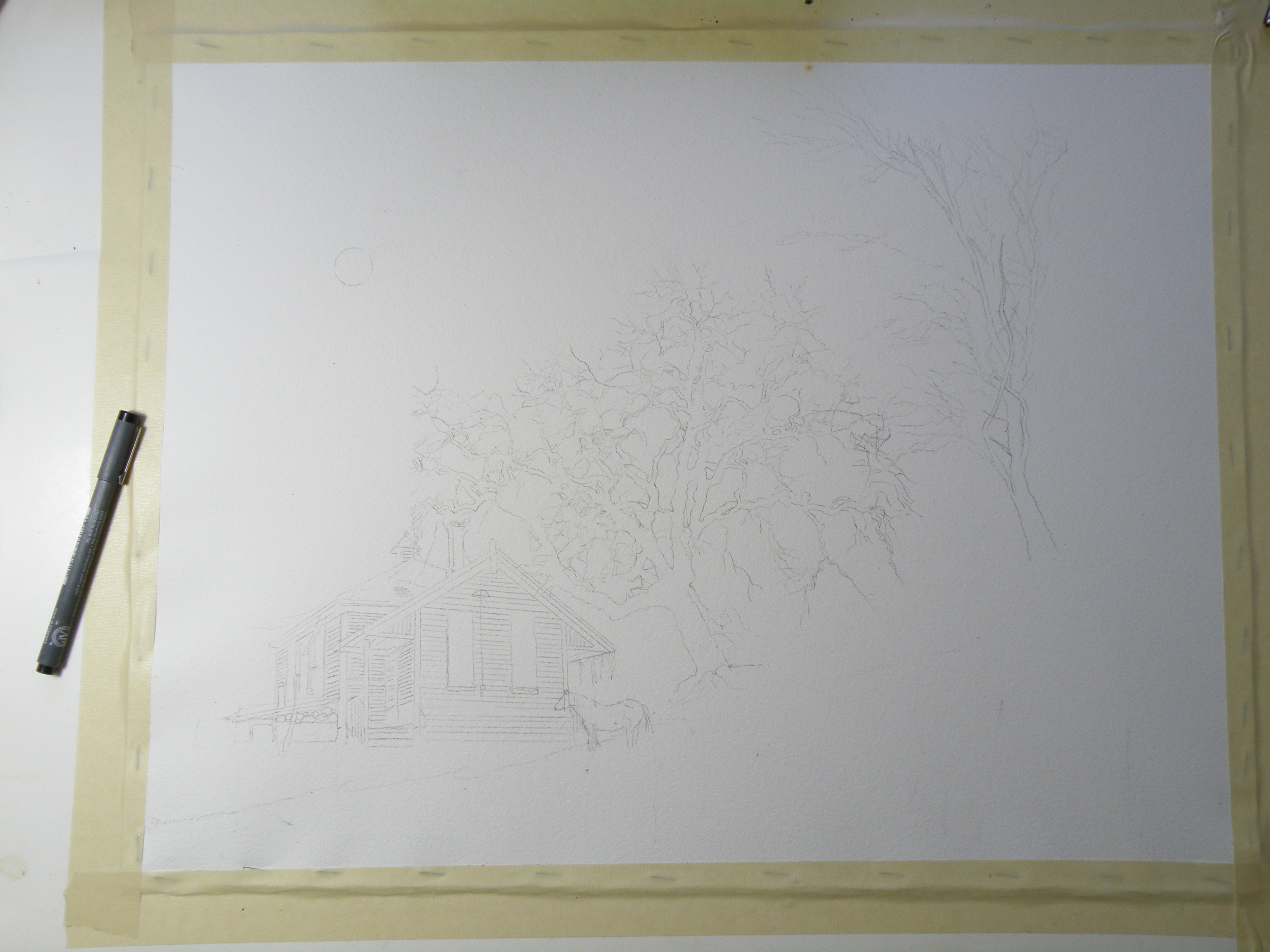
This is the initial drawing. Because the rancher kept horses, I decided to position one for sake of interest. The paper is Arches Cold Press 140 lb., stretched stapled and taped onto gater board, approx. 15 x 20 in.
Barn Owl Miniature
May 23, 2012
Whine Alert! I threw my back out and even my regular swimming routine isn’t helping restore things. It has been over a week and sitting at the computer only seems to aggravate it. Oddly, standing offers the most relief, so I’ve been painting.
My apologies for not leaving comments on my favourite sites. Even this just sitting here is causing shooting pains.
This pair of Barn Owls is from a photo on the BBC Website, without credits as to whom the photographer was/is. I’m in the process of offering compensation for my using the image as reference.
The Barn Owl (Tyto alba) is, oddly enough, common in a great many countries but not here in Canada. From Wikipedia: “. . . It is known by many other names, which may refer to the appearance, call, habitat or the eerie, silent flight: White Owl, Silver Owl, Demon Owl, Ghost Owl, Death Owl, Night Owl, Rat Owl, Church Owl, Cave Owl, Stone Owl, Monkey-faced Owl, Hissing Owl, Hobgoblin or Hobby Owl, Dobby Owl, White-breasted Owl, Golden Owl, Scritch Owl, Screech Owl, Straw Owl, Barnyard Owl and Delicate Owl. “Golden Owl” might also refer to the related Golden Masked Owl (T. aurantia). “Hissing Owl” and, particularly in the USA, “screech owl”, referring to the piercing calls of these birds. . . ”
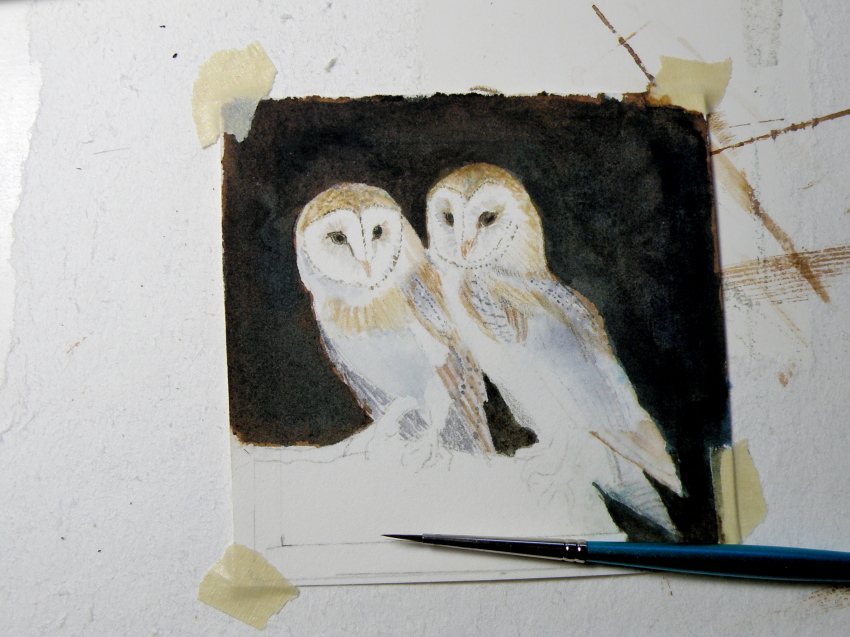
Work in progress . . .
The finished piece–a birthday gift for my friend Shiela

“Barn Owls”, watercolour on Hot Press Arches 140 lb. Paper
image: 2.5″ x 2.5″
framed size: 4″ x 4″
Thank you for your patience and support. I’ll be seeing my doctor soon, and hopefully we’ll get to the cause of the problem.
Jamieson Creek
May 6, 2012
This little painting (6″ x 7.5″) is of Jamieson Creek, which is not even ten minutes drive from our front door. This is a desert-like region, featuring its own local cacti (which I discovered by way of my hand), and is called The Sunshine Capital of Canada. Water, while not scarce, has usage restrictions and homes are now being installed with water meters.
So to have the Jamieson splashing over and around rocks and fallen timbers is a great joy. It is the epitome of the ‘laughing brook’ of literature, and compliments the broad, slow-moving Thompson Rivers which run through town. Were it not for our rivers, Kamloops would be uninhabitable. Right now the creek and rivers are swelling from the melt-off of mountain snows. Kamloops itself is some 4,000 ft in elevation, the mountain snows are up that much higher, and June is when the river level is at its peak.

“Up The Jamieson”, L & M Jones Collection
This painting was on the wall no longer than ten minutes before it was sold. My colleague in art, Lynda Jones, thought it complimented her pottery so well she went with her impulses. And that made my day.
Our Recent Show
May 5, 2012
It was an honour being asked by Lynda Jones to share her spotlight as Featured Artist at our Old Courthouse Gallery here in my city of Kamloops, British Columbia, Canada. Lynda is a potter whose studio is in Falkland, B. C.– a potter of ever-increasing recognition, most notably for her astonishingly beautiful smoke-fired pottery which can be seen in more detail here: http://www.okanaganpotters.ca/ljonesgallery.html.
Our Opening on May 1st came off well even though the wall socket we’d plugged the coffee and tea into was busted and we didn’t know until we were due to serve it. But once extension cords were found, a good time was had by all.
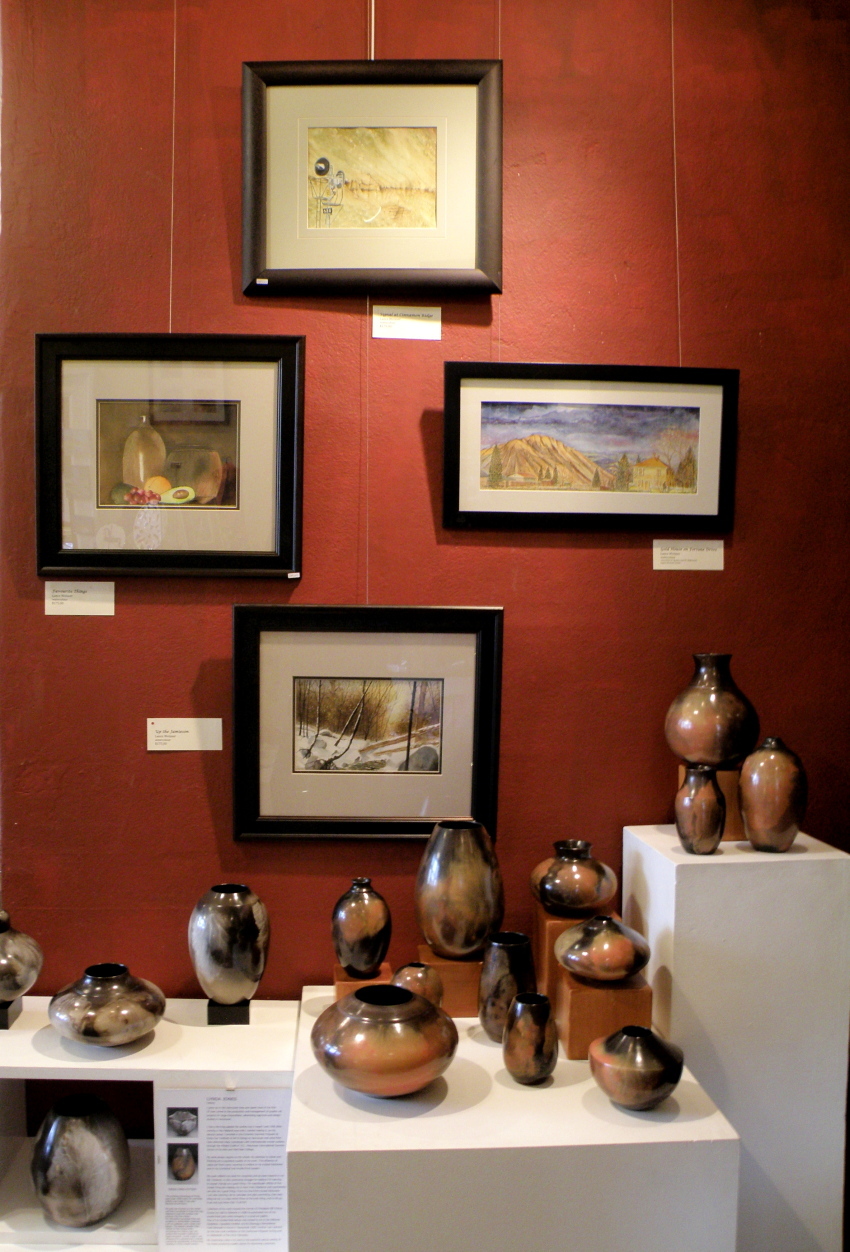
Lynda Jones and Lance Weisser, Featured Artists
Old Courthouse Gallery, Kamloops, B. C.
That same day, a quarterly magazine, ‘Currents’ published this very generous feature . . .
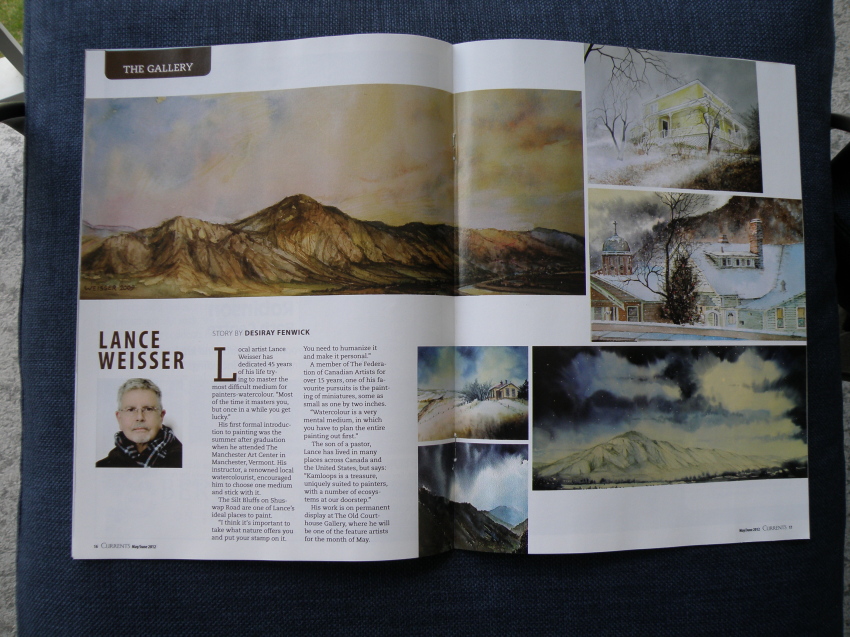
‘Currents Magazine’ May 1, 2012
Publicity like this is very helpful and makes it all the more necessary for me to remember that watercolour is my hobby, and a medium I struggle mightily with. All I can hope for is the chance to keep learning from my continual mistakes, while trying to improve in incremental steps.
Yesterday I was very happy to learn that the owner of the ‘Dr. M. S. Wade House’ (see ‘previous entries’ below) is very taken with my rendition of her home. She’s lived in it for more than 35 years and rues the day she’ll ever have to move out–but says if and when she does, she’ll now have my painting to bring back the memories. And as a painter, it just doesn’t get any better than that!
Local Cliffs, Finished Piece
April 25, 2012
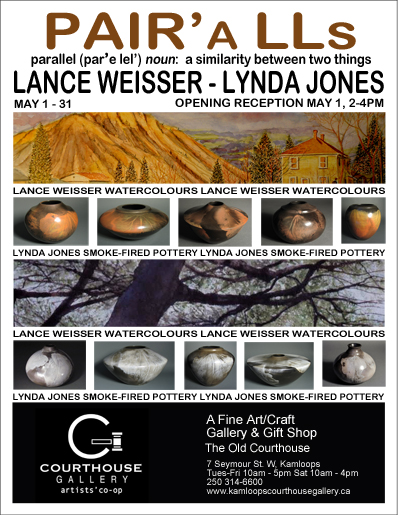
D Day for me is May 1st. That is when Lynda Jones and I are teaming up to be The Featured Artists at The Old Courthouse Gallery here in Kamloops. Lynda is a rare and amazing potter who specializes in highly burnished smoke-fired pieces and counts among her collectors the former U. S. President Clinton.
Here is the fantastic poster she has designed:
PAIR' A LLs E-POSTER MAY 2012 Courthouse Gallery
The Local Cliffs subject I’ve been doing studies of has finally been completed as a work I’m satisfied enough to allow to be matted and framed.

"Cinnamon Ridge Signal" 7.5" x 9", Arches 140 lb. Cold Press Paper
One thing I’ve learned through doing it, is that this small size of 7.5″ x 9″ is very pleasing for me. It is large enough to include a good amount of detailing, and small enough to get finished in a timely way.
And now it is on to getting painting #2 for the show done before our May 1st opening. Thank you for your previous comments which helped me in producing the final result!
 weisserwatercolours